
On this page
Temperature indication and melting behaviour
A temperature comparison checks the instrument indication. Running a reference substance also exercises the heating programme and the way the endpoint is detected. On a manual instrument the analyst observes the capillary. An automatic model may save a curve, a temperature or an image. Identify the function and the reporting mode used in your method.
Matching the routine method
The final heating rate affects the temperature at which melting is observed. A check run at a different rate can be difficult to compare with your routine result. Give us the stored method name, heating rate, endpoint definition and the approximate interval in which your samples melt. For a multi-position instrument, identify the positions normally used.
Tracing a result to its reference
If one capillary position gives a different result, note the position and the programme used. The same reference run across several positions is more useful for that enquiry than unrelated readings from separate batches. If your laboratory supplies the substance, include its lot, certificate and assigned melting point or range. Keep the observed start and end temperatures where your method records both.
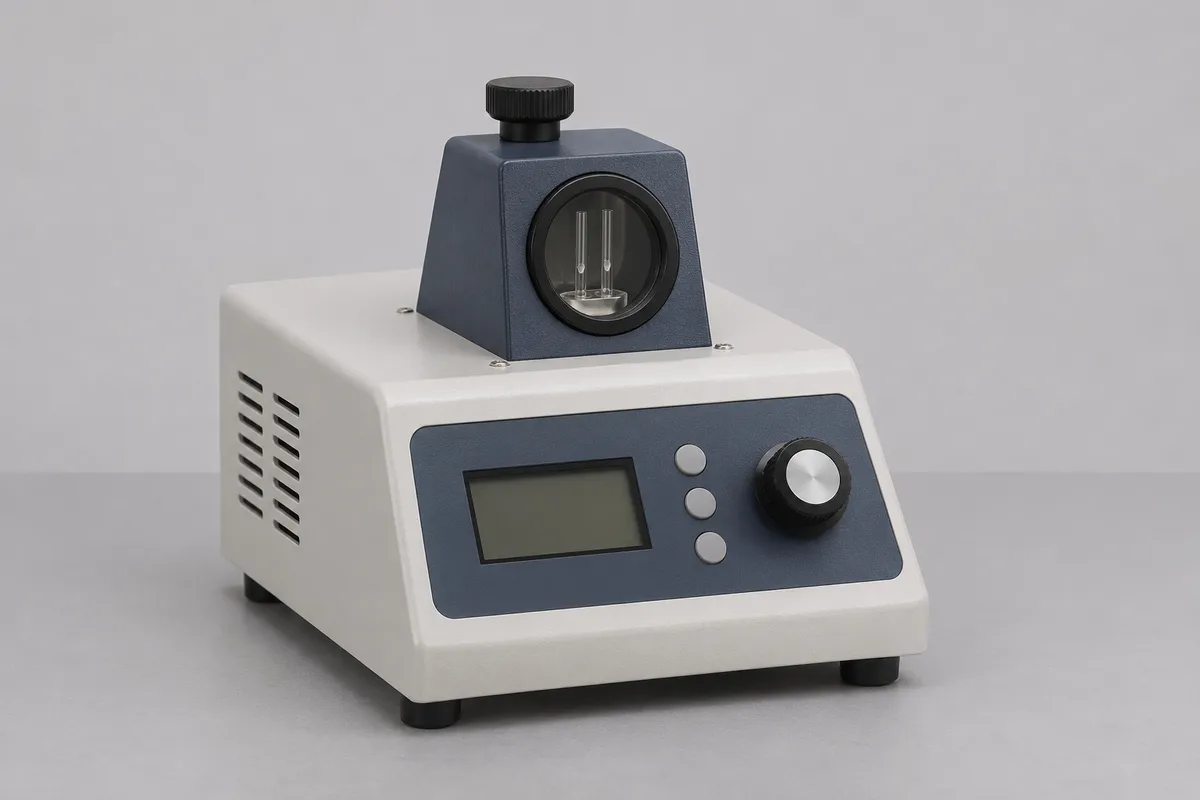
Melting point apparatus
Mark the endpoint reported by the instrument, such as the start of melting or the clear point. Use the same endpoint definition when comparing the result with a reference material certificate.
One analyst records the start of melting while another records when the last solid disappears. Those temperatures describe different events. Identify which endpoint the operating method uses and the heating programme near that endpoint when asking for a comparison with an assigned reference material.
- Range and configuration
- METTLER TOLEDO’s MP70 works from room temperature to +350 °C. State the temperatures and endpoint convention used for the reference materials in your laboratory.
- Manufacturers and models
- METTLER TOLEDO’s MP70 is part of its Melting Point Excellence range.
- What we check
- Compare the instrument’s indicated transition with certified melting-point materials near the working temperature. Record the mode and heating-rate setting associated with the result.
- Reference equipment and accuracy
- Choose materials with assigned transition values and uncertainties valid for the method. A calibrated temperature probe checks a different part of the measurement chain.
- When to repeat the check
- Check against a control material after service or an unexpected result. Use the history of these comparisons when agreeing the next periodic visit.
Technical references METTLER TOLEDO melting-point instruments