
On this page
Storage positions and alarm records
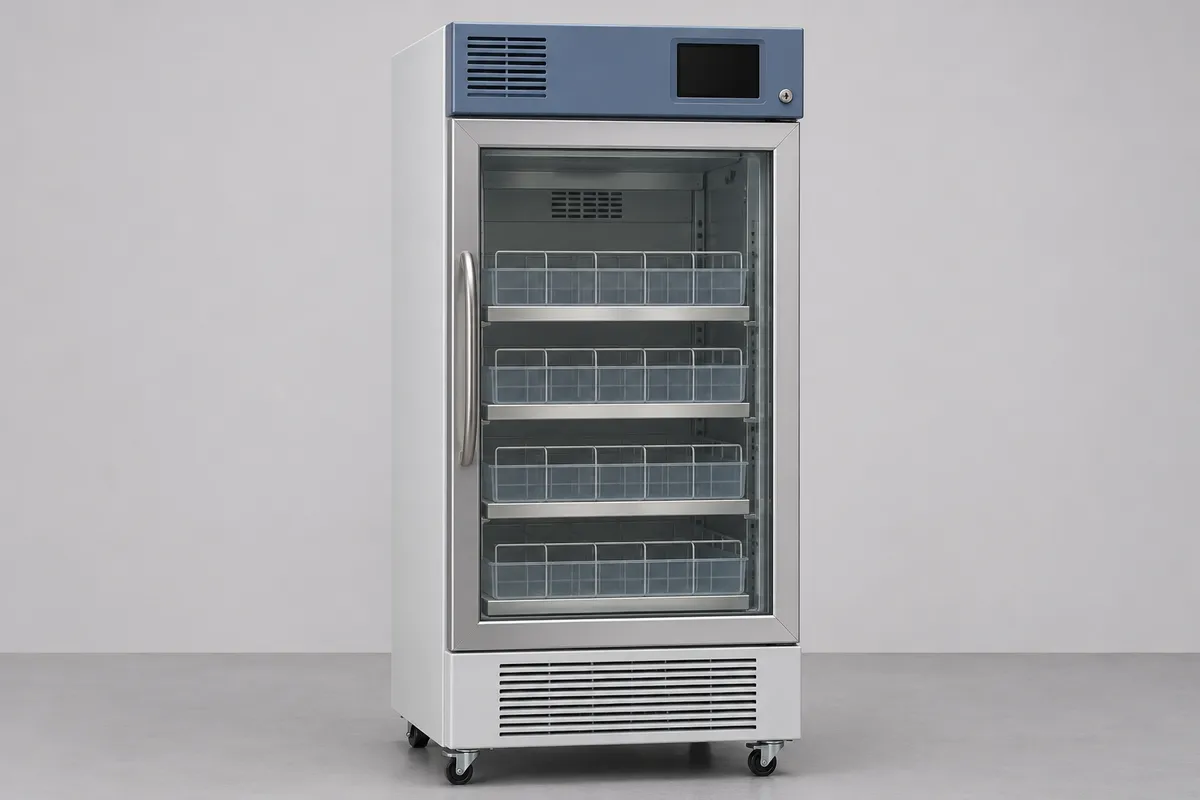
For qualification, list the cabinet ID, usable storage space, shelving arrangement and usual load condition. Identify the controller, alarm and separate monitoring probe by their own tags. Existing trend files with time stamps help relate a temperature excursion to the part of the cabinet affected.
Consider a cabinet whose door display agrees with the independent probe beside it. That comparison answers a question about the display. A temperature map that identifies a warmer upper shelf answers a different question about usable storage space. Identify both tasks if the quality team needs both records.
Specifications and service checks
During a door opening, the air probe responds sooner than a buffered probe. Put the traces on the same time axis and identify where each sensor sat. The two traces can describe the same event even when their peaks look different.
- Range and configuration
- The controller span describes the cabinet hardware. A qualification report identifies the approved operating band, usable space and configuration in the facility protocol.
- Manufacturers and models
- Helmer’s iBR245-GX has a published adjustable temperature range of +2 to +10 °C.
- What we check
- Compare the display with an independent probe. For a mapping study, record the temperatures at the specified positions through the agreed observation period.
- Reference equipment and accuracy
- Use calibrated temperature loggers with suitable uncertainty and a synchronised timebase. Identify any buffered probe and the shelf position of each reference.
- When to repeat the check
- Reassess uniformity after refrigeration or airflow changes. Use past excursions and the qualification plan to select the next survey.
Technical references Helmer Scientific product reference