
On this page
Piston pair and jacket pressure control
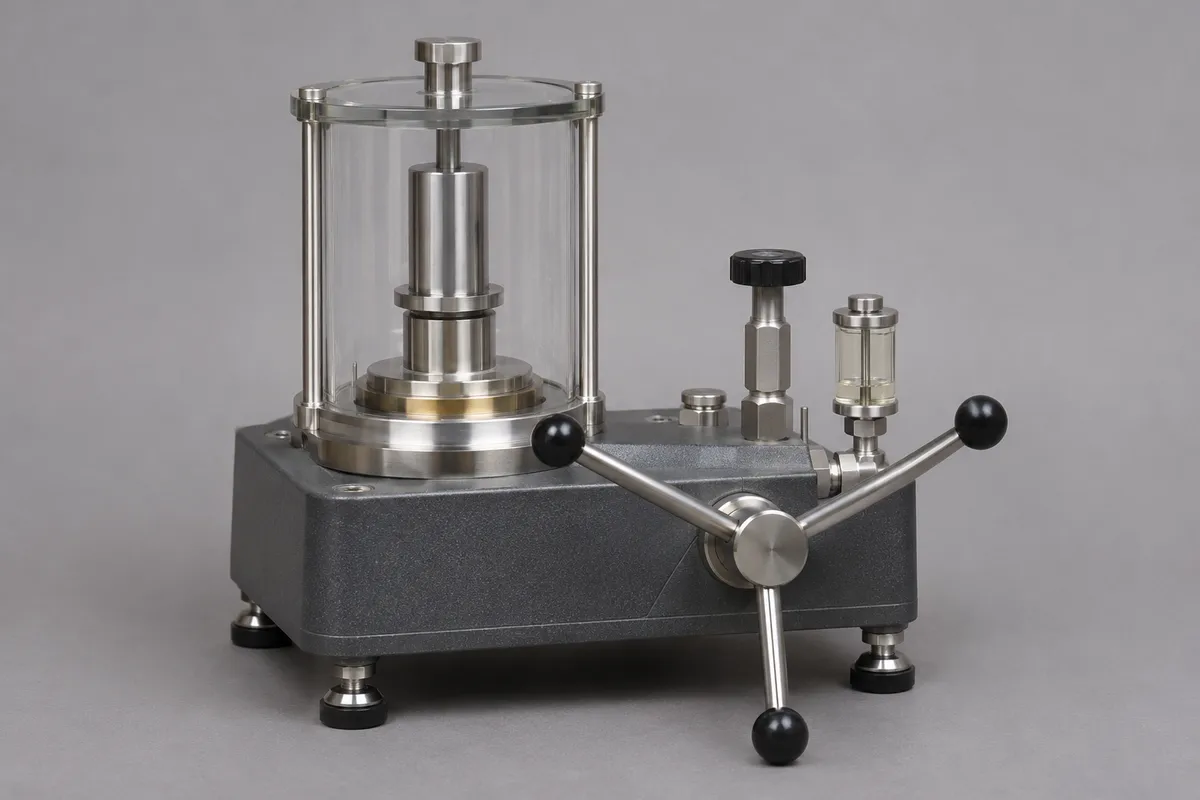
Identify the piston-cylinder pair, jacket control arrangement, pressure medium and operating range. Provide the earlier characterisation when comparing effective area results. A jacket setting copied from an unrelated cylinder will not describe the working condition of this assembly.
When a result sheet lists several jacket pressures beside a single nominal working pressure, keep each pair together. They describe different operating conditions of the cylinder. Averaging them into one unlabeled value would discard information needed to compare the assembly later.
Specifications and service checks
A high-pressure laboratory may use two different jacket schedules with the same piston. Put the schedule identity beside the piston-cylinder identity. Someone investigating a shift in results can then compare the pressure conditions that established the effective area.
- Range and configuration
- Nominal generated pressure and jacket operating range describe separate quantities. The certificate must specify the applicable effective-area model.
- Manufacturers and models
- NIST publishes an example of characterising a controlled-clearance piston gauge. Identify the actual piston-cylinder and jacket system by serial number.
- What we check
- Compare the pressure balance against a reference over its intended range, including the effect of controlled clearance on its effective area.
- Reference equipment and accuracy
- The uncertainty budget includes the reference pressure, masses, local gravity, temperature and characterisation of the piston-cylinder assembly.
- When to repeat the check
- Review after piston or jacket work and use intermediate comparisons to detect changes before the next full characterisation.
Technical references NIST controlled-clearance piston gauge study