
On this page
Vessel positions, shafts and attachments
Tell us which dimensions, speeds and temperatures your procedure specifies. We can report them against the numbered station and its fitted paddle, basket, shaft or vessel. If you change a shaft later, you can see exactly which station record to review.
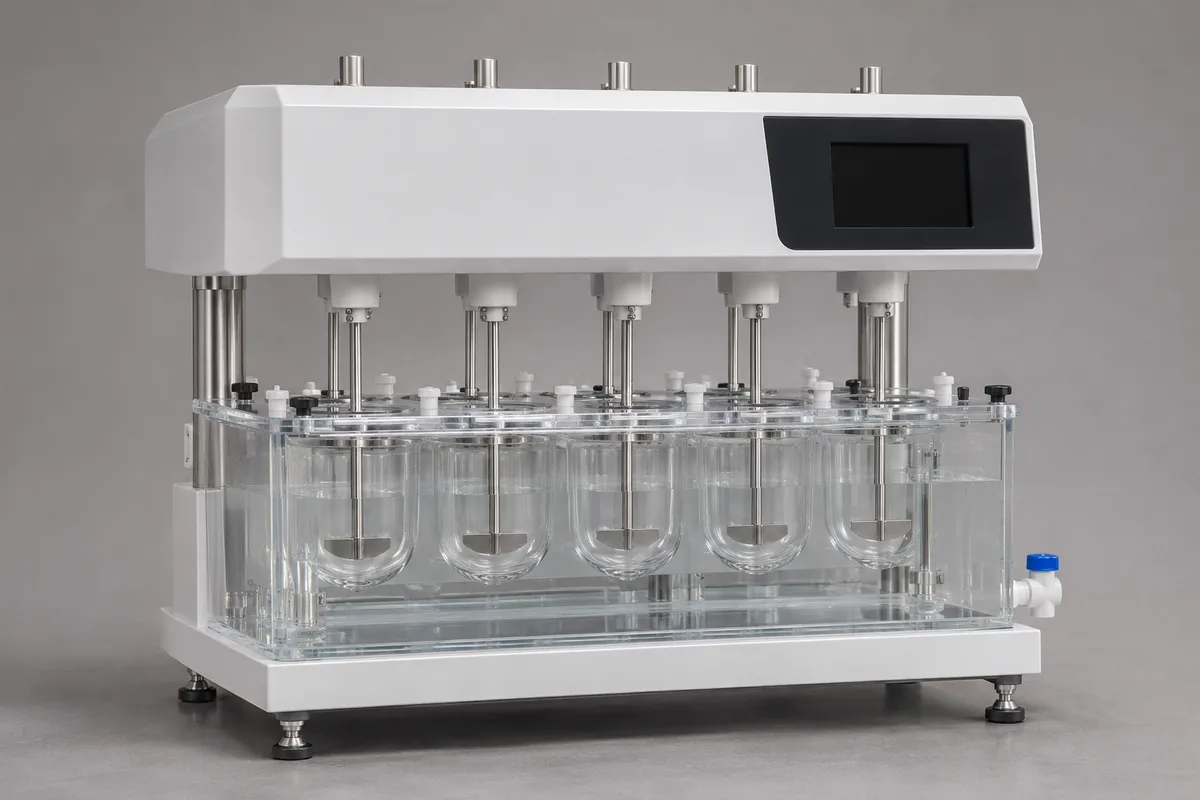
Dissolution apparatus positions and assemblies
Identify each station and the dimensions, speed, temperature or other parameters required by the protocol. Mechanical qualification and a performance test with reference material are different requests. Ask RTS to review the accepted method and reporting boundary before combining them on one quotation.
Specifications and service checks
One maintenance entry may cover six or eight positions on a bath. If a speed discrepancy was observed at the fourth position, retain that station number and its fitted shaft identifier. An average across the whole unit can conceal a difference at one station.
- Range and configuration
- Agilent’s 708-DS supports vessel settings including 100, 200, 1,000 and 2,000 mL. Report the installed vessel size, assembly type and stations actually in use.
- Manufacturers and models
- Agilent’s 708-DS has configurable vessel sizes and active station counts.
- What we check
- Check specified equipment quantities such as spindle speed, temperature, position or elapsed time against the applicable method. Label results by station so a single deviation can be traced.
- Reference equipment and accuracy
- Use traceable speed, dimensional, temperature and time references as required by the measurements ordered. Any method-level performance verification needs its own defined evaluation.
- When to repeat the check
- Review affected stations after spindle, vessel holder or heater work and follow the approved qualification schedule. Keep station changes with the previous results.
Technical references Agilent 708-DS manual