
On this page
Reference pull and the tape end fitting
Identify the end fitting, reference pull if specified and the intervals that matter on site. Note permanent creases or faded graduations. If a survey team relies on the last few metres, include lengths in that region as well as a shorter section near the origin.
A maintenance team may use the same tape around a roll and across an aisle. The first use follows a curved surface and the second may leave part of the tape unsupported. Describe the usual application when agreeing the pull and comparison lengths.
Specifications and service checks
A tape pulled round a soft insulation roll can compress it, while a tape stretched between fixed floor marks can sag. Describe which use gave the disputed length and whether the tape was supported along the measured section.
- Range and configuration
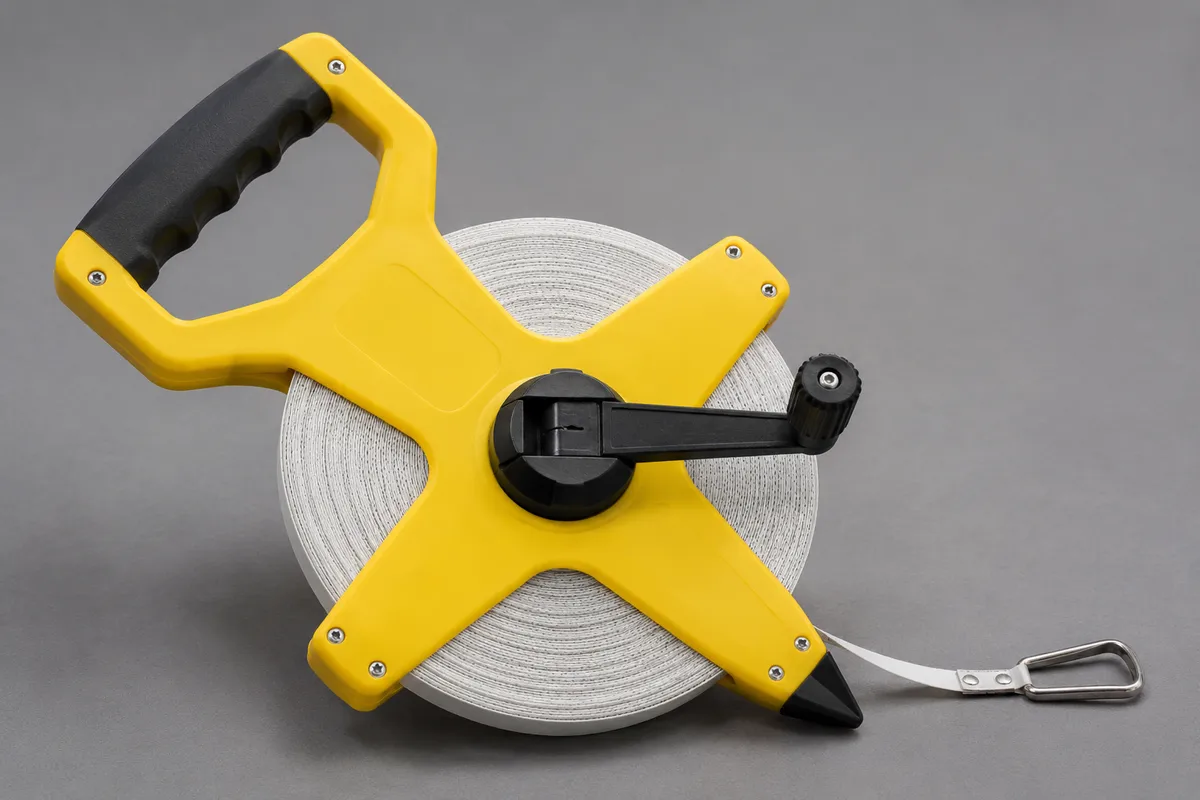
- Stanley’s 34-762 PowerWinder is a 300 ft fibreglass tape. The working length, temperature and applied tension matter when checking a long span.
- Manufacturers and models
- Stanley PowerWinder 34-762 is one long fibreglass model. Record whether graduations begin on the ring or the tape body.
- What we check
- Compare graduations against a traceable length reference under an agreed tension and support condition. Check the zero at the hook or ring as actually used.
- Reference equipment and accuracy
- Use a calibrated tape bench or reference tape with its corrections, plus a means to establish pull. Match the method to the manufacturer’s reference conditions for the tape material.
- When to repeat the check
- Inspect for stretching, damaged fibres and a loose end fitting. Check after the tape has been pulled hard around a corner or used under sustained tension.
Technical references Stanley Durable Tape Measures for Every Project · CC-4643 calibration scope, page 18