
On this page
Drop height, timing and mould dimensions
When a flow result changes, note which part of the apparatus changed with it. A replacement mould affects the initial shape, while a worn mechanism can change how far the table drops. For a hand-operated table, send the drop height and count in the method. If the machine runs a timed motor cycle, include the time and drop count your operator uses.
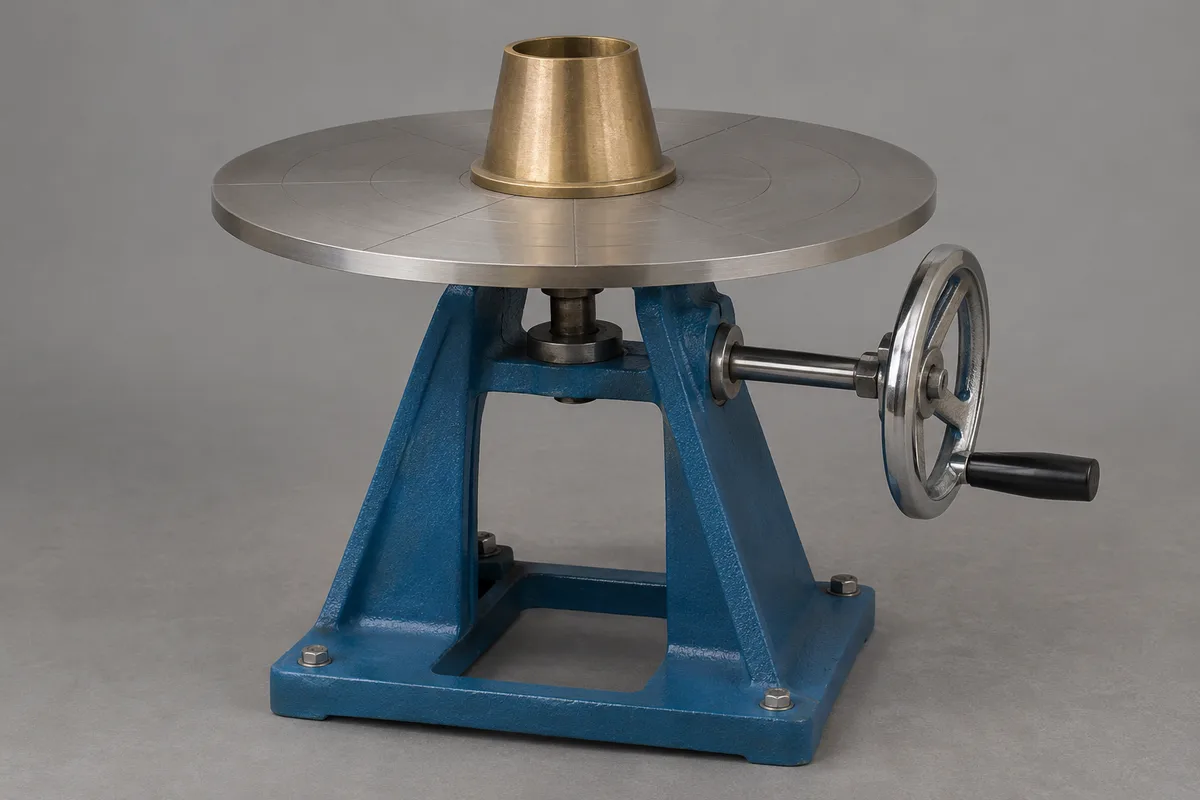
Flow table and its mould
Identify the table, mould and any drop or movement mechanism. List the dimensions, lift, movement count or timing that your procedure controls. RTS measures the table’s specified motion with the load and mould configuration recorded.
Specifications and service checks
A counter may register every cycle even when the lift or drop height has changed. If spread results have shifted after maintenance, ask for the mechanical travel and cycle timing as separate observations.
- Range and configuration
- Its table diameter is 762 mm. Identify whether the order is for a concrete spread table or a cement-mortar flow table before selecting tolerances.
- Manufacturers and models
- Matest C208 is a round, motorised concrete flow table.
- What we check
- Check the relevant tabletop geometry, lift/drop height and cycle count for the specified design. Report measured spread on a specimen separately.
- Reference equipment and accuracy
- Use a calibrated length or height reference and an independent counter or timer for driven models. The mould has its own dimensional checks.
- When to repeat the check
- Recheck drop height and geometry following wear or replacement of the cam, hinge or stop.
Technical references Matest product reference