
On this page
Gas basis and operating range of the head
Record the head model, controller channel, gas basis and pressure range used in production. Note whether another head takes over on pump-down. Identify any head or filament change since the previous comparison so the old and new records can be interpreted together.
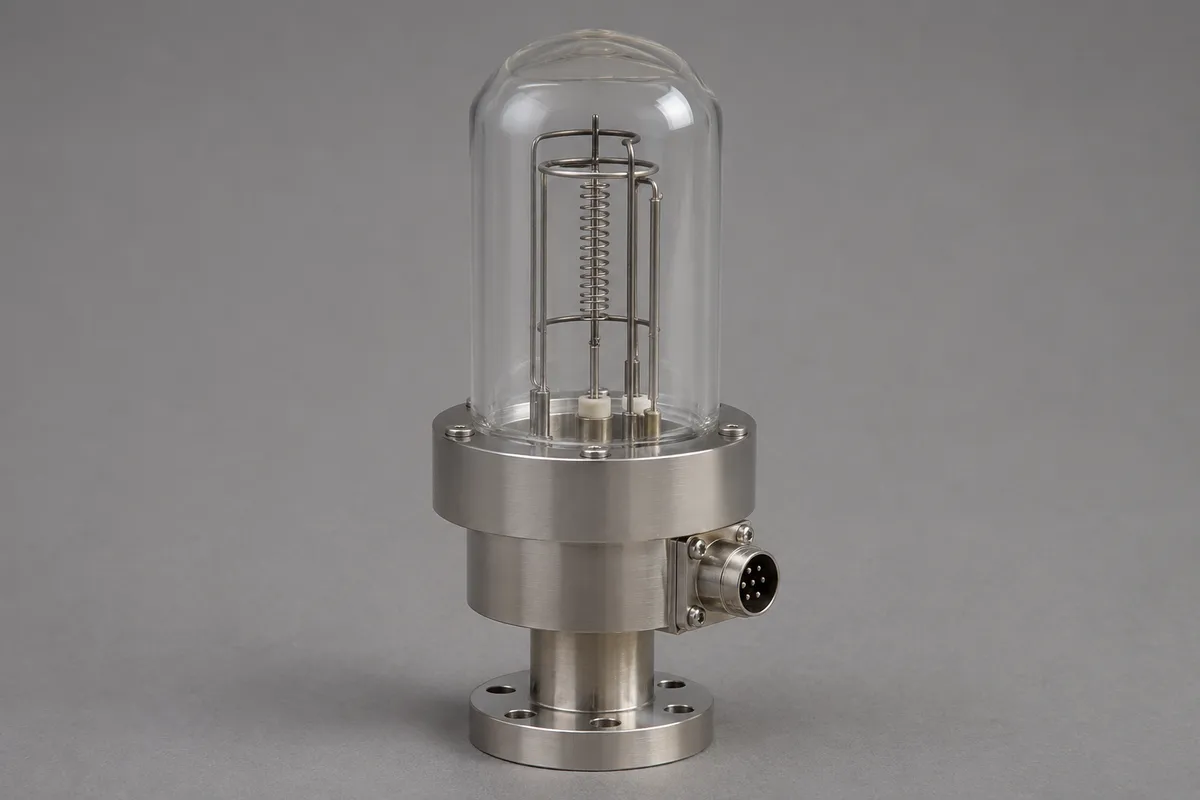
Hot cathode gauges
Include filament history where it affects the current configuration and record any previous sensitivity factors. RTS calibrates the hot cathode gauge at the specified pressure points and gas conditions, recording the applicable sensitivity factors and controller settings.
Specifications and service checks
A vacuum system may retain a history from before a filament was changed. Mark the date and filament selection used for each run you want compared. That preserves the identity of the sensing element even when the head and controller serials stayed the same.
- Range and configuration
- Quote the required high-vacuum decades and the calibration gas. An ion-gauge reading depends on gas species.
- Manufacturers and models
- Pfeiffer Vacuum ITR 90 is a combined gauge with a hot-cathode measuring section. The measuring principle changes across its range.
- What we check
- Compare the complete gauge and readout with a calibrated vacuum reference over its ionisation range. State the gas sensitivity convention on the report.
- Reference equipment and accuracy
- Use a calibrated vacuum transfer gauge appropriate at the selected pressures. Check reference stability and the background pressure contribution.
- When to repeat the check
- Reassess after a filament change or contamination. Record the head serial number to keep later comparisons meaningful.
Technical references Pfeiffer Vacuum ITR 90 instructions