
On this page
Matching piston, carrier and masses
Include the piston range, mass set, carrier, pressure fluid and working reference level. If the same base takes high- and low-pressure pistons, list each combination actually used rather than treating the base serial number as the whole standard.
A gauge positioned above the piston reference level sees less liquid pressure than at that reference level. Keep both heights in the setup record. A change of adapter or stand between visits can alter the head correction without any change to the weights.
Specifications and service checks
Some plants keep separate hydraulic balances for different operating fluids. Identify the fluid normally in the unit and any restrictions on mixing. A return to service after a fluid change can raise a compatibility or settling question alongside the pressure comparison.
- Range and configuration
- A dual-range piston has two effective areas. The order should identify the piston range and the mass combinations used for each pressure point.
- Manufacturers and models
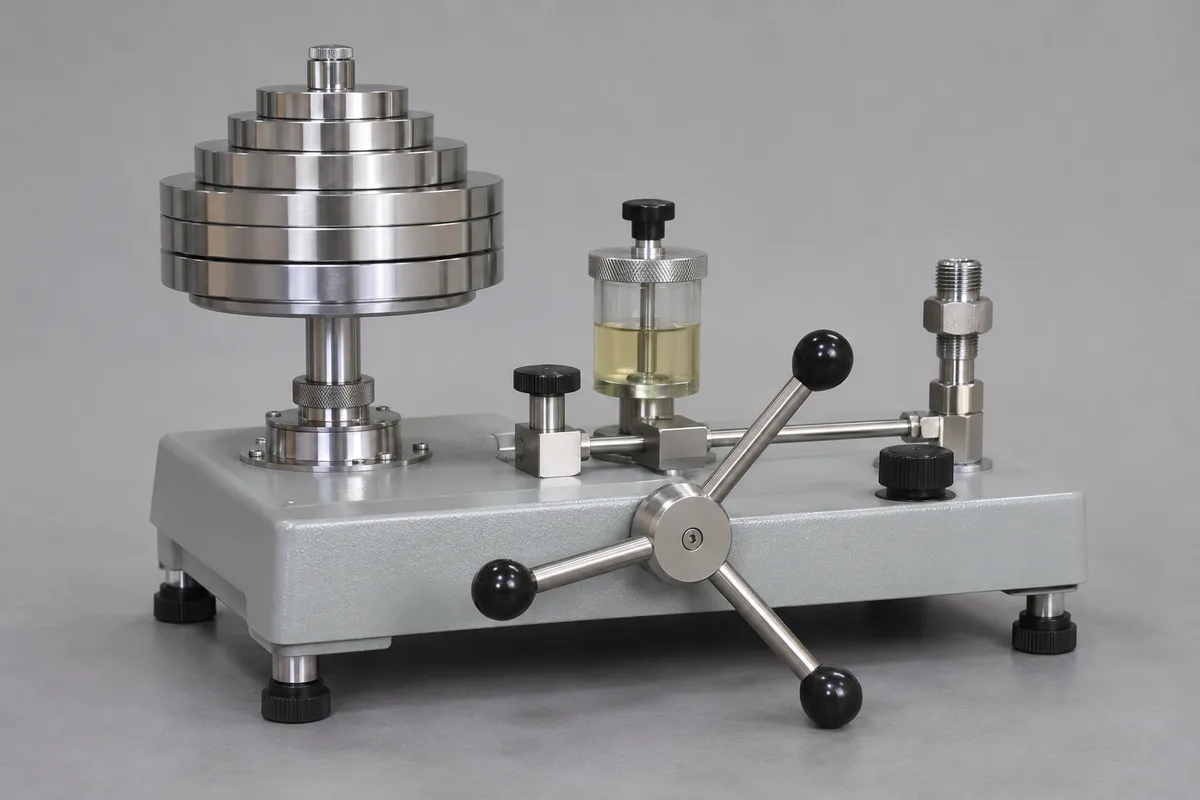
- WIKA CPB5800 is a hydraulic pressure balance. Confirm the fitted piston-cylinder range and the matching weight set.
- What we check
- Compare the pressure realised by the oil-operated piston at the working loads with a reference pressure balance or controller. Record the pressure reference level and the oil used.
- Reference equipment and accuracy
- Master piston-cylinder data and individually calibrated masses contribute to the reference. Fluid density, local gravity and temperature affect the result.
- When to repeat the check
- Keep separate records for masses and the piston. A changed piston-cylinder pairing or damaged weight calls for an earlier comparison.
Technical references CPB5800 Dead Weight Tester - WIKA USA