
On this page
Which shelves and temperatures do you use?
If racks move between jobs, number the shelf positions from a fixed point such as the lowest runner in the cabinet. That gives you a consistent location to compare even after a tray or its label has been replaced.
Two departments borrowing the same oven may use different shelves and hold temperatures. Give each working condition its own entry on the request and name the department that needs the result. A single centre-point check may satisfy one department while leaving the other department's requirement open.
Specifications and service checks
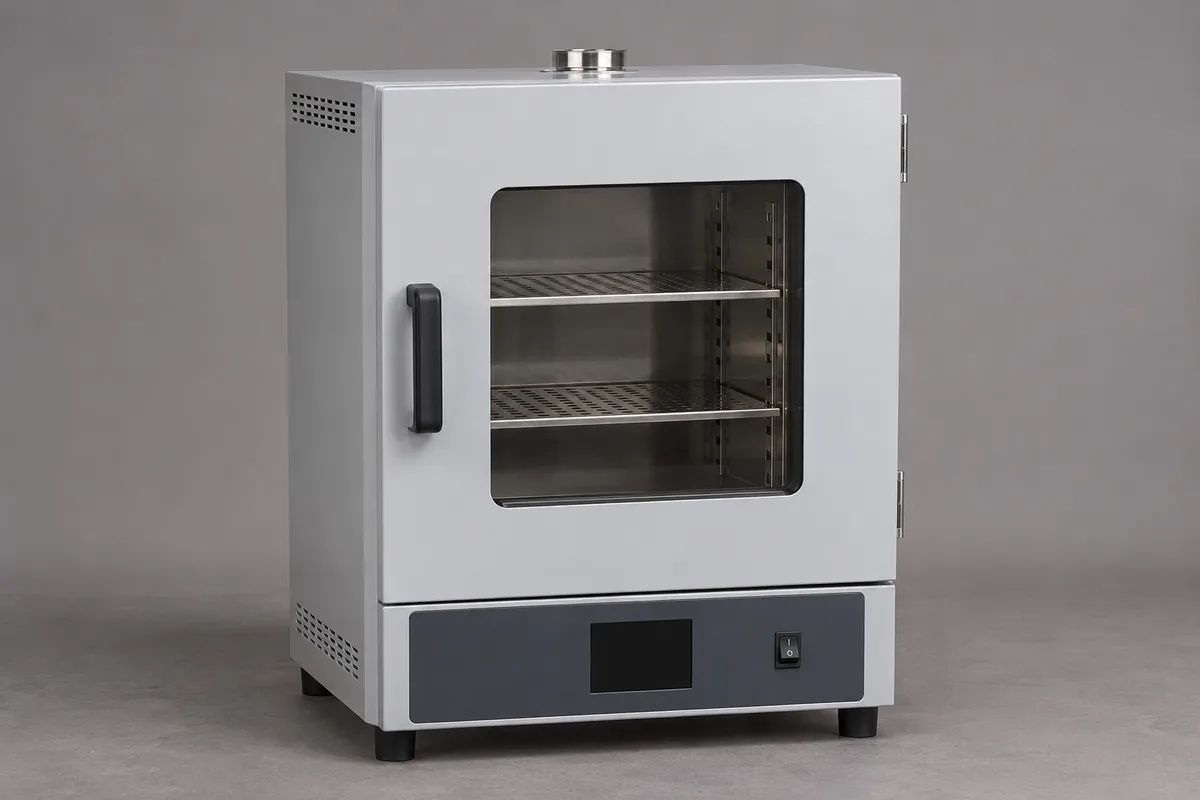
A small oven may have one shelf used for samples while a second shelf carries only a reference logger. Draw that distinction on the layout before asking for a comparison. It helps the reviewer judge whether either reading represents the space used for routine work.
- Range and configuration
- Memmert’s UF110m is specified from 10 °C above ambient to +300 °C. Despatch lists +204 °C as the upper temperature for its LBB forced-convection oven. Model and airflow design matter.
- Manufacturers and models
- Memmert UF and Despatch LBB are examples of forced-convection ovens for laboratory or production work.
- What we check
- Compare the display with temperatures measured at agreed shelf positions. Record the load, fan setting and useful volume so a repeat job can reproduce the arrangement.
- Reference equipment and accuracy
- A calibrated multipoint thermometer or logger measures differences across the oven. Include sensor uncertainty and temporal variation when assessing the specified temperature tolerance.
- When to repeat the check
- Check after fan replacement, door-seal repair or shelf layout changes. An ongoing control-point check helps decide the interval for a full temperature map.
Technical references Memmert UF110m specifications · Despatch LBB forced-convection ovens