
On this page
Identifying the garment and the areas inspected
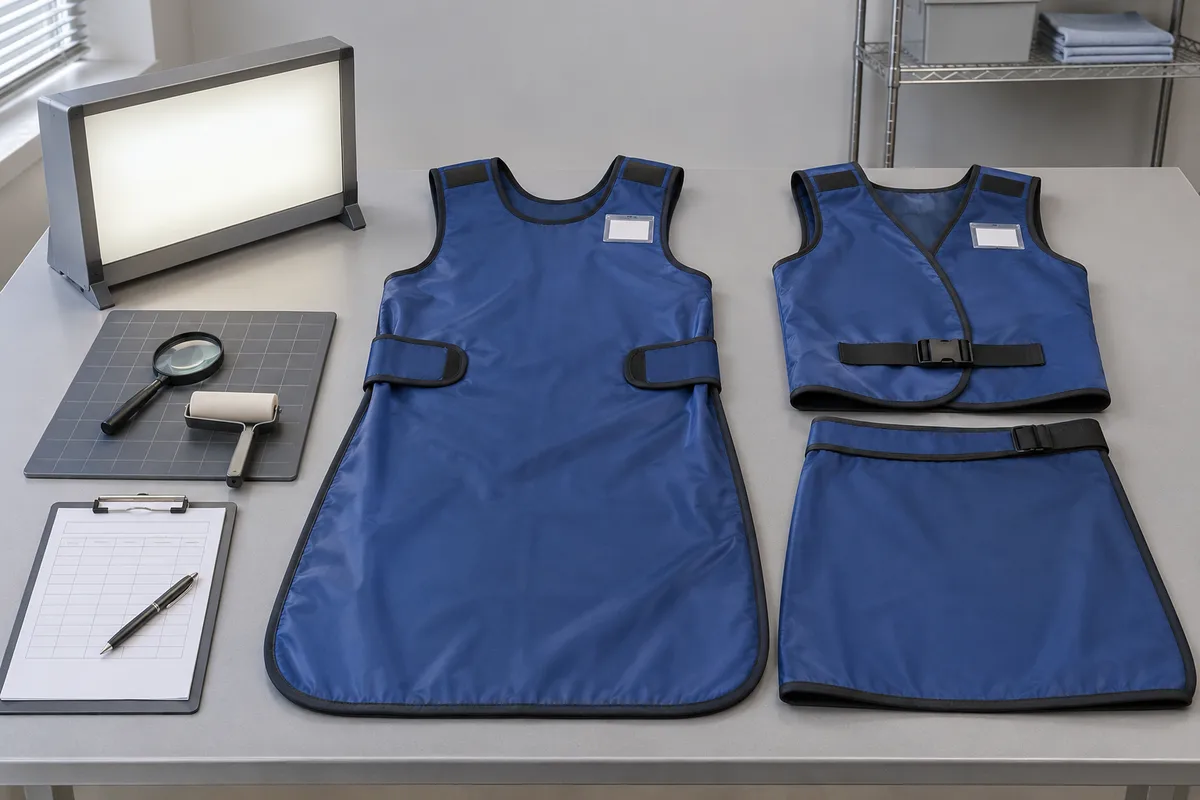
A two-piece set may have a vest in one department and a skirt in another. Give each piece its own identifier and describe any concern by panel and position, for example ‘left front panel near the fastening’. Supply the protection marking exactly as printed on the garment. The resulting inspection record can then be matched to your facility’s authorised radiation protection programme.
Lead apron inspection records
Record its identifier, stated protection specification and the inspection question raised by the department. RTS inspects the specified protective features and records the location and nature of the findings against the apron identifier.
Specifications and service checks
An apron with a detachable thyroid collar has two pieces that can be separated in stores. Give each piece an identifier and label left and right on the inspection record. This lets the hospital locate a reported area when the garment is returned.
- Range and configuration
- Ratings such as 0.25, 0.35 or 0.50 mm Pb equivalent describe attenuation under specified conditions. Front and rear panels may have different ratings.
- Manufacturers and models
- INFAB offers aprons with several specified levels of lead equivalence.
- What we check
- Identify each panel and closure, inspect condition and have the authorised imaging team assess integrity under its protective apparel programme.
- Reference equipment and accuracy
- Use the approved imaging and comparison arrangements for the examination. Physical fabric thickness measured with a caliper cannot establish lead equivalence.
- When to repeat the check
- Keep an inspection history by garment ID. Creases, torn closures and suspected damage should trigger review between scheduled inspections.
Technical references INFAB product reference