
On this page
Target pattern and non-contact speed readings
Identify the sensing method, target pattern and speed range. For a fixed machine pickup, include the number of teeth or marks observed per turn. If the readout alone is sent in, a simulated input checks a different arrangement from the complete pickup and readout.
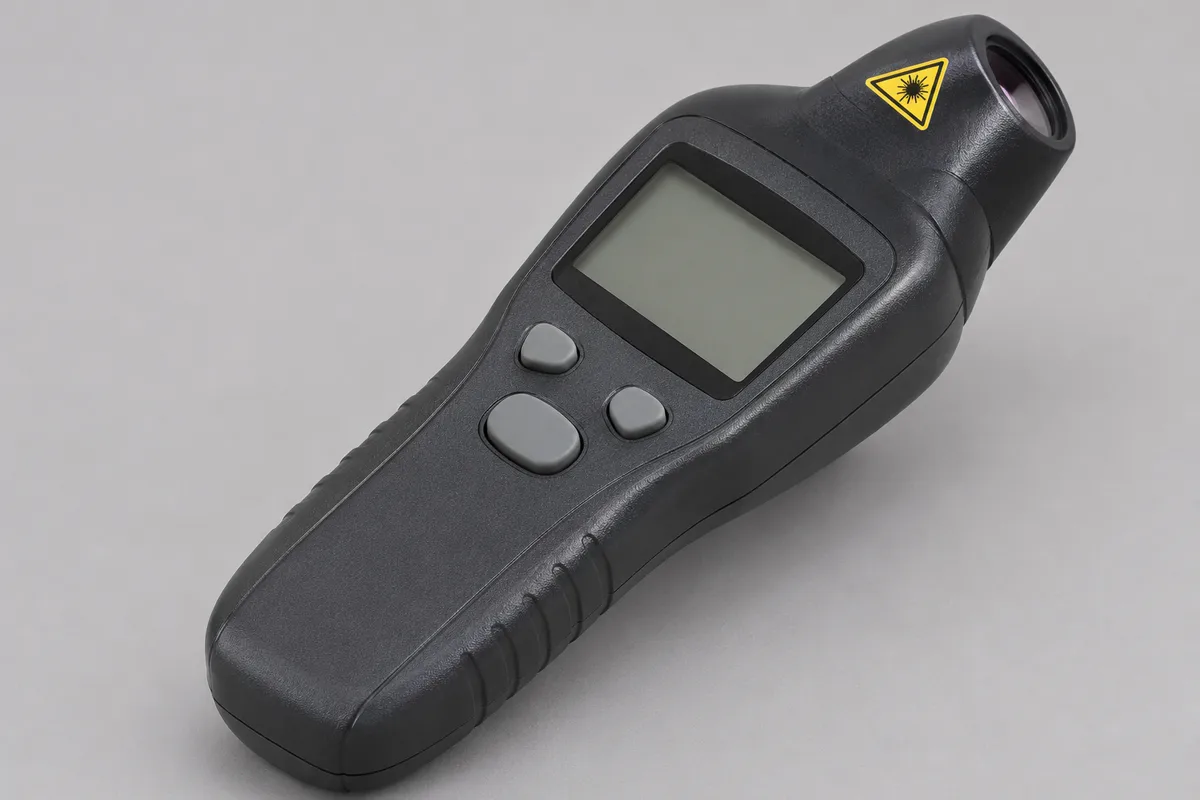
A fixed pickup facing a toothed wheel may deliver one pulse per tooth. A handheld optical meter on a single shaft mark sees one event per rotation. Comparing raw pulse counts without those factors can make two sound instruments appear to disagree.
Specifications and service checks
For a wheel indexed once per revolution, a non-contact pickup may produce a brief pulse at low speed and a much more frequent pulse train at operating speed. If the display drops out only at one end, include the working distance, target feature and speed region where that happens.
- Range and configuration
- One pulse per revolution at 60 Hz represents 3,600 rpm. Extra reflective marks or a different pulses-per-revolution setting change the conversion.
- Manufacturers and models
- Fluke 930 and 931 have an optical mode spanning 1–99,999 rpm. The figure applies to optical speed measurement under the manufacturer's conditions.
- What we check
- Compare the optical response with a rotating target or a characterised light signal. For an inductive or magnetic-pickup version, use the correct target or separately validate the pickup conversion and pulse-counting electronics.
- Reference equipment and accuracy
- Use a calibrated rotational speed standard for the complete pickup and display. A traceable electrical pulse source can check the counter alone if its pulses-per-revolution setting is known.
- When to repeat the check
- Check target detection between calibrations and review after sensor damage or persistent unstable readings.
Technical references Fluke 930 and 931 tachometer manual