
On this page
Mark count and optical working distance
Give the normal mark count, optical head and working distance if a fixture fixes its position. Specify the rpm values used on the machine and whether the check is of the optical path or a separate electrical pulse input on the same unit.
On a pulley with two reflective marks, an optical head configured for one mark can count twice per turn. If the reading jumps after pulley replacement, record the target pattern alongside the observed rpm before altering the instrument settings.
Specifications and service checks
A reflective patch close to a shiny coupling can produce more than one optical return per turn. If the reading intermittently doubles, describe the surface and the number of visible patches. A uniform reference target provides a different optical condition from the machine.
- Range and configuration
- One pulse per revolution at 60 Hz represents 3,600 rpm. Extra reflective marks or a different pulses-per-revolution setting change the conversion.
- Manufacturers and models
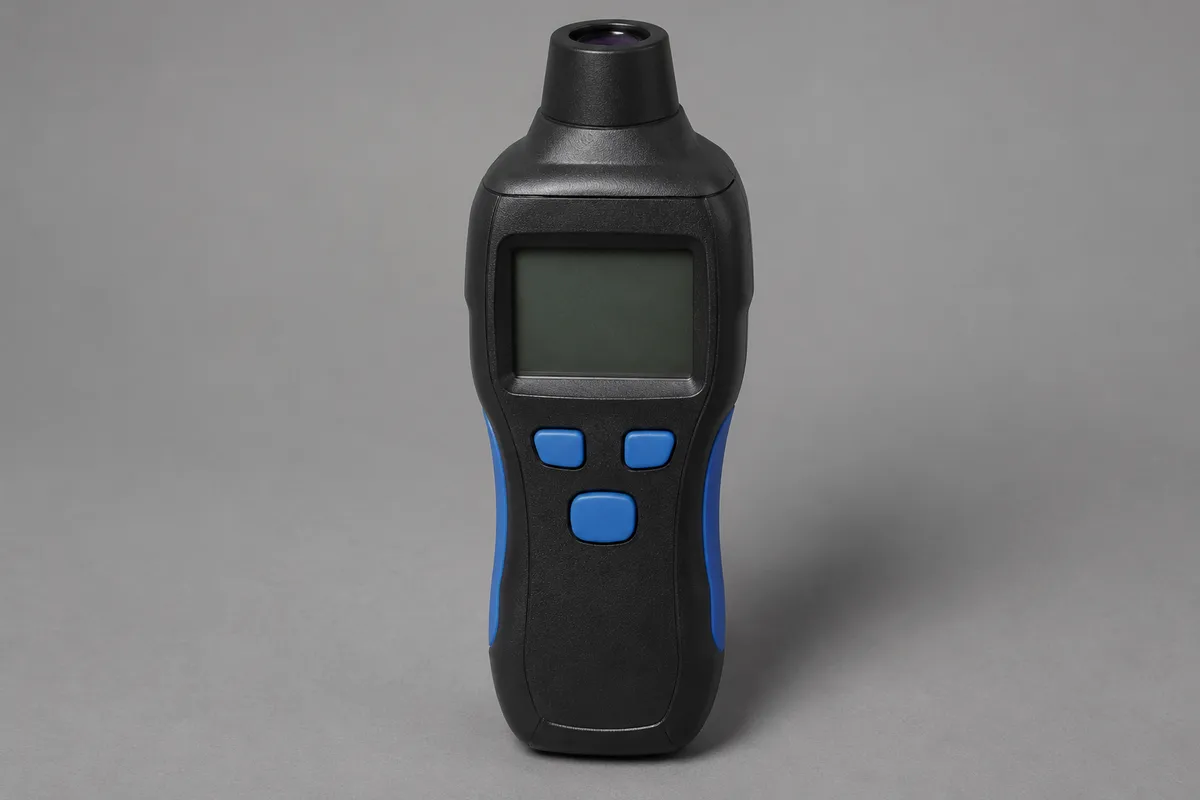
- Fluke 930 and 931 have an optical mode spanning 1–99,999 rpm. The figure applies to optical speed measurement under the manufacturer's conditions.
- What we check
- Verify indicated rpm against known optical pulse rates or a reference disc with a single reflective target. State the pulse-to-revolution conversion when using a simulator.
- Reference equipment and accuracy
- Use a reference speed system or optical simulator with traceable timebase and a known number of pulses per revolution.
- When to repeat the check
- Check target detection between calibrations and review after sensor damage or persistent unstable readings.
Technical references Fluke 930 and 931 tachometer manual