
On this page
Transfer legs or a direct-reading scale?
Tell us which type you have and the range of outside diameters normally inspected. Note the shape of the ends and any locking screw used to retain an opening. If a setter uses a particular master, identify it alongside the caliper.
A transfer caliper used on turned stems might be set from a ring-shaped part and then read across the tips with a rule. If an acceptance decision depends on a narrow tolerance, record the reference instrument used for that final reading.
Specifications and service checks
When a transfer caliper is set across a shaft, its leg opening must survive the move to a reference scale or micrometer. If the legs spring apart during transfer, repeatability of the operator’s setting becomes part of the comparison.
- Range and configuration
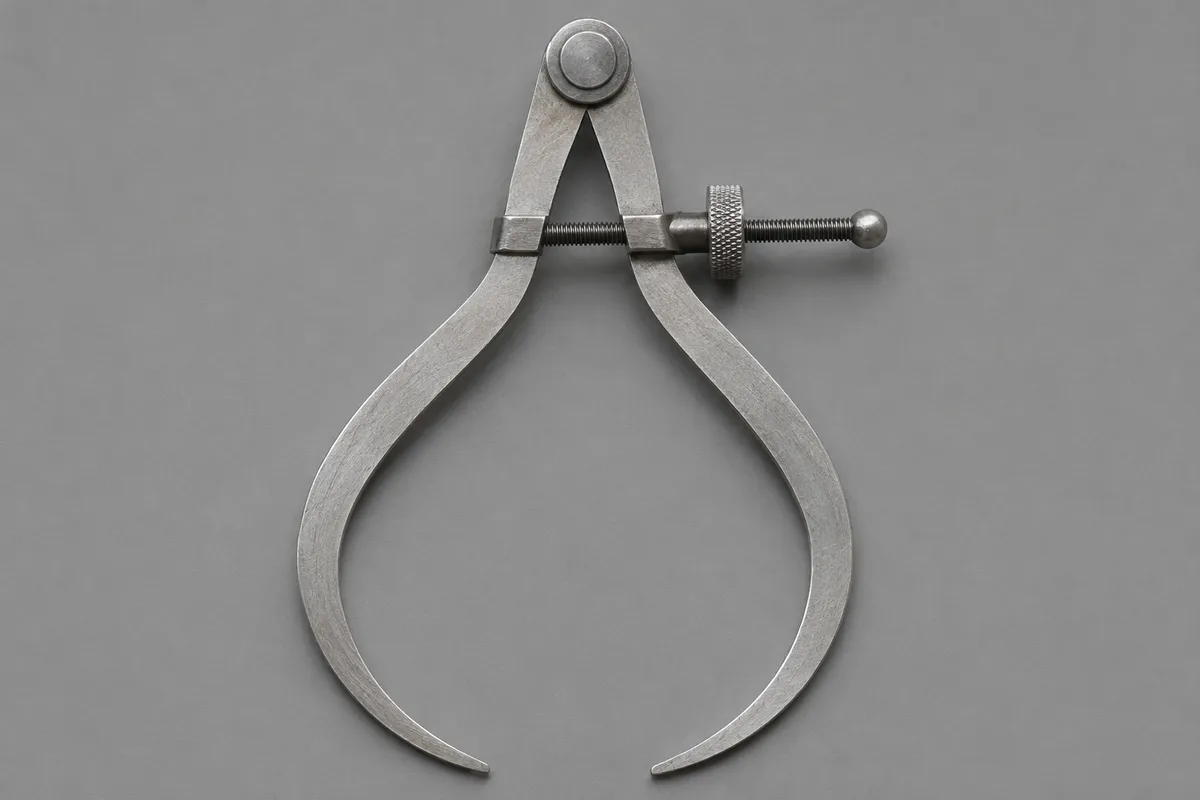
- The Starrett Series 79 example has a 4 in nominal size, listed as approximately 100 mm. It transfers the external dimension through its legs and does not have a graduated reading scale.
- Manufacturers and models
- Starrett’s 79 Series Yankee spring-type outside calipers have flat legs and a quick spring nut.
- What we check
- Set the tips around a known external size, withdraw the caliper and compare the transferred opening. Report the transfer comparison and setting retention rather than a scale error.
- Reference equipment and accuracy
- Use a calibrated length or cylindrical master and a suitable independent readout. Contact pressure and tip shape contribute more if the part has a small radius.
- When to repeat the check
- Inspect the spring, adjustment nut and tips after a drop or loss of holding force. Recheck the independent readout under its own recall schedule.
Technical references Starrett Outside caliper reference