
On this page
Trace direction on the reference patch
List the nominal parameter, marked evaluation area and trace direction. If your instrument uses a particular filter or cut-off for this specimen, include those settings. Mark any damaged line or heavily traced area so an old wear track is not mistaken for representative texture.
A turned comparison coupon with a nominal finish stamped on it should be identified as a surface comparison piece. A certified instrument-check specimen with assigned Ra or Rz values needs its own parameter, reference area and previous certificate details.
Specifications and service checks
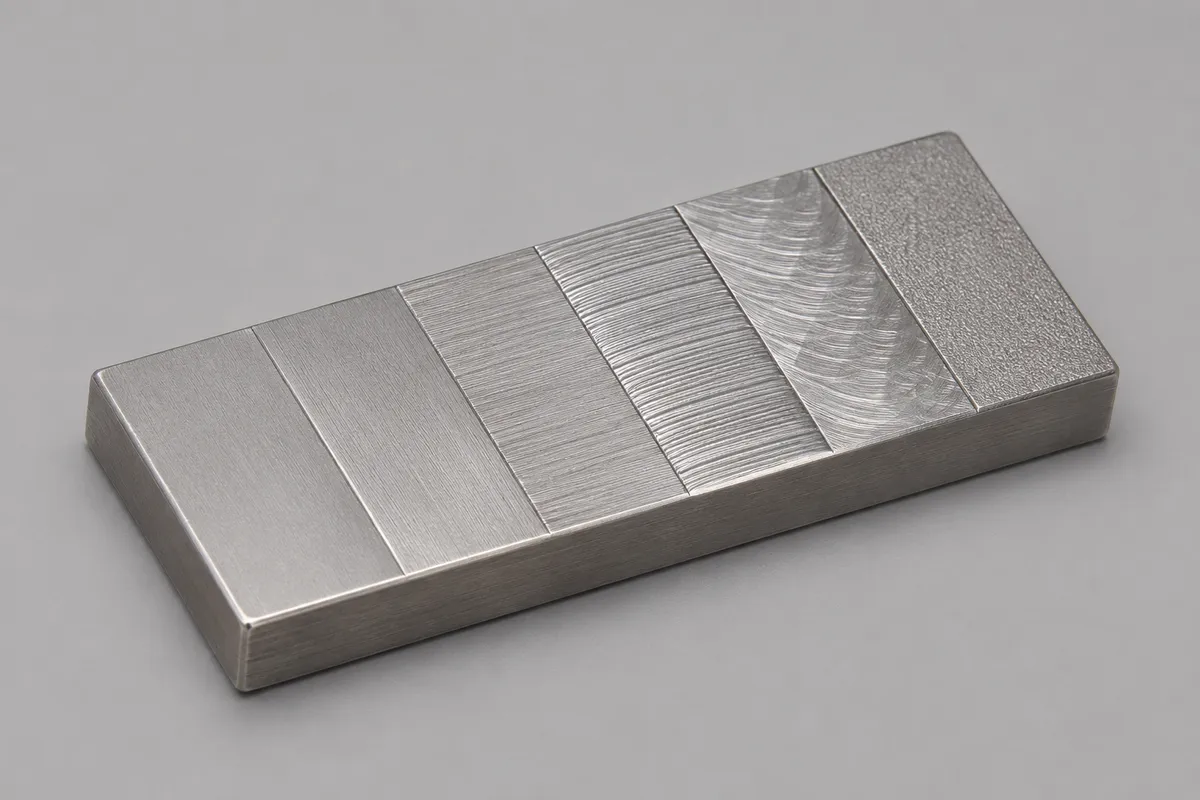
A multi-patch plate may have the same nominal Ra on two patches made by different processes. Mark the patch and traverse direction. A turned pattern and a ground pattern can look different even at a similar average roughness.
- Range and configuration
- A roughness specimen carries an assigned parameter such as Ra in µm for a stated cutoff and direction. Several patches on a plate can have different nominal values.
- Manufacturers and models
- Mitutoyo’s Surftest SJ-210 is an example of a reading instrument used with a suitable specimen. The specimen itself needs its own identification.
- What we check
- Measure traces in the designated area with a calibrated profilometer. Report the parameter, spread of results, filtering and evaluation length for that patch.
- Reference equipment and accuracy
- Use a calibrated surface profile instrument and appropriate step-height or roughness references with traceable values. Resolve the permitted uncertainty without crossing damaged tracks.
- When to repeat the check
- Re-examine scratched or worn patches and keep a record of which areas are used. Handle comparative finish plates separately if they have no assigned quantitative values.
Technical references Mitutoyo Surftest SJ-210