
On this page
Resistance output and its temperature equivalent
Some jobs require the resistance actually produced, others require the temperature equivalent shown on a configured reader. State the result you need and the wiring used. An incorrect lead arrangement can matter even when the dialled temperature is right.
For example, selecting Pt100 and zero degrees Celsius corresponds to a nominal 100 ohms. Selecting Pt1000 at the same temperature corresponds to 1000 ohms. An order that says only “check at zero” leaves the intended electrical output ambiguous even though the displayed temperature is identical.
Specifications and service checks
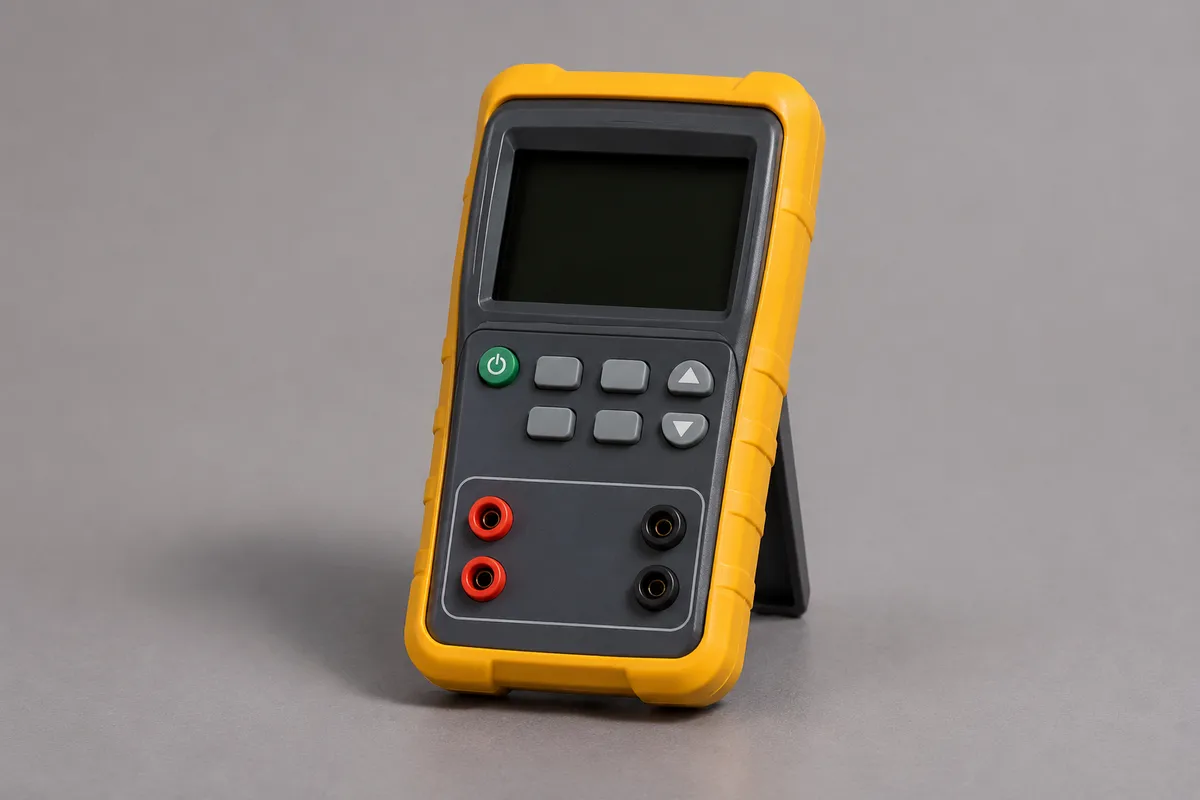
A simulator set to a platinum curve may have an output in ohms as well as a temperature display. If it is used to test a panel input, record the selected curve, wiring arrangement and simulated temperature. Those settings define the resistance the panel should receive.
- Range and configuration
- A simulated temperature corresponds to a resistance on a specified sensor curve. Identify whether the receiving input expects Pt100, another nominal resistance or a different coefficient.
- Manufacturers and models
- Fluke’s 712B measures and simulates RTDs. Its product sheet lists the supported sensor types.
- What we check
- Compare the delivered resistance at selected settings with an independent reference. Include the connection scheme and the receiving instrument’s excitation where it affects the result.
- Reference equipment and accuracy
- Use a traceably calibrated resistance meter or bridge suited to the source. Its uncertainty and lead compensation need to support the smallest tolerance requested.
- When to repeat the check
- Keep checks at resistance values corresponding to your usual temperatures. Review the interval if the lead set changes or the output becomes unstable.
Technical references Fluke 712B and 714B specifications · BIPM guide to industrial platinum resistance thermometers