
On this page
Rotor identity and the gas in use
Send the rotor identity, head and controller details, gas used and available record of the accommodation coefficient. State whether the enquiry concerns the head with its existing rotor or a replacement assembly, and identify the pressure interval of interest.
The controller can stay in a vacuum laboratory for years while a rotor is changed during service. If two certificates disagree, check the rotor identification and the coefficient used for each certificate before treating the change as drift. A record headed only with the controller number loses that link.
Spinning rotor gauges
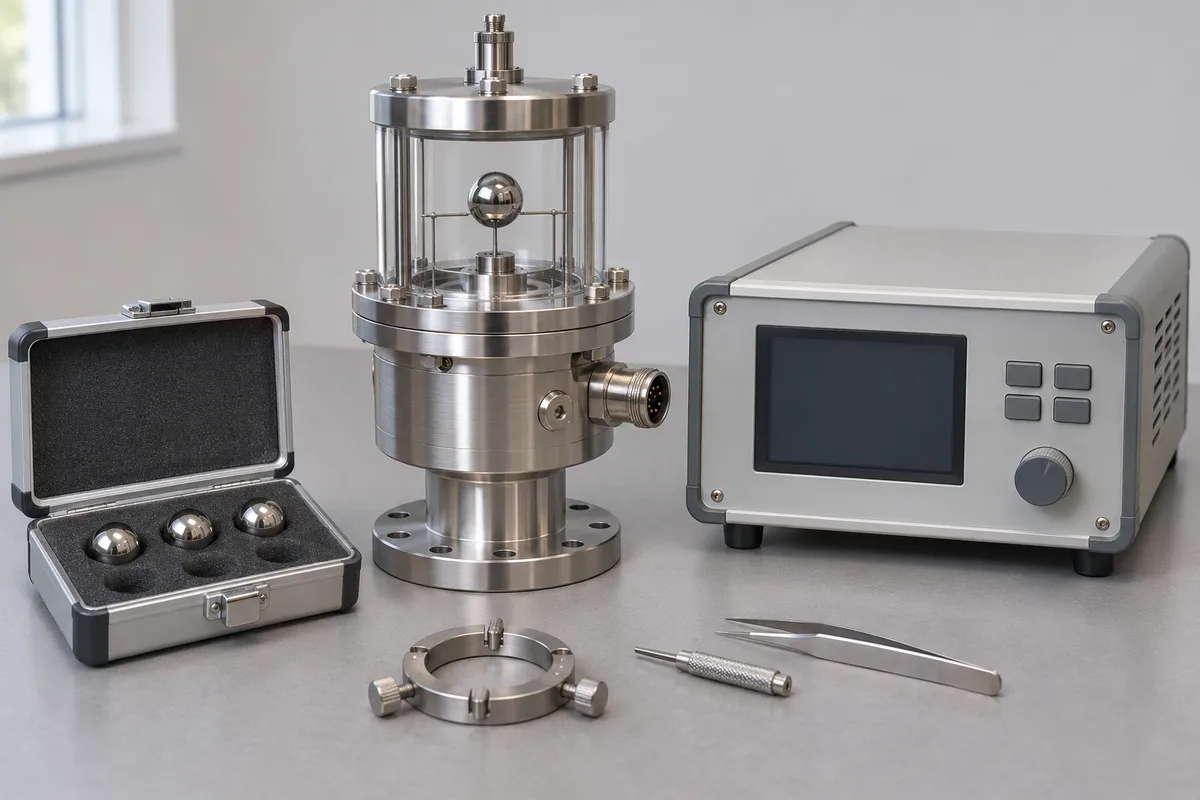
State the gas, requested pressure points and the reference role it serves in your laboratory. Keep transport and installation instructions with the kit. RTS compares the spinning rotor gauge with a pressure reference and reports the gas, orientation and assigned factors used.
Specifications and service checks
If the rotor controller reports a change after its tube was remounted, retain the date and orientation used each time. On this type of gauge a change to the residual drag contribution can matter particularly near the low end. A single pressure display conceals that history.
- Range and configuration
- The useful range is expressed in vacuum-pressure decades. Residual drag becomes increasingly important near the lower end.
- Manufacturers and models
- MKS SRG-3 is a spinning-rotor vacuum gauge. The rotor ball and head belong in the service record.
- What we check
- Determine the response of the rotor against a vacuum reference for the selected gas. Include the residual drag correction used in reporting pressure.
- Reference equipment and accuracy
- A traceable vacuum transfer standard, temperature measurement and rotor-specific sensitivity data are needed. Gas identity is part of the comparison.
- When to repeat the check
- Check the reference data after exchanging or disturbing the rotor, and review the interval against residual-drag history.
Technical references SRG-3 Spinning Rotor Gauge System