
On this page
Syringe selection and delivery settings
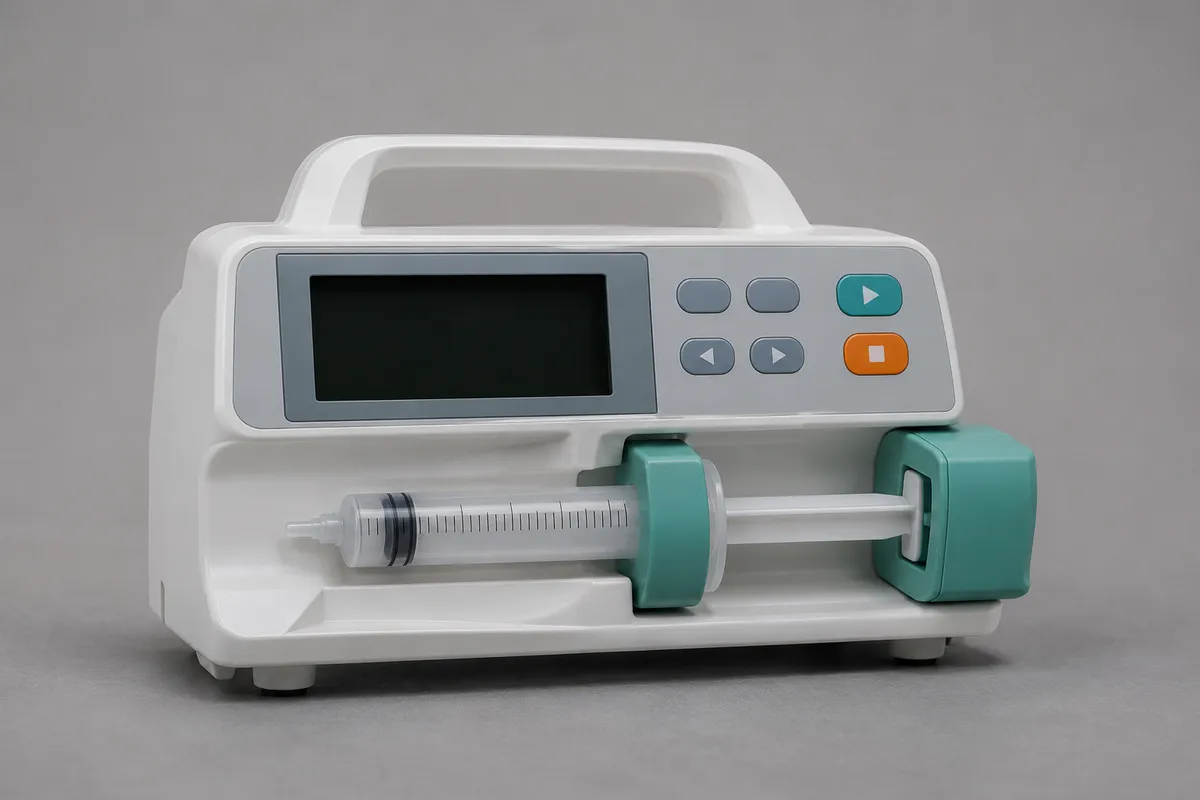
Identify the pump channel, syringe selection and delivery settings specified by biomedical engineering. Include the duration over which the independent volume or flow reading is obtained. A separate line can capture an occlusion-alarm check and its pressure result when required.
Suppose the engineering worksheet specifies a delivery rate but records only the final collected volume. Adding the start and finish times lets the reviewer calculate the mean rate over that interval. Keep the selected syringe brand and size beside those readings, especially when two models are tested in succession.
Specifications and service checks
A bench worksheet showing a syringe capacity can still omit the syringe profile selected in the pump menu. Capture both the physical syringe identification and menu selection when trying to reproduce a delivery discrepancy.
- Range and configuration
- The manual lists 0.1–150 mL/h with a 5 mL syringe and 0.1–1,200 mL/h with a 50 mL syringe. These examples describe device settings for identifying the bench range.
- Manufacturers and models
- In BD’s Alaris PK Plus specifications the programmable flow span depends on syringe size. B. Braun also supplies the Spaceplus Perfusor syringe pump.
- What we check
- Record the syringe make, size and fixture used when comparing delivery with a calibrated infusion analyser or gravimetric reference.
- Reference equipment and accuracy
- Choose a flow reference or balance and timebase with suitable low-rate uncertainty. Keep drive travel, delivered volume and occlusion pressure as separate test results.
- When to repeat the check
- Review results following drive or clamp repair and when a new syringe configuration is introduced.
Technical references BD product reference · B. Braun product reference