
On this page
Reading the two liquid levels
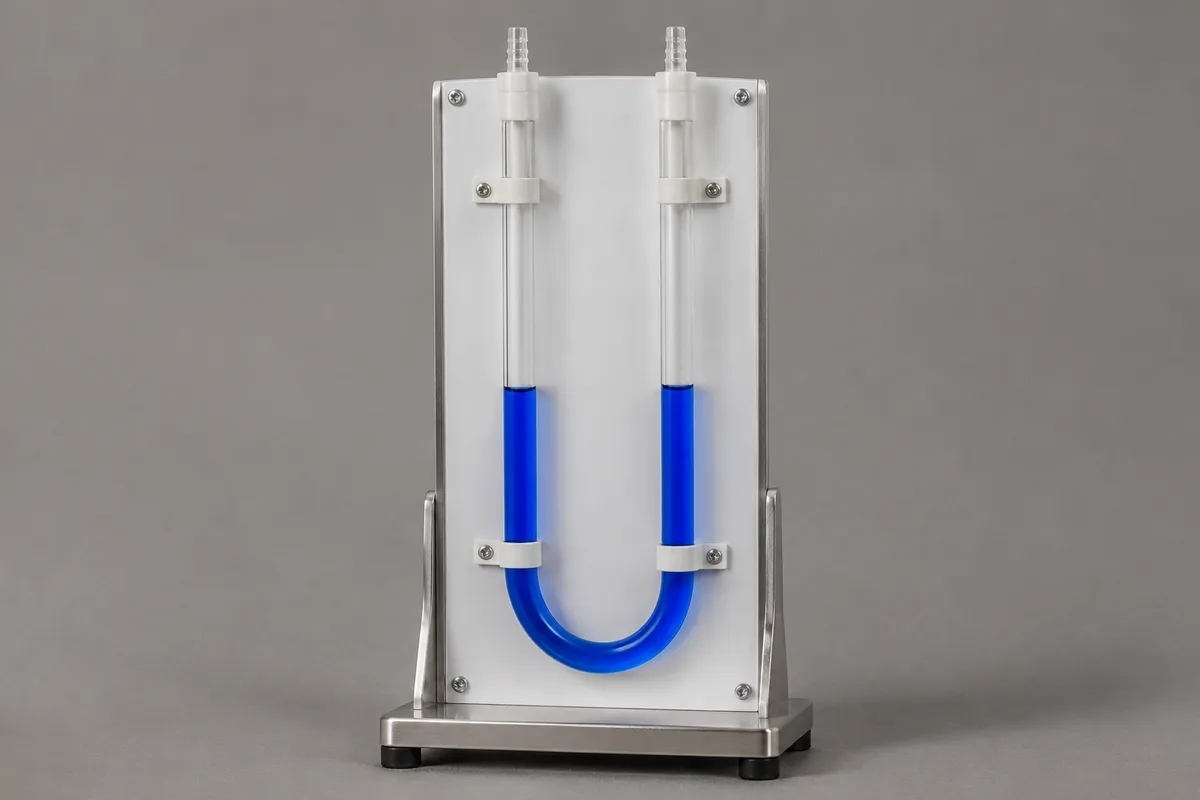
Include the liquid type, scale graduations and how the levels are read, particularly where the meniscus is curved. For a bench installation, identify both pressure connections and the mounting level. Specify whether you need the length scale or the assembled pressure measurement checked.
If one surface rises by 3 mm while the other falls by 3 mm from an initially level position, their separation has changed by 6 mm. Check whether the scale already accounts for both movements before interpreting a single-limb reading.
Specifications and service checks
A water column 10 mm high and a column of a denser liquid of the same height represent different pressure differences. Identify the fill liquid and whether the scale reads geometric height or pressure equivalent, especially when a tube has recently been refilled.
- Range and configuration
- Pressure difference equals liquid density times gravity times vertical level difference, with gas-density corrections where significant. The distance between the two menisci is the relevant height.
- Manufacturers and models
- Dwyer's liquid-column manometer families include U-tube and inclined scales. Identify the geometry and specified indicating fluid.
- What we check
- Compare scale readings with a low-pressure reference or characterise the liquid column and its scale. Record the liquid temperature and reading convention.
- Reference equipment and accuracy
- Use a calibrated length scale and thermometer with known fluid density, or an independent differential pressure standard.
- When to repeat the check
- Check after changing the fluid, relocating the instrument or disturbing the zero graduation.
Technical references Dwyer liquid-column manometers