
On this page
Where and in which direction vibration is measured
A vibration reading from the edge of a loaded table and one taken beside the motor are unlikely to describe the same motion. Mark the pickup position and direction on a simple sketch. Show which moulds were on the table and the setting used. If the operating specification also gives a run time, say which timer starts and stops the run.
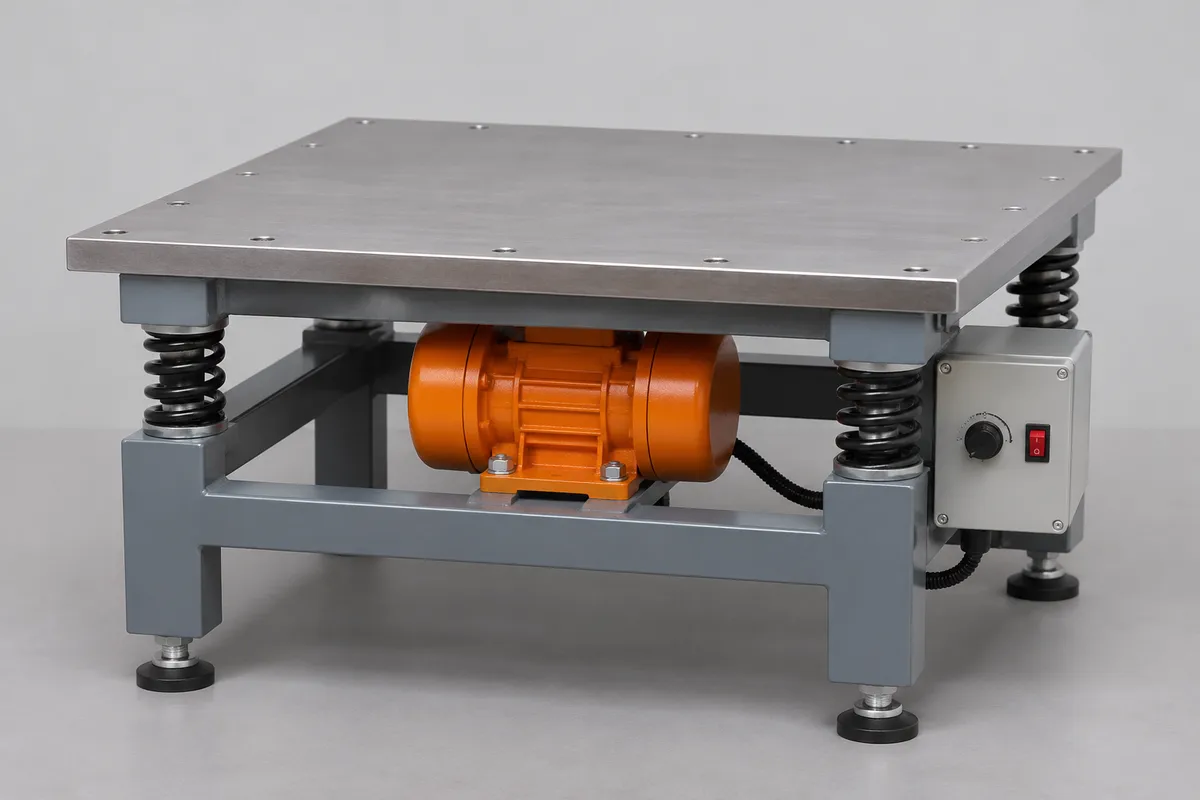
Vibrating table under a defined load
Give the specimen arrangement, platform location and any controlled time or frequency. Do not treat motor speed as a complete description of vibration at the specimen. The proposed method must identify where and how the required quantity is assessed, with the agreed load retained in the report.
Specifications and service checks
An unloaded table may behave differently once a mould is clamped to one side. For a repeat comparison, identify the mould position, payload and point on the platform where vibration was observed.
- Range and configuration
- Specify the tabletop, fixture and normal load. Vibration frequency in hertz and displacement amplitude in millimetres are separate characteristics.
- Manufacturers and models
- Matest’s C278 series includes vibrating tables for concrete specimens. Humboldt’s HC-3253, HC-3254 and HC-3255 are examples of concrete testing tables.
- What we check
- Check vibration at agreed table positions with the stated loading. If the cycle is timed, include a separate elapsed-time result.
- Reference equipment and accuracy
- Use a calibrated vibration instrument appropriate to the frequency and amplitude of interest. Define sensor mounting and measurement direction in the report.
- When to repeat the check
- Review after replacement of springs, eccentric weights or the motor. Keep comparable results under the same load.
Technical references Matest product reference · Humboldt product reference