
On this page
Where the gas is measured
For a compressed-air dryer, identify the take-off point and whether the sensor sits before or after pressure reduction. Record the pressure in the sample cell and say whether it is gauge or absolute. If your maintenance limit is stated as pressure dew point, send the limit as written. A relative humidity figure on its own describes a different measurement.
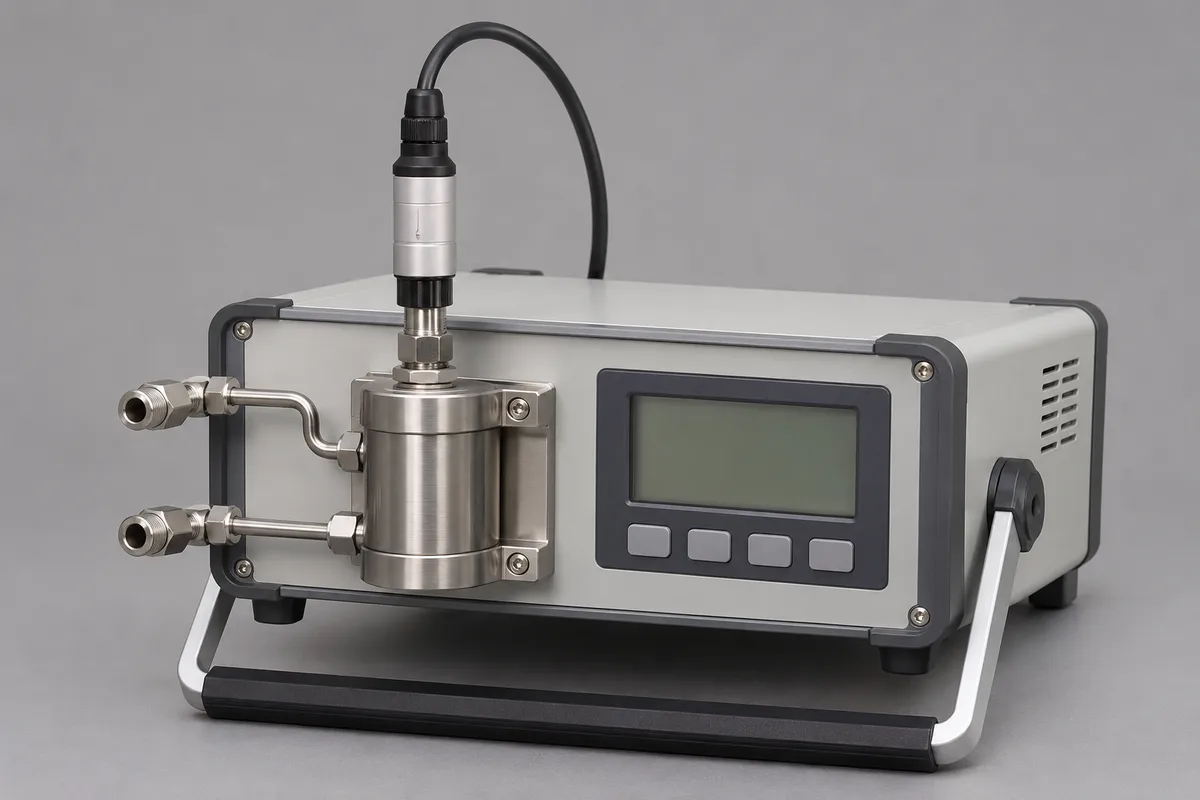
The probe and its sampling cell
A length of tubing exposed to room air can release moisture into a dry sample. That can explain a slow return to the expected reading after a portable unit is connected. Identify the probe, cell, tubing and filter normally used with the meter. For a transmitter, include the output range if the control room indication also needs checking.
Readings below freezing
On a chilled-mirror instrument, a liquid film and a layer of frost correspond to different temperatures for the same water vapour content. If your procedure calls for frost point, use that term on the order and on the results sheet. Include the points that matter at dryer changeover or at the moisture alarm.
Equipment covered
Dew point meter
A plant dryer record may specify pressure dew point while the portable instrument samples downstream of a regulator. The measuring pressure belongs with each dew-point figure. Tell us whether the installed sensor reads in the line or at a sample outlet and give the working range. That helps us compare the instrument under the conditions your specification actually names.
A compressed-air report giving only “−20 °C” leaves the pressure and the dew- or frost-point convention open. Copy the wording from the display or export and record the measuring pressure. This is particularly useful when comparing fixed and portable meters on the same line.
- Range and configuration
- Vaisala gives the DMT152 a calibrated dew-point range of −80 to −20 °C and a wider output span. Specify the range that needs a measured result.
- Manufacturers and models
- Vaisala’s DMT152 is a dry-gas transmitter. Michell’s Optidew uses a chilled mirror and offers different sensor options.
- What we check
- Compare the reading in the chosen dew- or frost-point convention with an independent reference at the stated pressure. Record the gas and pressure basis in the report.
- Reference equipment and accuracy
- A traceable dew-point generator or reference hygrometer must cover the low end. A room-humidity meter provides little evidence at very low moisture levels.
- When to repeat the check
- Follow reference comparisons at the working moisture level. A sensor changed after contamination needs a new baseline even if a scheduled visit is months away.
Technical references Vaisala DMT152 instrument guide · Michell Optidew manual · NIST humidity measurement services