
On this page
Sampling pressure and the dew or frost point
Identify the sampling head and the pressure at which it normally measures. At temperatures below freezing, the phase assigned to the observed condensate matters to the interpretation. Keep that convention with the reported result.
A manufacturer’s certificate may present a dew-point result above freezing and frost-point results below it. If an older certificate uses the label dew point throughout, check its phase convention before calculating a year-on-year change. Matching the printed number and unit alone is insufficient.
Specifications and service checks
A drying line records a dew point at line pressure while a portable instrument reads on an expanded sample. Write down the sample pressure at the mirror for each record. A common pressure basis is needed before interpreting the difference between the two dew points.
- Range and configuration
- Michell lists dew-point spans including −25 to +90 °C and −40 to +120 °C for different Optidew sensors. Identify the fitted sensor and whether the result is dew point or frost point.
- Manufacturers and models
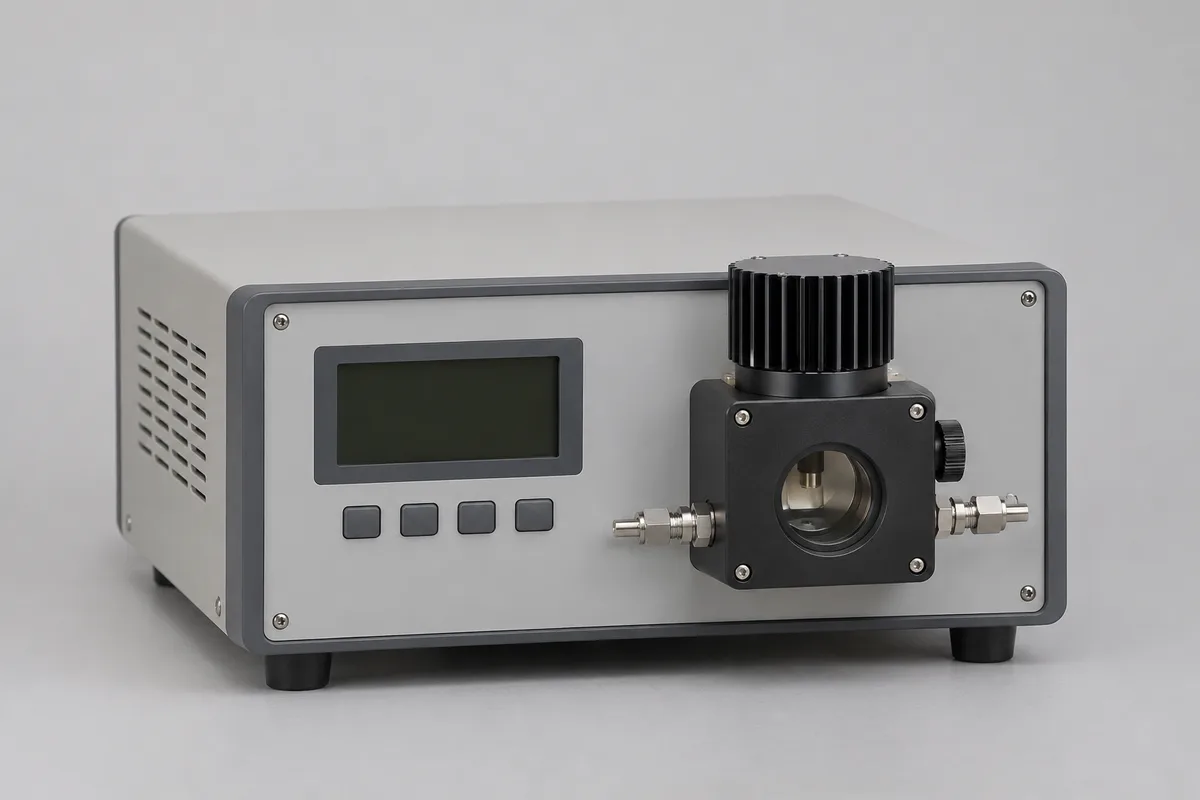
- Michell Instruments’ Optidew is a chilled-mirror reference hygrometer.
- What we check
- Compare the indicated condensation temperature with a reference at the specified sample pressure. Record the phase convention used for readings below freezing.
- Reference equipment and accuracy
- Use a traceable dew-point reference or characterised humidity generator. Include uncertainty for sample pressure and reference stability at each point.
- When to repeat the check
- Review the mirror condition and intermediate comparisons. A contaminated mirror or repair to its temperature sensor is grounds for an earlier comparison.
Technical references Michell Optidew manual · NIST humidity measurement services