
On this page
Reading the alcohol scale at its reference temperature
Send the scale inscription, range and marked reference temperature. Identify whether results are required in alcohol strength or density units. If readings are normally temperature-corrected after observation, specify whether the order concerns the glass instrument or also that separate calculation.
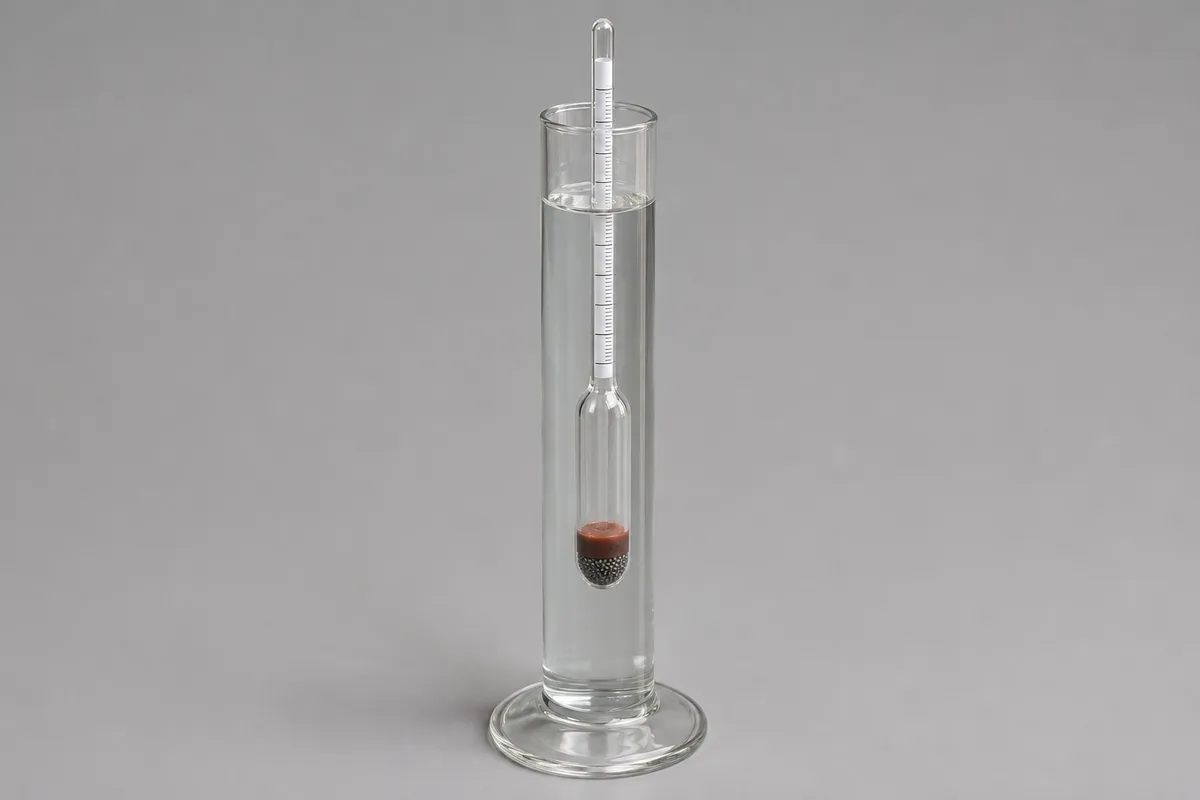
A receiving laboratory might read the stem at room temperature and then use a table to express strength at its reference temperature. Keep the observed stem reading and liquid temperature together. The corrected value alone cannot show which part of that process produced a discrepancy.
Specifications and service checks
A blend containing dissolved sugar can give a different density from a simple water–ethanol mixture of the same alcohol content. Name the sample type when asking about an unexpected scale reading. A stem comparison and the suitability of the scale for a mixture are separate questions.
- Range and configuration
- The scale and reference temperature matter together. A reading taken away from the reference temperature requires the correction appropriate to that scale and liquid.
- Manufacturers and models
- Brannan's Sikes hydrometer illustrates one alcohol scale. Read the actual scale designation before converting it to an alcohol-by-volume result.
- What we check
- Compare selected indications with assigned liquid densities or reference mixtures at controlled temperature. Record how the meniscus was read.
- Reference equipment and accuracy
- Use traceable density references and a calibrated thermometer suitable for the sensitivity of the scale.
- When to repeat the check
- Check after stem damage or suspected movement of the internal paper scale.
Technical references Alcohol Sikes Hydrometer - Brannan