
On this page
Matching the dial to the range switch
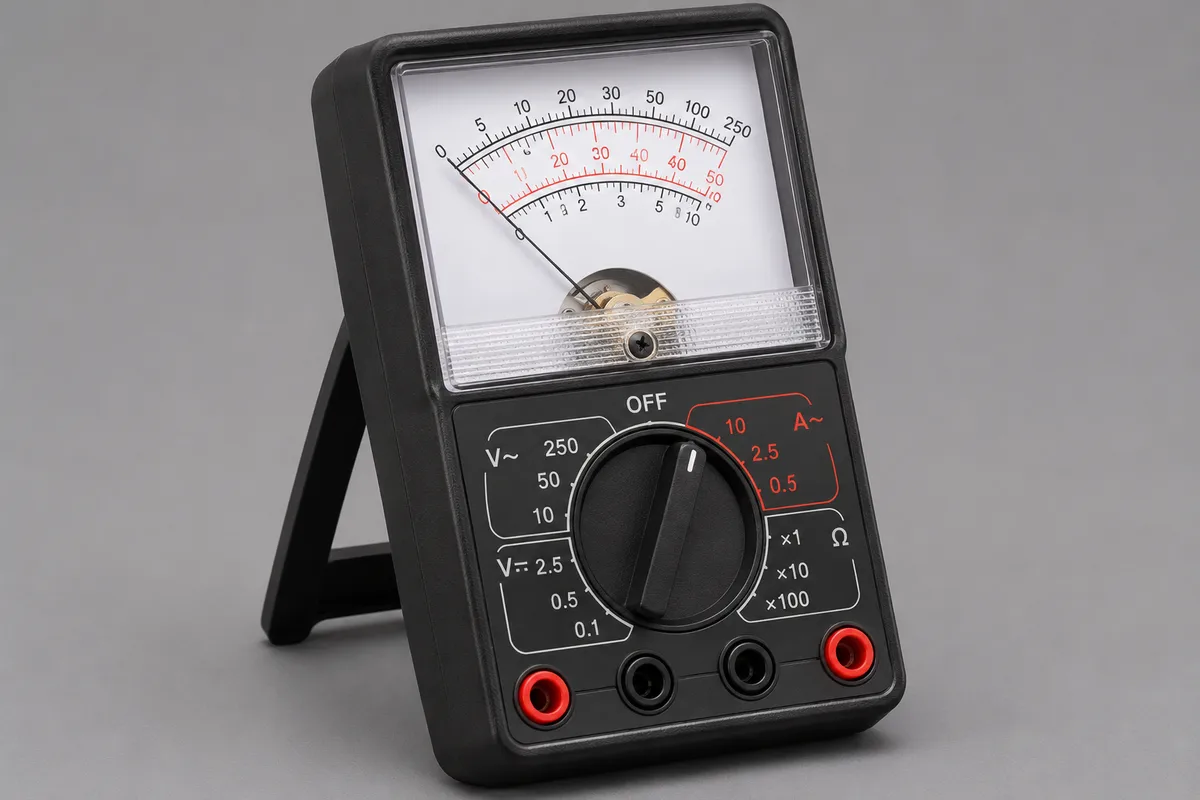
A photograph of the dial and range switch is often the quickest way to show us which of several coloured scales you read. Note how the meter sits during use. For resistance checks, include the battery type and how you set the resistance zero.
On a 0–10 dial read with the selector on a 50 V range, a pointer position of 6 represents 30 V. If the inspector has noted “6 divisions”, include the selected range. This also makes it clear which full-scale value applies when the maker expresses accuracy as a percentage of full scale.
Analog multimeters with pointer scales
Photograph the scale and selector markings so the requested reading can be tied to the chosen range. Give the voltage, current or resistance function, full-scale value and points your technician reads. For a marked accuracy class or acceptance limit, include the manual reference rather than converting it to a percentage of the indicated reading without checking its definition.
An analog meter's resistance scale uses its own graduations and multiplier. The report should retain those with the selected resistance values and the specified operating position. A sticking pointer, damaged window or zero-setting problem is recorded before adjustment. Voltage, current and resistance ranges each need their own results, with any accessories that change the input identified alongside the meter.
Specifications and service checks
An older pointer meter may indicate less voltage than a digital meter across a high-resistance divider because it loads the circuit differently. Identify the selected voltage range and its input sensitivity when the two readings are being compared. Changing the range can change the load.
- Range and configuration
- An analogue meter has several scales on a common dial. Accuracy may be expressed as a percentage of full scale, which becomes a larger part of a small reading.
- Manufacturers and models
- Simpson 260 Series 8 is a pointer type volt-ohm-milliammeter. Record its range switch position and which scale is read.
- What we check
- Compare the pointer against traceable input values on the selected ranges. Check the mechanical zero, use the specified orientation and consider the loading of the input.
- Reference equipment and accuracy
- The master source must deliver the requested voltage or current into the actual input resistance. Allow for pointer interpolation in the reading uncertainty.
- When to repeat the check
- Recheck after transport damage or a sticking pointer. Use the previous errors on the working ranges when reviewing the date.
Technical references Simpson 260 Series 8 instructions