
On this page
Weighing a small addition in its vessel
What is the smallest addition your analyst needs to weigh, and what does the tare vessel weigh with it? Those numbers help us plan a repeatability check near the load actually on the pan. Include the usual net loads too, so the indication can be compared across the range in use.
A 100 g vessel with a small addition gives a high gross load but a small change in indication. Giving RTS both quantities lets the check reflect the weighing operation behind the formulation sheet.
Specifications and service checks
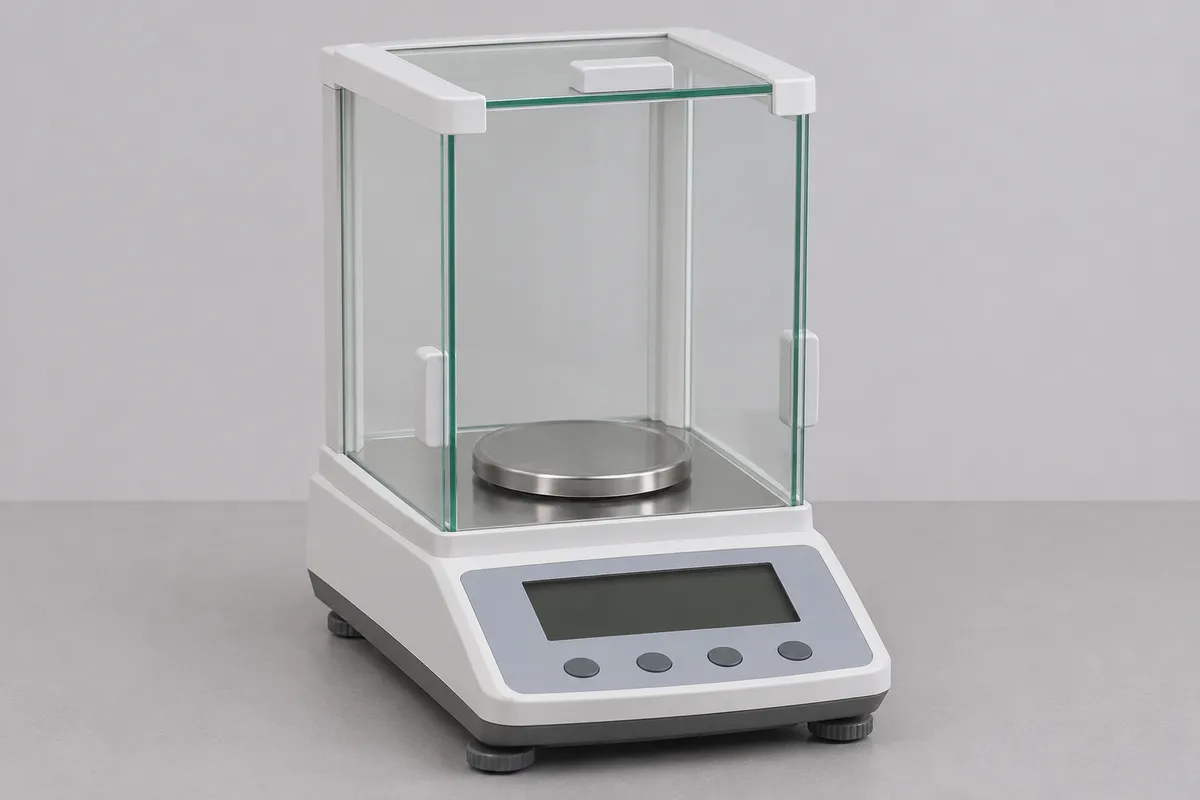
A small powder addition may appear steady on a closed balance and wander while a draft-shield door is open. Note the gross load, smallest addition and door position if this is the behaviour the weighing team wants to investigate.
- Range and configuration
- The OHAUS PX224/E has a 220 g maximum load. Quote readability and the smallest net sample as well as gross capacity. A container can consume much of the range.
- Manufacturers and models
- OHAUS Pioneer PX224/E is one analytical example. The exact model identifies the number of decimal places available.
- What we check
- Compare indications at the laboratory’s working loads, repeat a small load and evaluate the effect of its position on the pan.
- Reference equipment and accuracy
- Use calibrated weights with suitable conventional mass values and uncertainty. E2 is a candidate for fine balances. Confirm suitability at the smallest load rather than relying on the class alone.
- When to repeat the check
- Review the interval using daily check-weight results, relocation and changes to the bench or draft shield.
Technical references OHAUS Analytical balance reference