
On this page
Station pressure and elevation correction
Specify the pressure interval used and whether the displayed value is station pressure or has been set to show pressure reduced to another elevation. Include the normal mounting orientation and any adjustment since its last comparison.
When a barometer moves from a ground-floor instrument room to an upper floor, a small change may reflect the elevation difference. Record where the indication was observed before attributing the full change to drift in the capsule or mechanical linkage.
Specifications and service checks
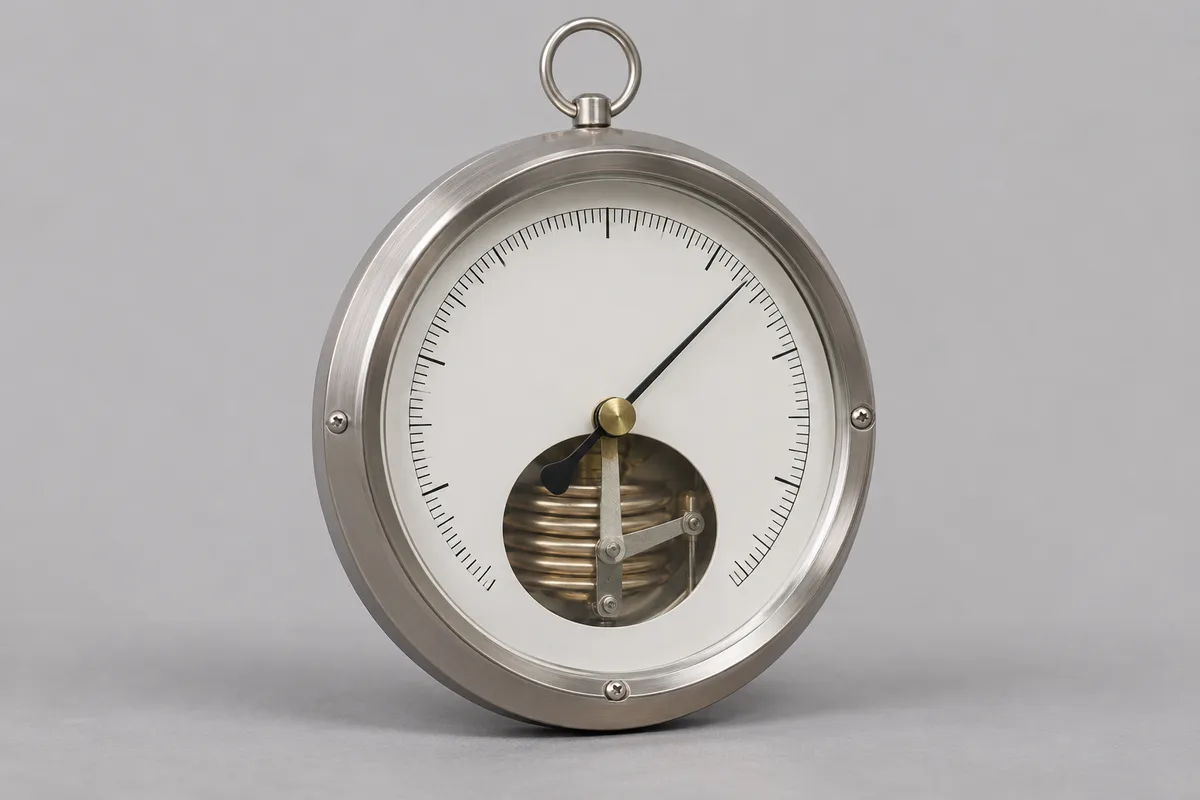
A movable index on a dial may have been set by yesterday’s observer. Read the pressure pointer separately and identify which hand moves when the case setting is operated. A photograph can prevent the comparison marker being mistaken for a second pressure indication.
- Range and configuration
- Read the full atmospheric span in hPa or mmHg from the dial. Record whether an adjustable index was set for altitude.
- Manufacturers and models
- Fischer specifies its Model 103 precision aneroid barometer over 890–1,050 hPa with 0.5 hPa graduations and a stated accuracy of ±0.7 hPa.
- What we check
- Compare the dial through rising and falling pressures to reveal mechanical hysteresis. Use the indicated station pressure at the instrument's height.
- Reference equipment and accuracy
- A calibrated absolute pressure standard with suitable resolution is the reference. Include the uncertainty from reading the pointer between divisions.
- When to repeat the check
- Inspect the zero and pointer after a move or impact. Stable comparisons can support a longer interval.
Technical references Fischer Model 103 precision aneroid barometer