
Identify the pressure value on the display
State whether the requested result concerns measured absolute pressure or a calculated, height-corrected value. Give the units, working interval and points required by your procedure. For a digital barometer, include any configured altitude or correction setting and indicate which output your system records.
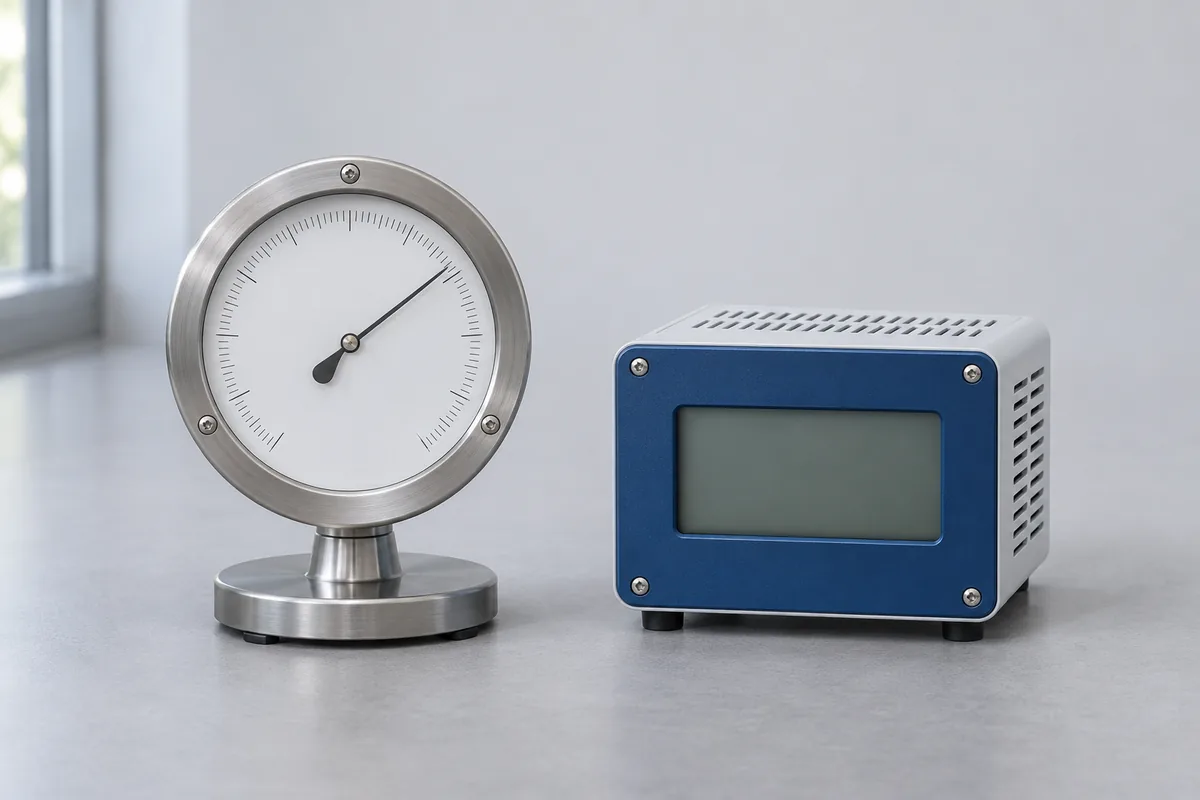
An aneroid dial may have a movable reference pointer as well as its measuring pointer. Provide a clear photograph of the face and markings, with the model and asset number. Describe the instrument’s normal orientation where the manufacturer specifies it.
Keep the complete pressure path in view
Identify the pressure port, any attached tube and an external display or communications module used with the sensor. For a multi-sensor unit, say whether results are needed for individual sensors or only the combined value. The quotation should identify the output and configuration covered.
If the barometer supports a laboratory calculation, give the pressure limits used in that work and the acceptance requirement. A comparison against another local display may involve different elevation corrections. Keep those settings with any readings that prompted the enquiry so the team can review the disagreement.
Agree the calibration and return arrangements
RTS will review the instrument type, requested absolute-pressure points and available reference arrangement before confirming acceptance. Ask for the received condition to be recorded if an adjustment is being considered. Tell us whether a fixed monitor can be released from its installation, and retain its mounting and connection details for reinstatement.
Use the serial number and owning laboratory on the dispatch list. Obtain packing instructions for delicate dial mechanisms and keep detachable modules identified with the barometer.
Liquid manobarometers
For a liquid manobarometer, identify the liquid, scale units, reading convention and temperature information used in the result. Give the pressure interval and explain whether the instrument records atmospheric or another reference pressure. Include the mounting and level-reference arrangement. RTS will review the complete method and handling requirements; checking a scale dimension alone is not the same as calibrating the pressure indication produced by the filled instrument.
Altimeter measurement principle
For an altimeter, identify whether altitude is derived from atmospheric pressure or from another measurement system. A barometric model needs its pressure reference, units and configured reference conditions identified. State whether pressure indication or the derived altitude display requires assessment. RTS must confirm the relevant method and capability; a barometer comparison does not establish coverage of every altitude system or an aviation-specific acceptance requirement.