
On this page
Which head and station are in use?
Where one position or channel is suspected of a delivery error, retain individual results rather than only a plate average. A record of the deck configuration and software method allows the same equipment check to be repeated after a head or software change.
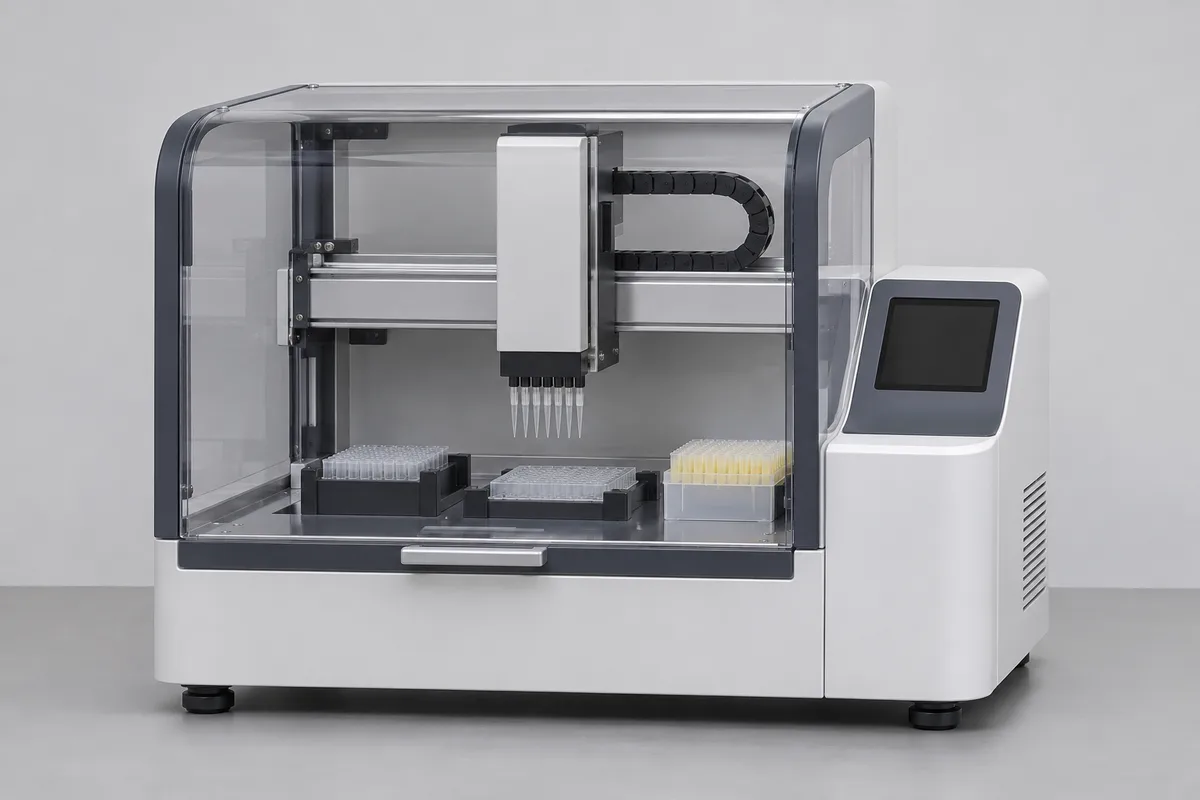
For a platform that both dispenses and transfers liquid, give the station and head used for each operation. A volume result obtained from a fixed dispensing head may say little about the pipetting head that processes a different plate later in the same run.
Specifications and service checks
On a deck with two interchangeable heads, a workstation serial number identifies neither head. Mark the affected deck position and channel on a simple plate plan. A volume issue that follows the head after a swap is a different service question from one confined to a single deck position.
- Range and configuration
- Identify the platform, head serial number and fitted channel count. A system with interchangeable heads can have several separate volume specifications.
- Manufacturers and models
- The Opentrons Flex platform accepts 1-, 8- and 96-channel heads. A Tecan Fluent system likewise has its own module identities. Keep the particular head and its service record linked to the platform.
- What we check
- For the service file, link the detachable head’s calibration record to its mounting position and serial number. Specify the indicated volume or independent measurement channel to be documented.
- Reference equipment and accuracy
- Ask for the reference identifier, uncertainty and channel coverage on the calibration record. A platform service label alone cannot identify the heads included.
- When to repeat the check
- Review the head record when hardware is exchanged or firmware changes the volume indication. Keep service and calibration dates against the appropriate component.
Technical references Tecan Fluent manual · Opentrons Flex pipette configurations