
On this page
Volume markings and how the vessel is used
State whether the requirement is the volume held at that level or the amount poured out. Those quantities can differ because liquid remains on the walls. Give each selected beaker an identifier if its result is to stay with the item.
Beaker graduations and actual volume requirements
State whether the laboratory needs a particular contained volume established or simply uses the vessel during another measurement. Include the marked size and required uncertainty for review. Do not assume every printed graduation warrants the same certificate as a volumetric flask.
Specifications and service checks
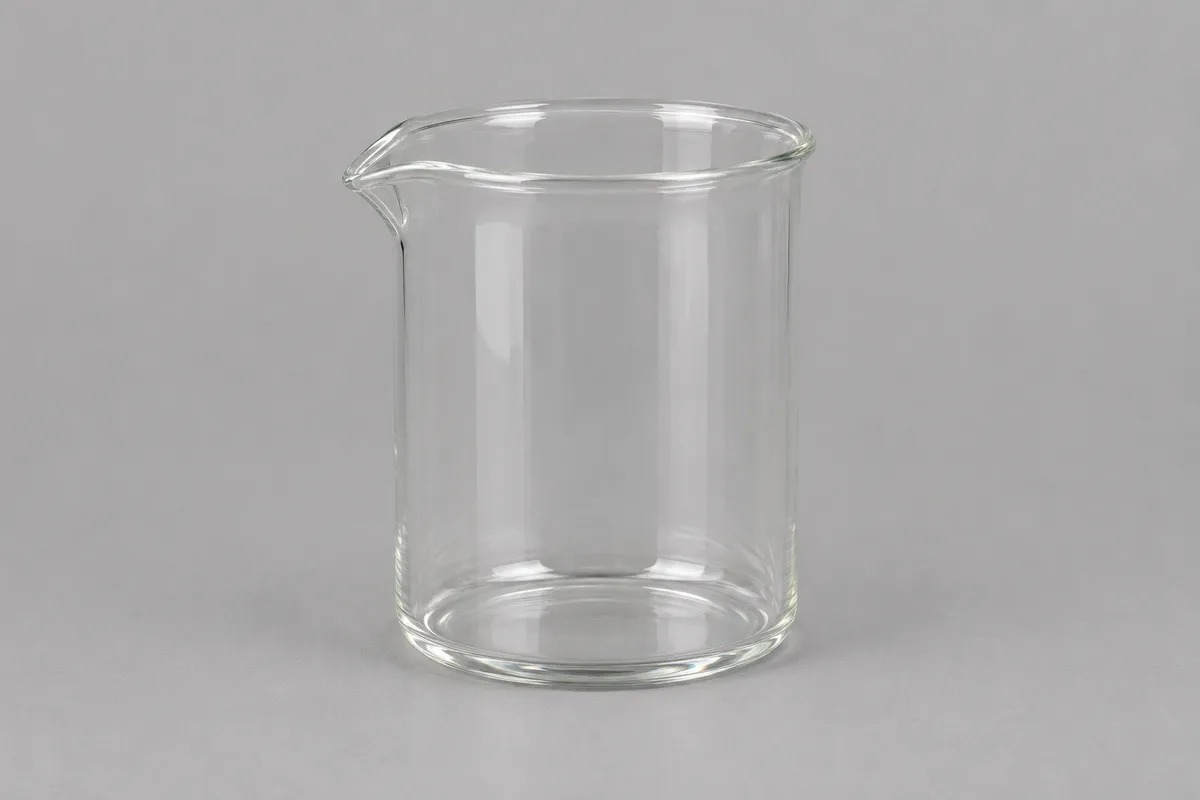
A 250 mL beaker may be used only to transfer liquid, or its 100 mL mark may control a routine batch addition. In the second case, identify that specific mark and the volume tolerance your process allows. The nominal capacity moulded into the base gives only part of the picture.
- Range and configuration
- DWK’s 250 mL DURAN Erlenmeyer is an example of a vessel with approximate graduations. A marked capacity and a certified volumetric class are different entries in the catalogue.
- Manufacturers and models
- DWK’s DURAN low-form beakers and Erlenmeyer flasks illustrate the difference between vessel capacity and a certified measuring flask.
- What we check
- For a check of one graduation, identify the line and the fill convention. Compare the mass of the water it contains with the volume represented by that mark.
- Reference equipment and accuracy
- Use a traceable balance and water-temperature measurement. A broad vessel and thick graduation can make reading the mark the largest uncertainty contribution.
- When to repeat the check
- Inspect after glass damage and use the previous volume result to judge the need for rechecking. For an approximate mixing vessel, define the required tolerance first.
Technical references DWK DURAN low-form beakers · DWK DURAN 250 mL Erlenmeyer flask · NIST volumetric calibration procedures