
On this page
Pointer zero and loading position
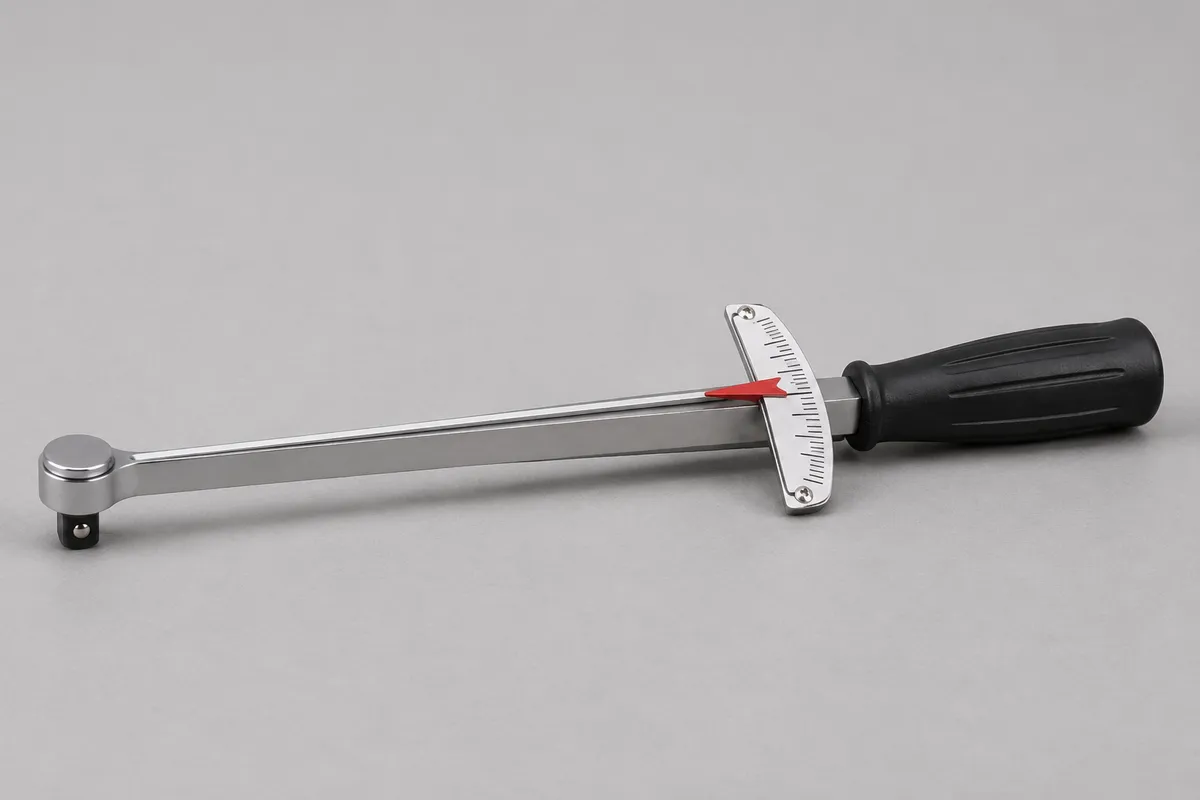
Identify the scale unit, drive size, pointer zero and directions in which the wrench is read. Where the handle has a defined loading position, show that position. A result should pair the applied torque with the indicated reading at each requested point.
If the mechanic reads a mark as the pointer reaches it, a comparison using the wrench as an indicating device matches the task. Asking for a click point would describe the action of a different type of wrench.
Specifications and service checks
A pointer can appear to sit on different graduations when read from opposite sides of the scale. If operators disagree on the setting, record the scale face and reading direction they use, along with the unloaded pointer position.
- Range and configuration
- The GEARWRENCH 2957N is a 1/2 inch drive beam wrench with a primary scale of 0–150 lbf·ft. Check the marked unit before selecting verification points.
- Manufacturers and models
- GEARWRENCH 2957N uses a beam and pointer. Record the drive size, torque scale and the directions in which the tool is used.
- What we check
- Compare the beam indication with applied torque in each specified direction. Read the pointer against the scale at the same viewing angle each time.
- Reference equipment and accuracy
- Use a torque loading rig and calibrated transducer matched to the wrench capacity and scale division. The handle support forms part of the setup.
- When to repeat the check
- Check the unloaded pointer between calibrations and after a tool is dropped. Persistent offset calls for examination before the next issue.
Technical references GEARWRENCH 2957N beam torque wrench · ISO Hand torque tool requirements