
On this page
Rotor identification and speed readings
If two benches share a rotor, include its own serial number and the identity of the instrument tested with it. This prevents the result for one drive and display from being applied automatically to the other unit.
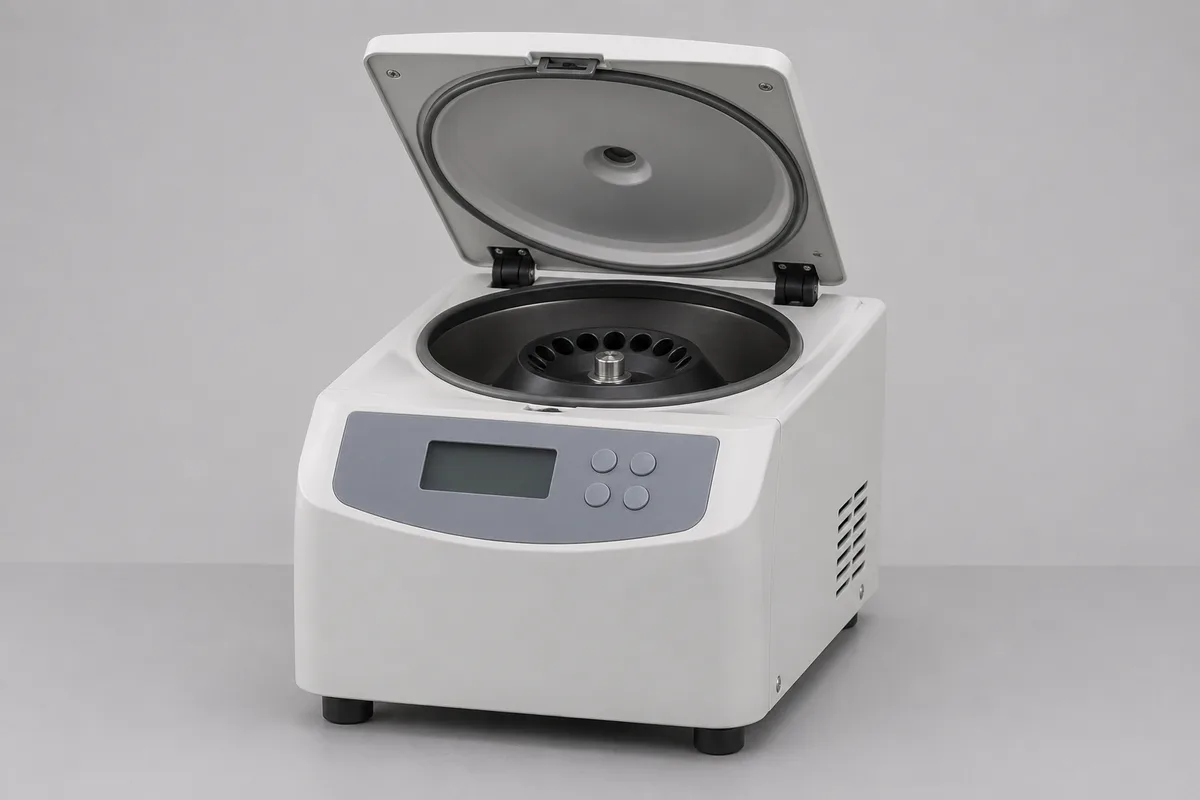
For a unit with separate numerical speed and time displays, the equipment register can carry one line for the drive and two result columns. Put the rotor serial number beside those columns so the figures follow the right rotor if it moves to another machine.
Specifications and service checks
Two benchtop units can carry identical front panels while one uses a different rotor. If operators enter speed in rpm on one and relative centrifugal force on the other, retain the rotor ID and the displayed unit on each asset entry. That makes the two booking requests unambiguous.
- Range and configuration
- The drive and the fitted rotor have separate speed limits. Indicated rpm and relative centrifugal force are different quantities. Refrigerated models also have a separate temperature channel.
- Manufacturers and models
- Eppendorf lists its 5804 benchtop centrifuge and the refrigerated 5804 R separately. Use the model suffix to identify whether a temperature channel is present.
- What we check
- Compare indicated rotational speed with a traceable speed reference using the manufacturer’s approved service access. Identify the fitted rotor and test any timer or temperature channel separately.
- Reference equipment and accuracy
- A calibrated tachometer or authorised service reference establishes speed. A time reference and calibrated thermometer are needed if those quantities are included.
- When to repeat the check
- Review after a drive or speed sensor repair. Rotor condition and lifetime inspections belong in the maintenance record alongside speed calibration.
Technical references Eppendorf 5804 and 5810 series manual · Beckman Coulter Avanti rotor catalogue · Stanhope-Seta photo tachometer