
On this page
Tray load, volume setting and clamp checks
If the display shows millilitres but the engineering check uses a reference mass, the units describe different quantities. Include the instrument's stated conversion setting, the tray or bag tare and the actual readings in the record. Where the clamp or timer is included, list its own setting and observed response. A tray weighing check does not establish that the clamp operated at the specified point.
Blood collection monitor indications
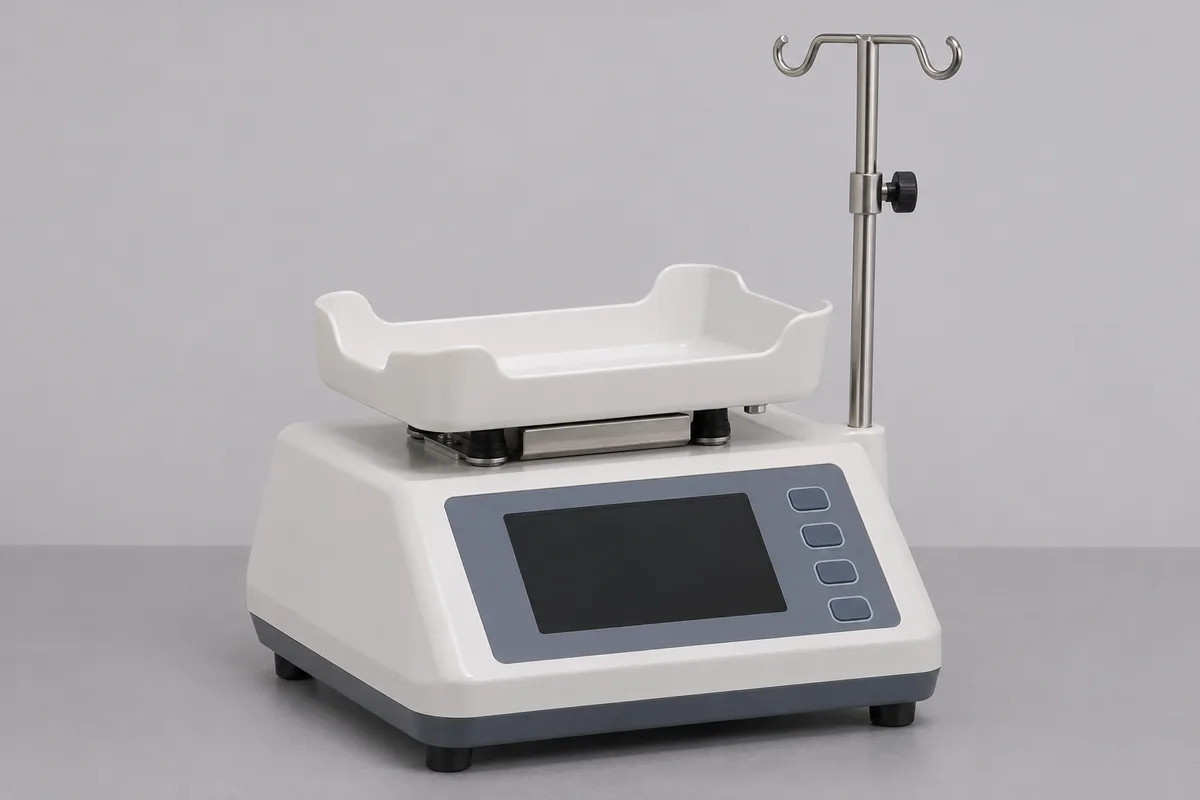
Identify which functions appear in the department’s test procedure and the accessories presented with the unit. Request the recorded quantities and acceptance criteria separately. Calibration of a balance function does not by itself establish the full collection sequence or suitability for clinical use.
Specifications and service checks
A tray can return to zero when empty and still read high under load. For a bench enquiry, name the empty bag set used for tare and one representative loaded mass. This lets the technician check the two parts of the indication independently.
- Range and configuration
- The weighing mechanism senses mass. Where the display reports volume, the conversion depends on the instrument’s configuration and manufacturer assumptions.
- Manufacturers and models
- Terumo Blood and Cell Technologies supplies the T-RAC II collection monitor.
- What we check
- Check the weighing channel against known loads across the part of the scale under review. Identify the tray, tare arrangement and units used in the engineering report.
- Reference equipment and accuracy
- Choose certified masses with uncertainty appropriate to the monitor’s load span. Treat any time or alarm verification as a separate function.
- When to repeat the check
- Review after tray or load-cell replacement and after relocation where service instructions call for it.
Technical references Terumo Blood and Cell Technologies product reference