
Anaesthesia machine configurations
List the workstation, fitted gas modules and breathing-system configuration as separate identified components where appropriate. State the manufacturer procedure and functions the engineering department needs assessed. Gas delivery, ventilation, monitoring and electrical safety are distinct records. A successful check of one module should not be described as qualification of the complete anaesthesia workstation.
Blood collection monitor indications
A blood collection monitor can combine a weighing function with mixing, timing and an indicated collection endpoint. Identify which functions appear in the department’s test procedure and the accessories presented with the unit. Request the recorded quantities and acceptance criteria separately. Calibration of a balance function does not by itself establish the full collection sequence or suitability for clinical use.
Dialysis machine engineering records
Provide the machine model, configuration and the specific engineering measurements required by its service procedure. Temperature, pressure, flow and conductivity indications may belong to different parts of the system. Describe those channels individually and identify the responsible biomedical reviewer. A laboratory instrument certificate should not be substituted for the manufacturer’s complete machine assessment or the owner’s release decision.
Electrosurgical unit and electrocautery machine enquiries
Departments sometimes use electrocautery machine as a general equipment label. Supply the actual model and operating technology so a thermal cautery device is not confused with an electrosurgical generator. For an electrosurgical unit, identify the required output modes and approved analyser/load arrangement from the service procedure. RTS must review that specialist requirement before agreeing any testing.
Medical electrodes and associated accessories
Identify the electrode by its intended equipment, model or part number and whether it is reusable or a consumable. The enquiry should describe the accessory’s role in the approved test arrangement, not request an unexplained calibration of an electrode. Include the matching lead or interface when relevant. Accessory condition and a measurement-channel result are separate reporting questions.
Glucometer quality-control enquiries
Send the meter model, strip-system designation and the quality-control question raised by the laboratory or clinical engineering department. A control-material result, an analytical comparison and a meter’s internal check provide different evidence. Request review of the applicable method and manufacturer requirements. Do not send patient readings or assume that a general electrical calibration establishes blood glucose measurement performance.
Infant incubator engineering assessment
Identify the incubator configuration, fitted sensors and the functions listed in the manufacturer’s engineering procedure. A temperature indication, chamber distribution, humidity display and alarm record may need separate treatment. Include the required conditions and specialist test-system details for review. This enquiry concerns equipment released for bench assessment by biomedical engineering, not instructions for changing conditions around an infant.
Nebulizer assembly and required result
Give the nebulizer technology and the complete assembly designated by the manufacturer. State whether the engineering request concerns an electrical function, gas-flow arrangement or a defined aerosol-performance test. The device name alone does not specify a measurand. Ask RTS to review the suitable method and service route; a simple running check does not establish aerosol delivery performance.
OT light illumination enquiries
For an OT light, list the light heads, selected operating mode and the measurement arrangement required by the service procedure. Illuminance at one position differs from assessing field distribution or the complete lighting assembly. Include the specification and planned engineering access. RTS will review the photometric requirement rather than treat a general lux-meter certificate as evidence for the light itself.
Phototherapy unit optical measurements
Identify the unit model and the optical quantity, spectral response and measurement geometry specified in its engineering documentation. A reading from an ordinary illuminance meter is not interchangeable with a dedicated phototherapy measurement. Send the approved instrument and procedure requirements for review. No patient settings or treatment decisions belong in the service enquiry or proposed bench report.
Radiant warmer sensor and controller records
Give the warmer model, temperature-probe identity and the operating configuration named in the engineering procedure. Ask for sensor response, controller indication and any other required observations to be listed separately. RTS needs the model-specific assessment requirements before quoting. A result for a detached temperature probe does not certify the warmer’s complete control behaviour or authorise patient use.
Suction apparatus pressure and flow enquiries
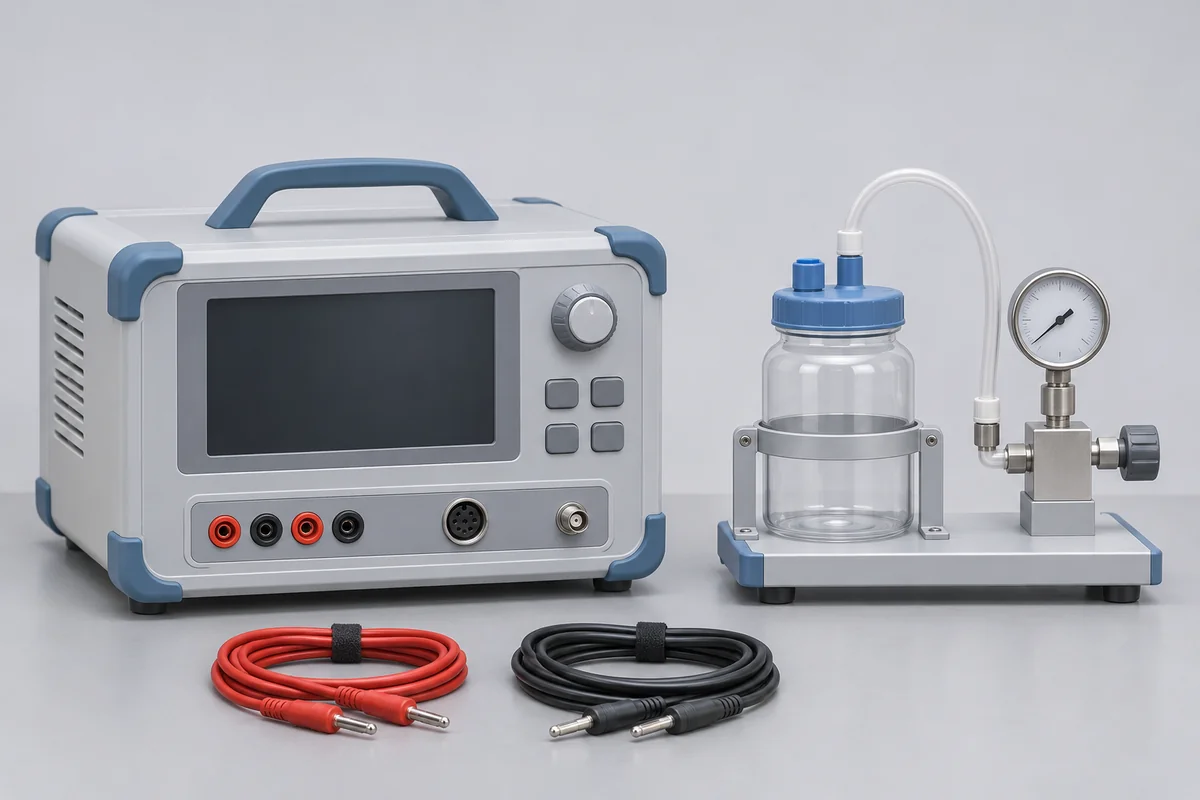
Record the suction apparatus model and the collection assembly supplied for the engineering check. Distinguish a vacuum indication from a flow measurement and from a complete functional assessment. Include the manufacturer’s test conditions and the department’s preparation declaration. The quotation should state the accepted quantities and configuration so the biomedical reviewer can see exactly what the resulting report covers.
Prepare one engineering list for the visit
Keep each asset and detachable module on a separate line, with the controlled procedure revision and requested evidence. Name the person who can clarify an accessory mismatch before the visit. For IMT Faridabad or another Indian location, include the engineering workshop address and release window. RTS will confirm which requests can be accepted and whether a specialist service route is required.