
On this page
Shelf temperatures through a cooling cycle
Mark the shelf levels and load positions on a sketch. For a comparison after refrigeration maintenance, keep that sketch and the cooling-cycle times with the earlier temperature record. A change seen on one shelf is easier to investigate if you know where the sensor was.
A controller trace and a shelf trace may move together yet sit at different temperatures throughout the run. That points to a difference between locations or indications. By contrast, a change seen only during one cooling cycle needs to be read against the time record for that cycle.
Specifications and service checks
A cabinet that cycles around its setting can give different spot readings at the start and end of a cooling cycle. A time trace at the shelf used for routine work shows how far that shelf swings and for how long. Mark that shelf and the load condition on the booking.
- Range and configuration
- An incubator’s volume and control options identify the enclosure. For a calibration enquiry, record the range and resolution marked on the individual temperature or gas indicator.
- Manufacturers and models
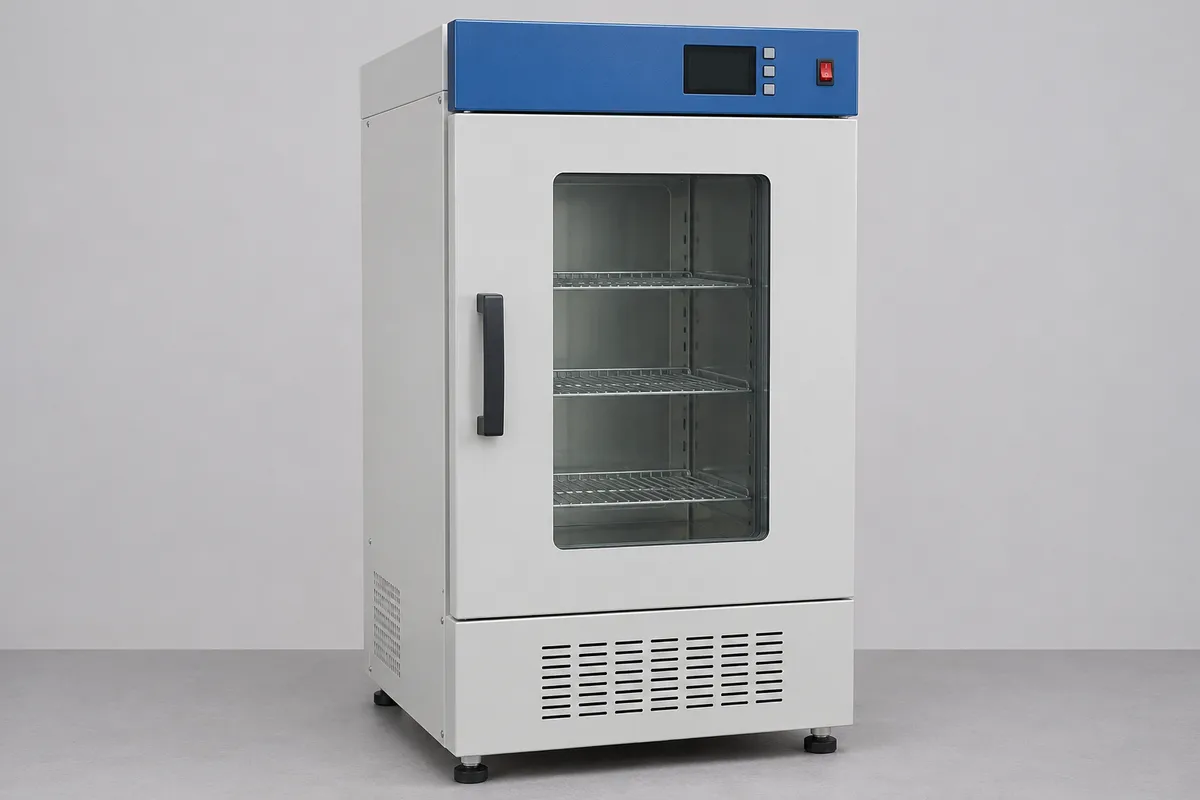
- VELP’s FOC120E is a cooled incubator. Its individual temperature sensor or readout can be cross-referenced to the equipment service record.
- What we check
- Identify the detachable probe or readout to be compared, its serial number and its connection to the enclosure. Keep the channel result with the equipment service record.
- Reference equipment and accuracy
- A temperature indicator needs a traceable temperature or electrical reference appropriate to its input. An independent gas instrument needs the appropriate assigned gas reference.
- When to repeat the check
- Review recall at the channel level. A swapped probe or controller should be recorded with the date and the serial number of the replacement.
Technical references BINDER BD-S 56 data sheet · BINDER CB series documentation · VELP cooled incubator catalogue