
On this page
Pointer readings and case tapping
Identify the process connection, pressure medium and normal working sector. If your inspection procedure prescribes tapping the case before reading the dial, include that instruction so results taken at different visits can be compared.
A dial used to set a press may approach the operating point from below on every cycle. If an earlier certificate reports only falling-pressure readings, they do not fully describe that use. Mark the normal direction of approach beside the working value.
Specifications and service checks
An operator may notice that the pointer sticks just below the usual line setting and then jumps a division. The dial positions before and after the jump tell the bench more than a single reading taken after tapping the case. Include whether the movement was seen on filling, emptying or both.
- Range and configuration
- WIKA offers different full scales within this series. A 0–10 bar dial and a 0–100 bar dial need different comparison points, even if the cases look identical.
- Manufacturers and models
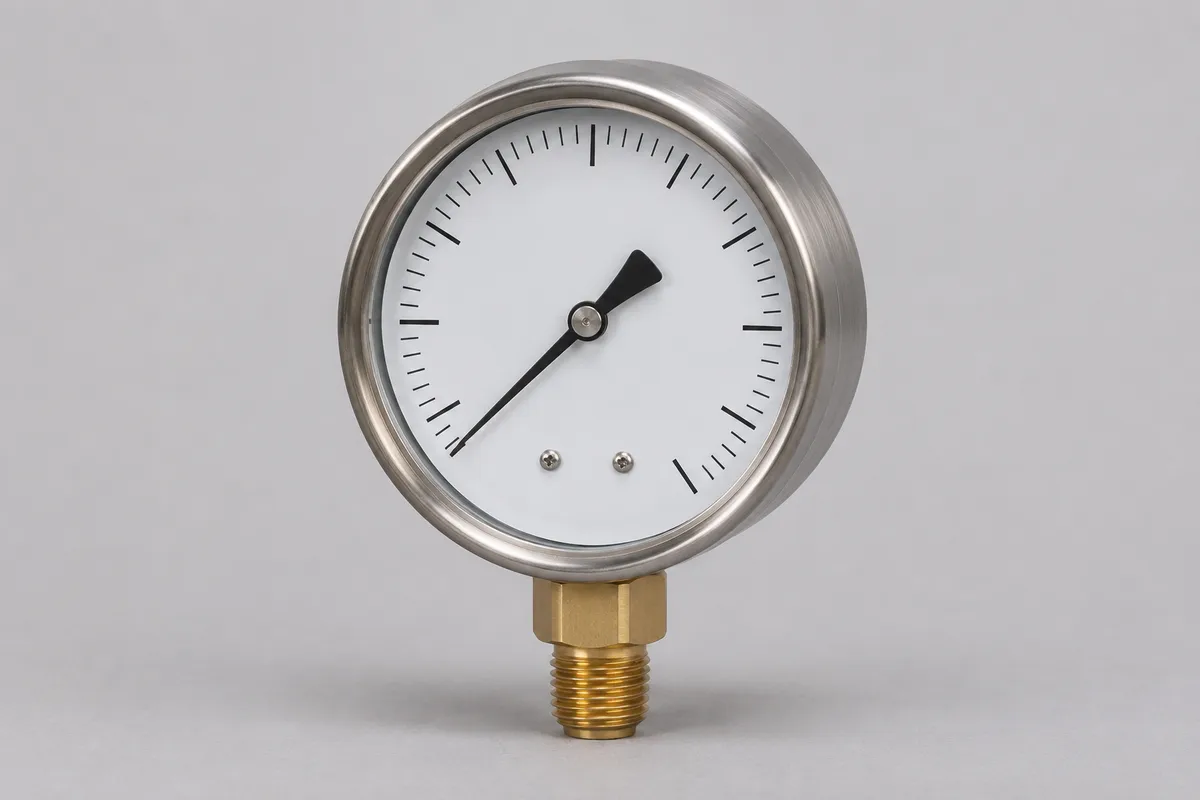
- WIKA 232.50 is a dry Bourdon-tube gauge. The dial diameter and pressure unit identify the specific variant.
- What we check
- Record the pointer on rising and falling pressure at the same dial divisions. A difference between the two passes can reveal lost motion or hysteresis in the Bourdon tube and movement.
- Reference equipment and accuracy
- The master is a calibrated pressure reference of the same pressure type. Select its range and uncertainty against the dial's permitted percentage of span.
- When to repeat the check
- Review the period against pointer zero, drift and exposure to pressure pulses. Recheck after overload or movement repair.
Technical references WIKA 232.50 and 233.50 Bourdon gauges