
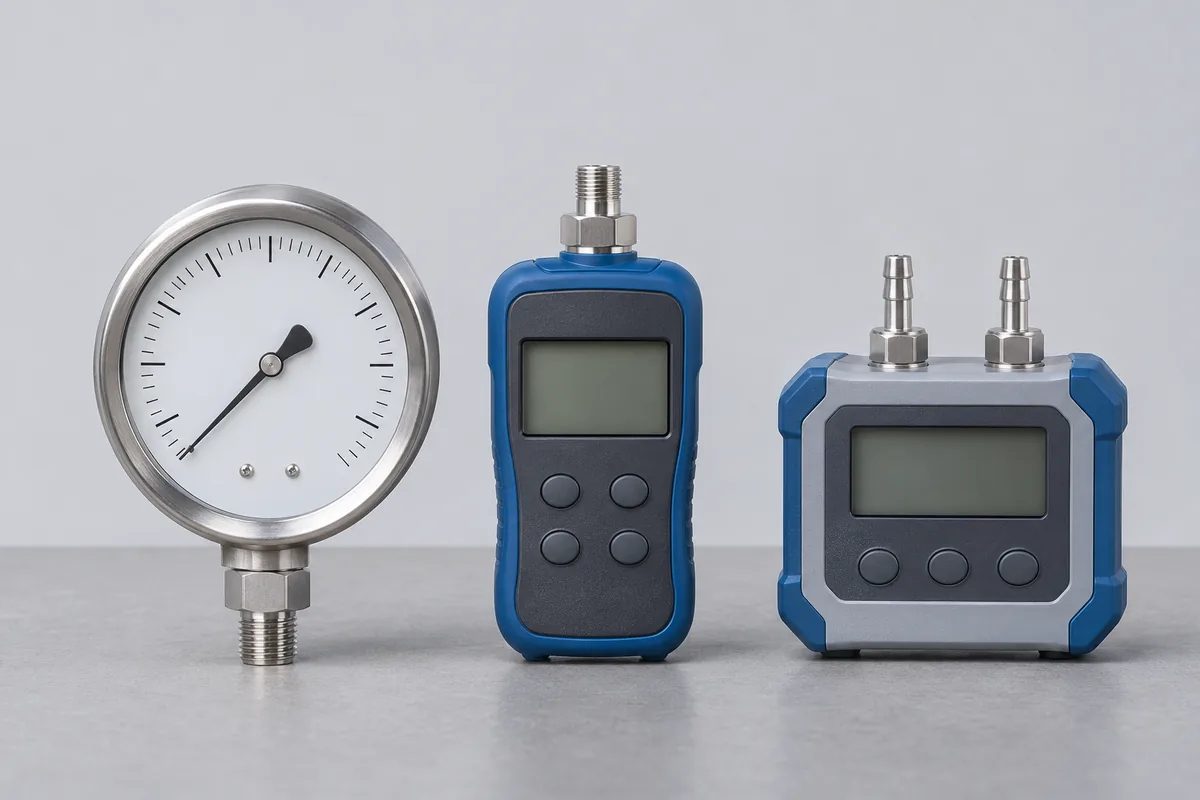
Pressure indicators and recorded pressure channels
For a separate pressure indicator or recorder, identify how the pressure reaches it. Some instruments have a pressure connection; others accept an electrical signal from a separate transmitter. Give the input type, pressure range and displayed units, then state whether the result should cover the readout alone or the sensor and readout together.
If a pressure trace is used as a production record, include the recorder channel, scaling and recording interval or chart speed. Ask for the report to distinguish indication error from any requested recording check. A simulated current input establishes the response of the receiving channel; it does not calibrate an excluded pressure sensor. Keep both asset numbers on the enquiry when the complete assembly is required.
Read the dial or nameplate
Send the make, model, scale limits and unit exactly as marked. Include the accuracy class if shown. For a digital gauge, give the display resolution. If the instrument reads vacuum, absolute or differential pressure, mention that in the request.
Identify the connection and medium
Describe the port or thread and what normally reaches the instrument, such as air, water or oil. Mention any diaphragm seal, capillary or adaptor that stays with the gauge. For oxygen service or a gauge with process residues, discuss handling with RTS before dispatch.
Which pressure points should you request?
A gauge marked 0 to 16 bar might run at 6 bar most of the day, while the inspection sheet asks the operator to record a reading at 9 bar. Give RTS the marked range and flag 6 bar and 9 bar as the points you need reported. A set of points spread across the full scale can miss either of those readings.
If the gauge moves between different machines, ask for points across the full span and include any particular settings the machines share. For a gauge dedicated to one station, send the lowest and highest pressures actually used there. Copy the allowable deviation and its unit from the drawing or inspection sheet, together with any requirement to record readings as pressure rises and falls. Ask RTS to confirm the points and directions on the quotation.
For a group of gauges coming from IMT Faridabad, put each tag and its requested points on the same row of the instrument list. If one tag belongs to a transmitter, include its pressure range and output signal so the two jobs can be quoted separately.
Oxygen pressure gauges and cleanliness
An oxygen pressure gauge must retain its service identification and the cleanliness requirements supplied by the owner. State the connection, range, working points and whether any attached seal or accessory belongs to the assembly. Agree the compatible test arrangement with RTS before dispatch. A pressure result does not, by itself, certify oxygen cleanliness or material suitability, so include those requirements separately when they are part of the purchase order.