
On this page
Output conditions for the specified breakdown test
Identify the type of specimen, AC or DC output, voltage range and the quantities required from your approved test method. If a liquid cell or electrode fixture is supplied, list it separately. Calibration of the instrument and a breakdown test on material are different jobs.
A laboratory investigating a change in recorded breakdown values may need to distinguish an error in voltage indication from a change in specimen preparation. Retain the displayed peak, selected programme and fixture identity with the reference comparison to make that investigation possible.
Specifications and service checks
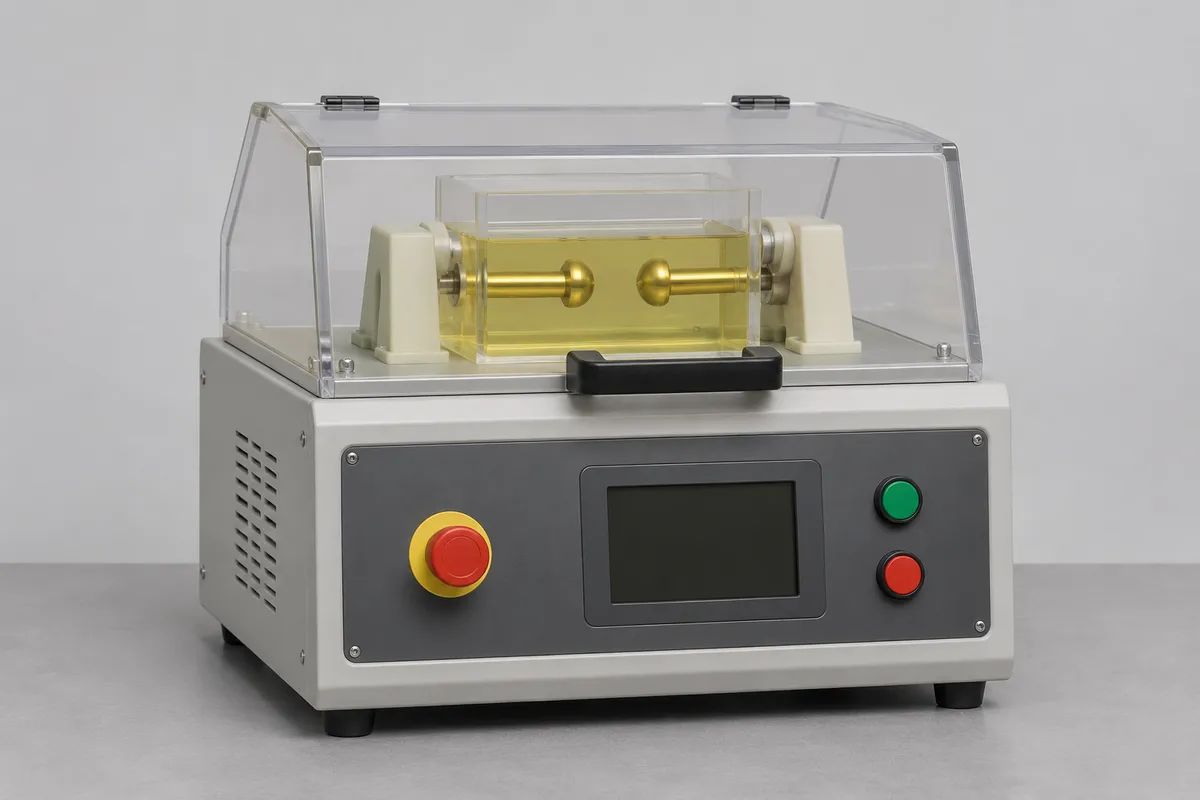
For a tester used with insulating liquids, distinguish the voltage indication from the automatic breakdown detection and ramp programme. A complaint that a test terminates early is different from an error at a stable voltage. State which part of the cycle is in question.
- Range and configuration
- Quote maximum voltage in kV, voltage rise rate and the applicable electrode geometry and gap. An instrument verification and a breakdown result on an oil sample are separate records.
- Manufacturers and models
- Megger OTS models are examples for insulating liquids. For film, solid insulation or another specimen, identify the test cell, electrodes and the event the instrument uses to indicate breakdown.
- What we check
- Verify the voltage channel, ramp and response at the specified breakdown criterion. A specimen's measured breakdown voltage also depends on its geometry, conditioning and applicable product test method.
- Reference equipment and accuracy
- Use a calibrated divider or dedicated voltage check system rated for the tester, traceable time measurement and a calibrated gap gauge where applicable.
- When to repeat the check
- Inspect electrodes and the cell between oil tests, and reverify the voltage channel after repairs.
Technical references OTS PB and OTS AF series of insulating oil test sets