
On this page
Ball size, force and indentation measurement
Which ball and force combination produced the result in question? Give the microscope or camera used to read the impression and the values of the reference blocks available. If the ball or optical reader was changed, note when. The material’s usual hardness helps us choose a comparable check.
Two jobs can use the same optical reader with different ball sizes. If their hardness results disagree, label the reader comparison separately from the force and ball used for each job. The workshop can then see which part of the measurement has been checked.
Specifications and service checks
Reading the diameter of an existing indentation twice tests the optical reading stage. Making fresh impressions on a reference block also exercises the ball and loading system. Specify which comparison best matches the disagreement at the inspection bench.
- Range and configuration
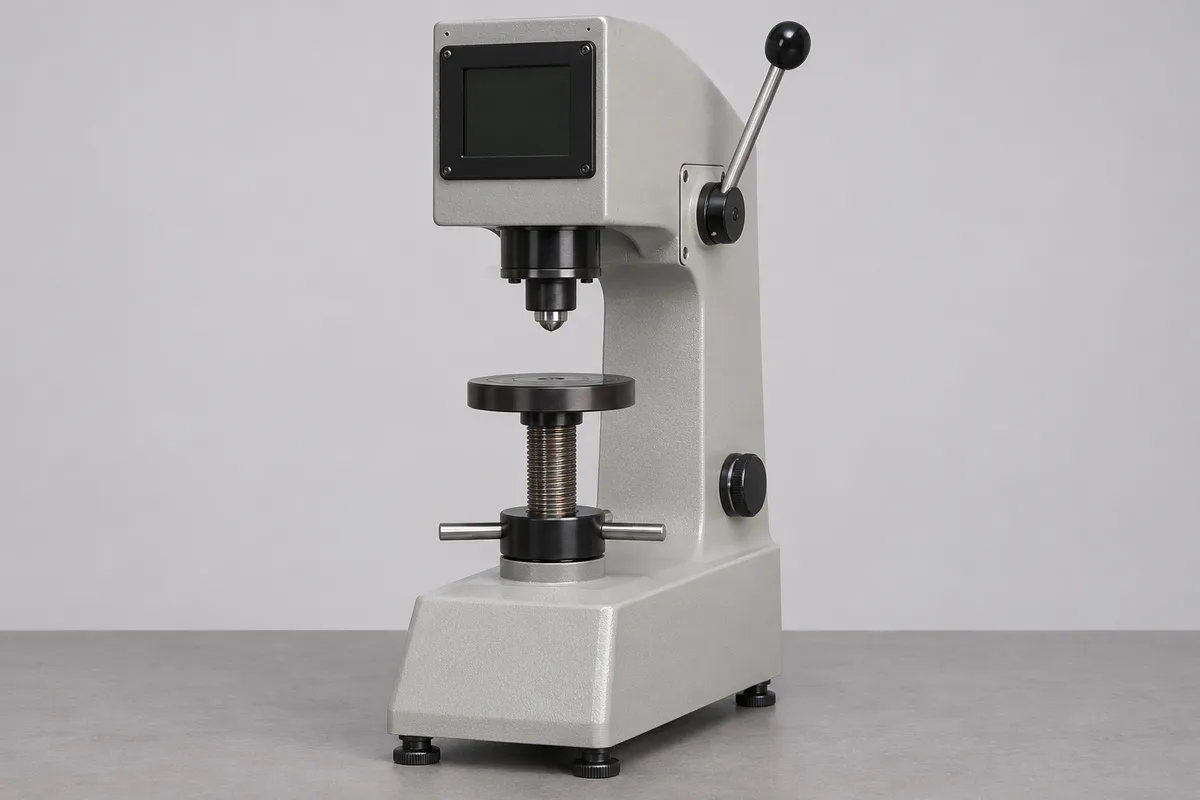
- The Wilson BH3000 offers Brinell test loads from 62.5 to 3,000 kgf. The result designation also includes the ball diameter and test conditions.
- Manufacturers and models
- Buehler’s Wilson BH3000 is a bench Brinell tester. Include the ball size and the microscope or camera used to read the impression.
- What we check
- Verify the machine with certified HBW blocks for the ball and load used. When direct verification is requested, examine the applied force, ball and indentation measuring system separately.
- Reference equipment and accuracy
- Use blocks certified for the specified HBW combination. For direct checks, the force standard and the length scale for the optical reader need stated uncertainties.
- When to repeat the check
- Follow the block check frequency for the applicable test method. Recheck after changing the ball, servicing the loading mechanism or adjusting the optical reader.
Technical references Wilson BH3000 Brinell Hardness Tester - Buehler · Wilson Brinell Test Blocks - Buehler