
On this page
Identifying weights used in combination
Give the marking and nominal mass of each weight, including pieces normally used together. A pallet total cannot tell a scale technician which pieces made up a particular load. Individual results let the technician build up the same combination again.
A stack used to check a floor scale may combine five separately marked pieces. If one piece has recently been repainted, retain its individual result so the total mass of the stack can be calculated with the pieces actually on hand.
Specifications and service checks
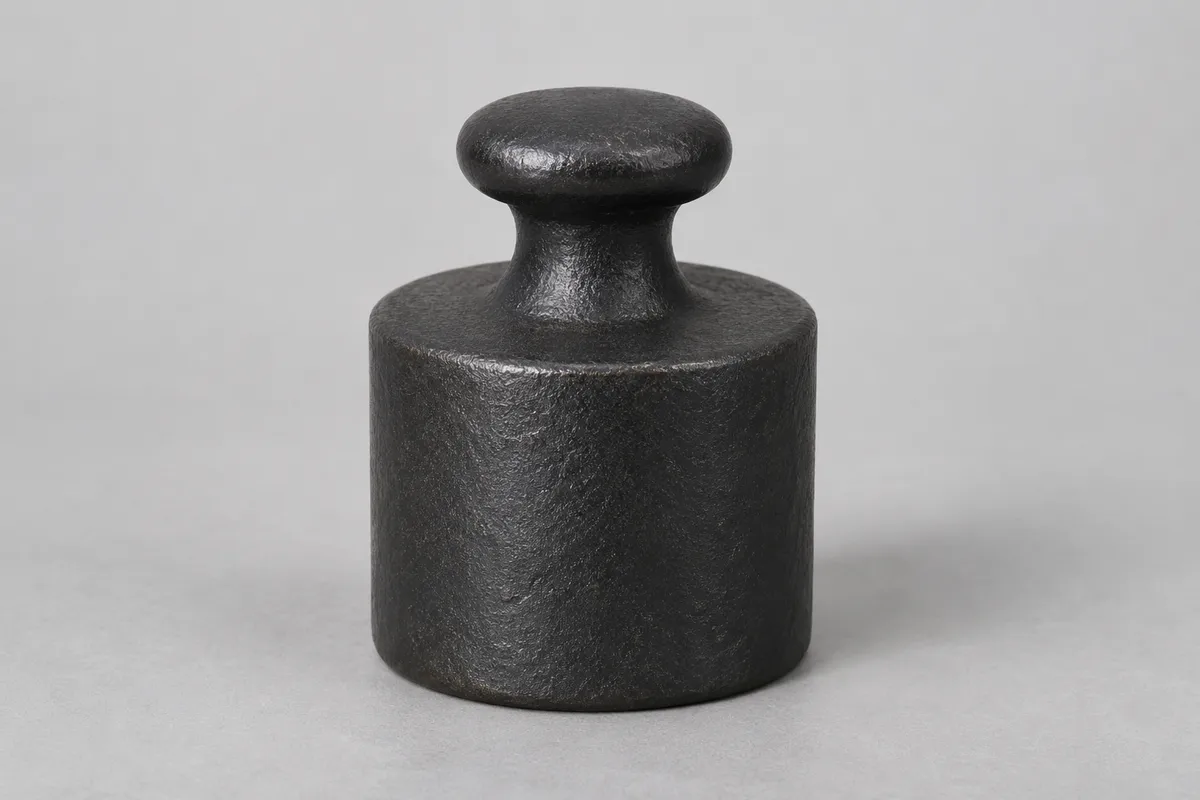
A lifting eye that can be unscrewed may travel in a separate bag. Establish whether it belongs to the weighed assembly before comparing the mass with an earlier result, especially if several similar weights share one set of lifting parts.
- Range and configuration
- Record the denomination of each individual weight and the class marked on its certificate. A set may contain several pieces carrying the same nominal value.
- Manufacturers and models
- METTLER TOLEDO supplies OIML-class weights. For a box or cast-iron piece, the denomination, class and individual ID matter more than the case model.
- What we check
- Check condition before comparison. Corrosion, paint loss and material trapped in a lifting cavity may alter the as-found mass. Agree any cleaning before the first weighing.
- Reference equipment and accuracy
- OIML R 111 classes run from E1 through F and M classes. Choose references and a comparator that can resolve the tolerance of the weight being tested.
- When to repeat the check
- Shorten the review interval for loose weights exposed to abrasion, corrosion or cleaning. Set a recall for each replaced or repaired piece.
Technical references METTLER TOLEDO OIML and ASTM Weight Classes: Tolerances, Accuracy, and How to Choose · OIML R 111-1 weight classes