
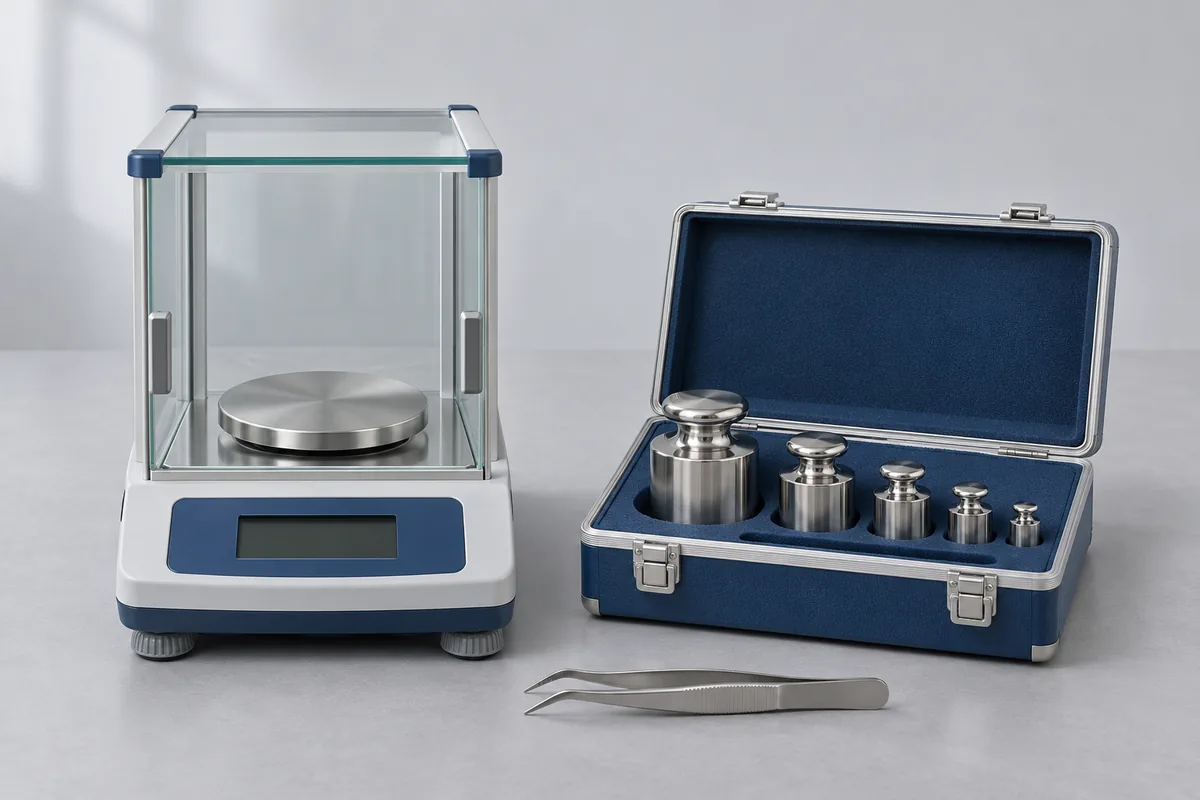
List each piece in the case
Record the nominal mass, unit, material if known and any class or identifier already marked on the weight or set. List duplicates individually. For small weights kept in numbered compartments, a photograph and the case inventory can establish which position belongs to which piece.
Explain how the weights are used
State whether the weights check a shop balance or form a reference set for other measurements. Include the previous certificate if you need results against the same identifiers. Tell RTS about damaged surfaces, loose components or missing seals so the team can confirm handling, supported masses and reporting before dispatch.
Nominal mass and the reported value
The number stamped on a weight is its nominal denomination. A calibration record may give conventional mass, a correction from nominal and measurement uncertainty. Tell us which values your balance-check procedure uses. If you need a statement against a particular weight class, supply the class requirement and ask for the assessment to be included explicitly.
Keep a copy of the previous results when reviewing drift or deciding whether a reference set remains suitable. Cleaning or adjustment can affect the comparison with those earlier values, so agree how the received condition is to be recorded before work begins. Leave damaged seals or loose adjustment closures as found and describe them in the enquiry. For small weights, use the existing case map or numbered compartments; adding an informal mark can compromise the identification and condition you are trying to preserve.
Release a set without losing its identity
Name the owner of each set and the department that should receive it. The packing list should identify every piece after the outer carton is removed. Keep small members in their assigned compartments, and agree handling equipment and transport arrangements separately for heavy weights.
Dead weight used as a reference
For a dead weight, state whether the required value is mass or a force associated with its use in a defined setup. Identify hangers and individual pieces separately. A mass result alone does not describe every force application or a pressure balance's piston assembly. Include the relevant procedure so RTS can review the intended quantity, required corrections and reporting arrangement before accepting the set.
Mass comparator performance requirements
A mass comparator measures differences between reference and test objects under a defined weighing procedure. Give its capacity, indication range, readability and the loads used for comparison. Identify the required repeatability or other performance checks and the reference masses available. Its role in calibrating weights does not make a general balance certificate sufficient for every comparison task; RTS must review the stated performance requirement.