
On this page
Opening pressure or reverse leakage?
Consider a duty where the question is whether fluid leaks back into a tank after the pump stops. The useful observation there is reverse leakage at a stated differential pressure. A forward opening-pressure result answers another part of the specification. Mark the flow arrow, fluid, valve size and applicable limit on the request, and include the line gauge as a separate item if its indication also needs calibration.
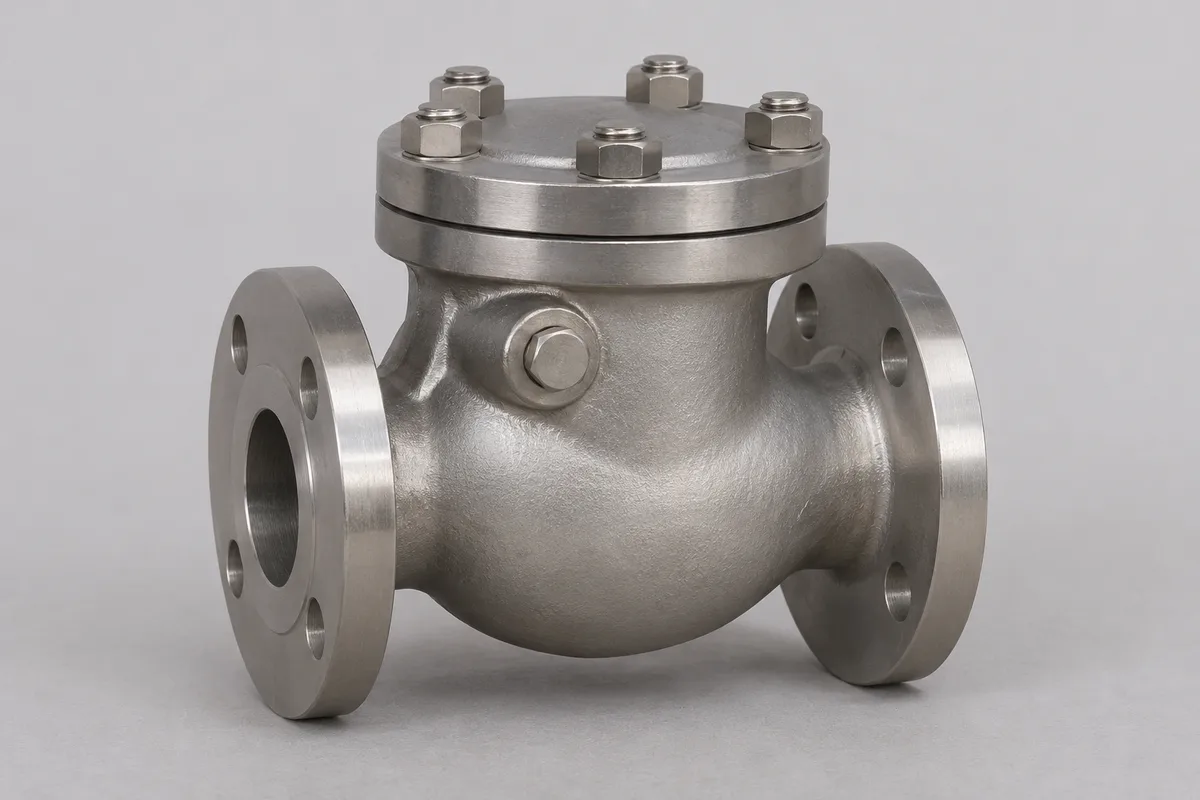
Check valves and flow direction
Mark that direction and give the model, connections and specified operating conditions. If the enquiry concerns opening pressure or reverse leakage, provide the manufacturer's requirement and acceptance limit. Those need an agreed test arrangement. Listing a check valve alongside a gauge does not mean that the gauge calibration also establishes the valve's performance.
Specifications and service checks
A spring-loaded valve specified to start opening at a small pressure difference may still need a much greater difference for normal flow. Distinguish initial opening from the working flow condition in the enquiry. These are different points on the valve’s behaviour.
- Range and configuration
- The cracking pressure on a rising differential and the reseal point as differential falls are distinct. The maximum body pressure is a third figure.
- Manufacturers and models
- Swagelok C-series check valves are supplied with specified cracking-pressure options. Identify the spring or order code if available.
- What we check
- Record the differential at first defined forward flow and the reseal condition using the agreed medium and detection criterion.
- Reference equipment and accuracy
- Use a calibrated differential reference, a means of detecting small flow and a compatible fixture. Leak-detection sensitivity matters at the lower endpoint.
- When to repeat the check
- Check after spring replacement or evidence of reverse leakage in service.
Technical references Swagelok check valve catalogue