
On this page
The loaded space and the cooling interval
Identify the volume occupied by the fixture and the hold periods used in your test. If cooling from room temperature is itself part of the requirement, specify the start and finish conditions so the cooling record can be assessed separately from the steady hold.
If the controller reaches the set temperature well before a sensor on the work shelf, those observations describe different locations. Note where the hold period starts in the plant procedure. The results can then show both controller behaviour and the conditions experienced in the test space.
Specifications and service checks
When the door opens briefly, the display and a logger on a shelf may take different times to settle. Mark the door opening on the time trace, then distinguish the recovery period from the later steady period when comparing shelf readings.
- Range and configuration
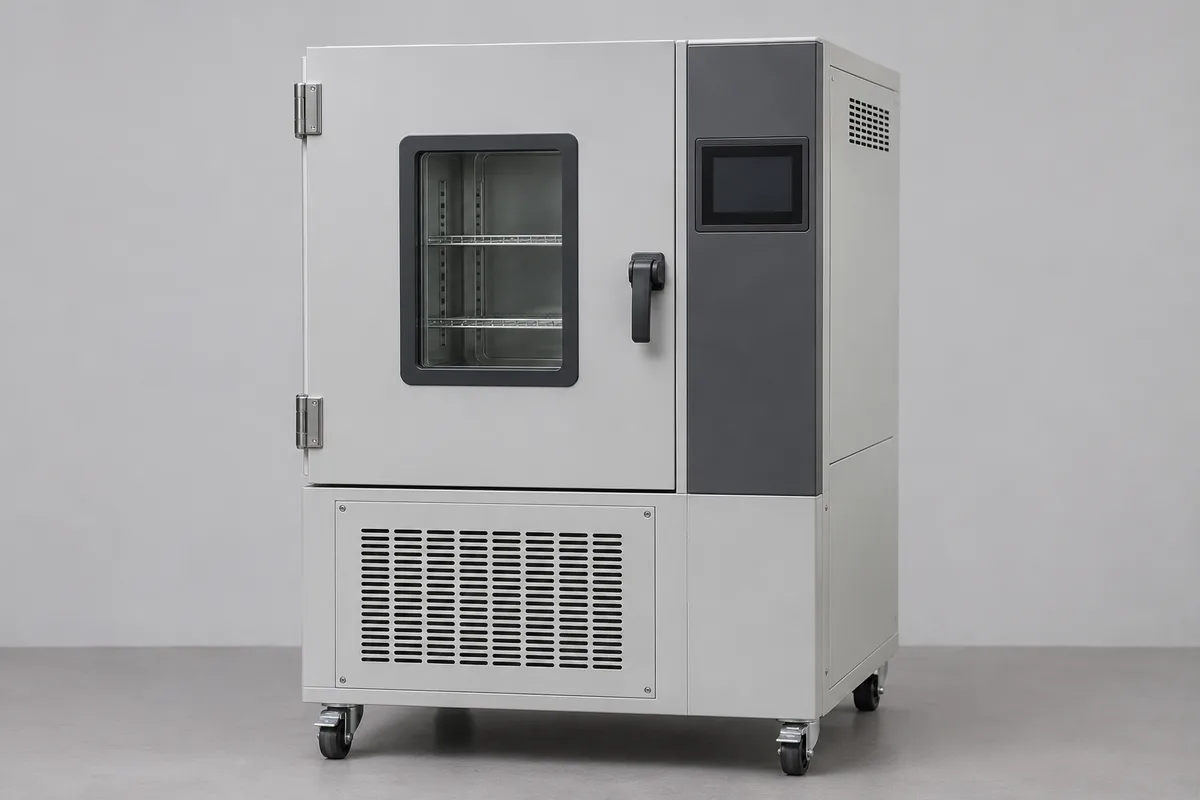
- The ESPEC SU-242 is a temperature-only example rated from −40 to +150 °C. Useful volume, loading and the points named on the order determine the comparison.
- Manufacturers and models
- The SU and SH models in ESPEC’s benchtop series include different temperature and humidity configurations.
- What we check
- Record which part of the usable cold space is being checked. Compare independent sensors on the designated shelves and note any operating event that changes the temperature record.
- Reference equipment and accuracy
- Use a set of calibrated temperature sensors and a synchronised logger. The reference uncertainty should support the allowed variation within the test space.
- When to repeat the check
- Review after refrigeration or heater repair, a change of control probe or a significant change in loading. Compare repeat maps at the same locations.
Technical references ESPEC SU and SH benchtop chamber specifications · EURAMET climatic chamber calibration guide