
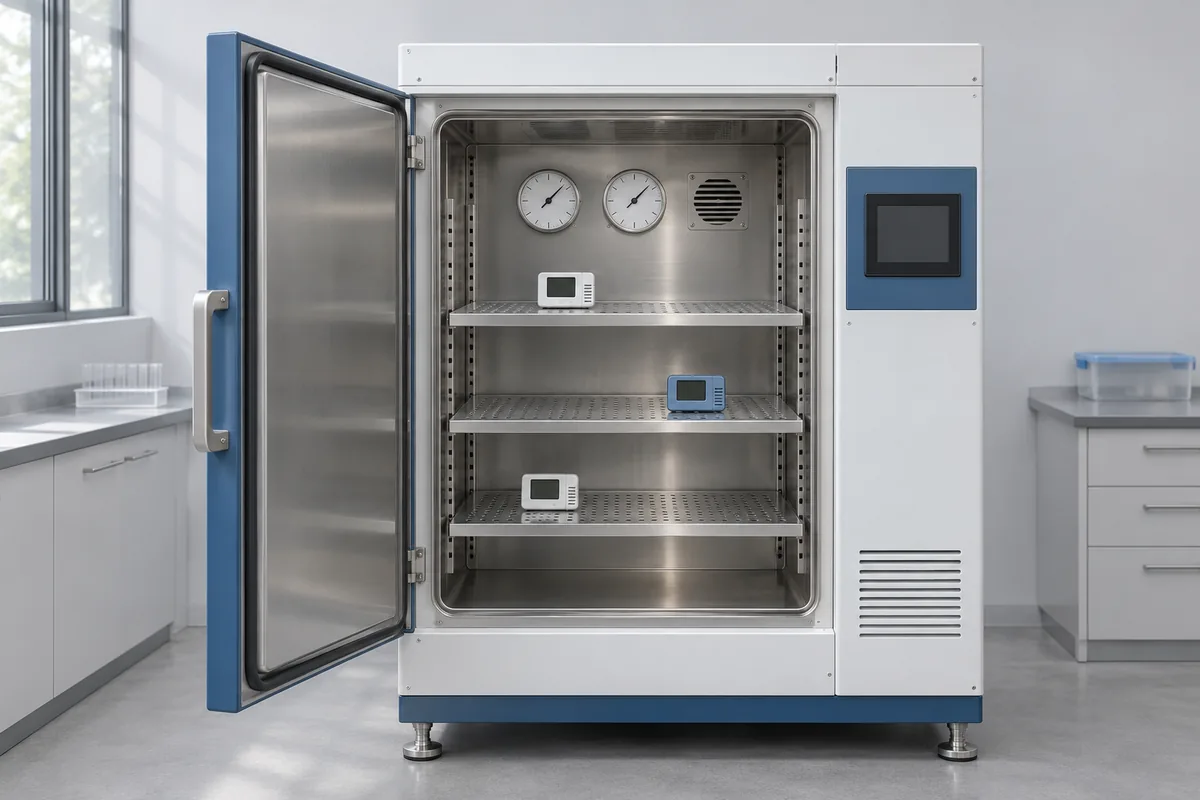
Describe the chamber recipe and load
Send the make, model and chamber ID. List the temperature settings and any relative humidity settings to be assessed together. Describe the normal shelf spacing, loading arrangement and the time the chamber can be released. Include the agreed reporting tolerances for each quantity.
Identify the records your reviewer expects
Mark the chamber sensor and any independent monitor on the shelf plan. Indicate whether the reviewer needs a file for each measured position, a summary of variation across the chamber or a comparison with its display. A broader chamber qualification needs its own approved activities and acceptance criteria.
Compare the same condition over the same period
For a combined temperature and humidity study, identify which positions need both quantities recorded. Give the interval of interest and the start condition defined by the approved protocol. The reviewer needs time-aligned records to see whether an observed humidity change occurred with a temperature change, a door opening or another documented event. Retain the actual shelf and load arrangement with those records.
Send previous mapping findings if particular shelves require closer attention. Do not use a summary from one operating recipe as evidence for every condition the chamber can produce. Agree how missing readings, an interrupted run or a changed recorder position will appear in the report. If the chamber has undergone a sensor replacement or control-system change, include the maintenance reference so the new study can be reviewed in context.
Environmental and climatic chamber characterisation
An environmental chamber may run hot and cold stages, humidity conditions or a programmed cycle. Identify the occupied test volume and the stages for which temperature or humidity results are needed. A steady dwell study, a ramp-rate record and recovery after an agreed event are different deliverables. Send the relevant procedure and acceptance limits so the quotation names the required measurements.
Include the load, fixtures, access ports and any air-circulation setting defined by the method. For a walk-in chamber, provide a position plan that identifies heights as well as floor locations. The chamber’s published operating range does not establish that every requested combination can be assessed by the same reference setup. RTS will review the conditions and proposed recording arrangement before confirming the work.
Book around the chamber release
Name the person authorised to release the chamber, prepare the approved load and receive the report. Confirm when normal samples can be removed and when the equipment is next required. For chambers at several sites, keep the settings and protocol revision against each asset number.