
On this page
Probe identity, bar size and cover depth
A repeat survey might use the same display with a replacement probe. Before comparing the old and new readings, identify both probe IDs and the bar size selected on each survey. For a reference-block comparison, give the nominal covers and bar diameters that bracket the work. If you also rely on the meter’s bar-size estimate, include the estimate and its reference as a separate check.
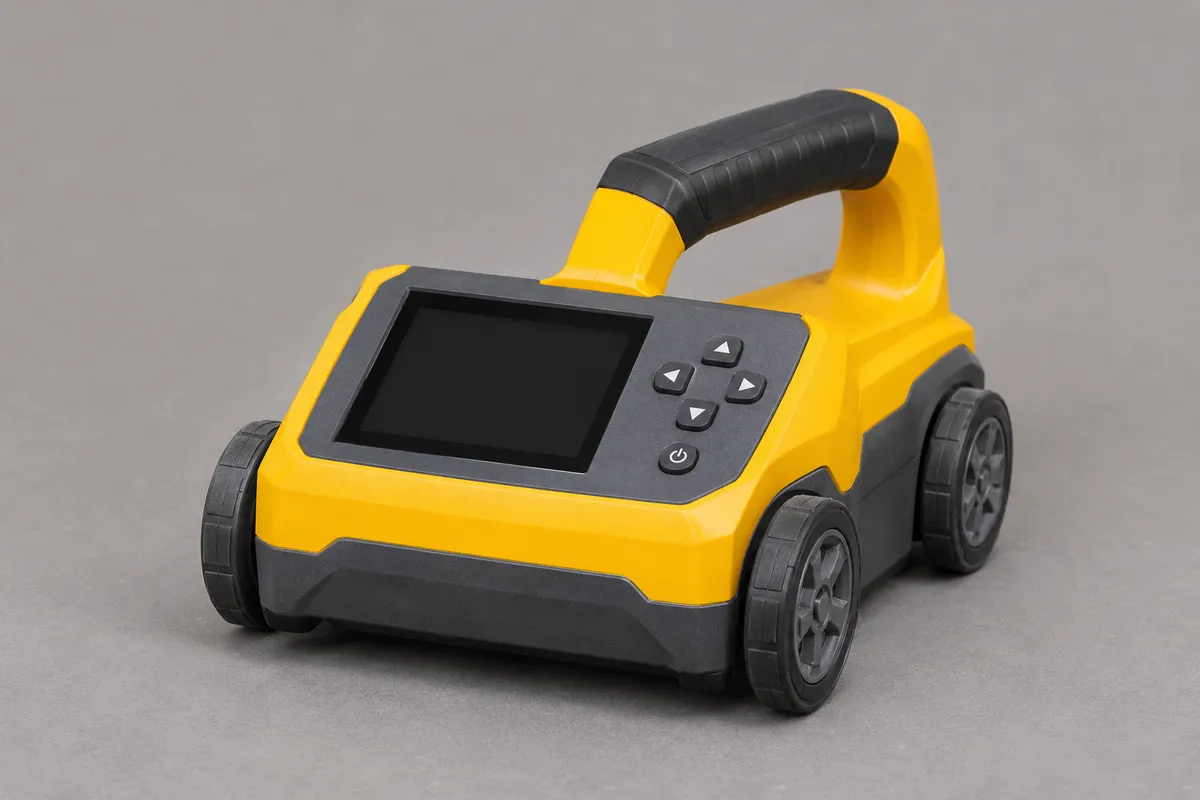
Concrete cover meter
Explain whether the request concerns cover depth, locating reinforcement or an estimated bar diameter. Include the reference arrangement proposed for comparison. Calibration of a depth indication in a defined setup does not confirm every result through congested reinforcement or another bar geometry.
Specifications and service checks
The same indicated cover can depend on the reinforcement diameter selected on the instrument. Include the bar size, probe identity and reference block arrangement when asking the lab to reproduce a reading.
- Range and configuration
- Coverage depends on bar diameter and spacing as well as depth. Give the reinforcement arrangement alongside the depths of interest.
- Manufacturers and models
- Screening Eagle’s Profometer PM8000 family measures concrete cover over reinforcing steel.
- What we check
- Compare readings over a reference bar at known cover depths. Record the bar diameter entered into the meter and whether neighbouring steel was present.
- Reference equipment and accuracy
- Use a documented reference block or fixture with verified cover distances and bar dimensions. A plain length scale cannot reproduce the electromagnetic response.
- When to repeat the check
- Verify against a known block between surveys and after replacing the probe or updating its compensation.
Technical references Screening Eagle product reference