
On this page
Mass or volume on the batching display
Give the sensor and transmitter serial numbers together, identify the operating liquid and specify the quantity used for batching. Where the batch closes on accumulated mass, request the total as well as the rate. Record any zero adjustment already made in the field.
A line may total 1,000 kg correctly while the displayed volume appears wrong after a product change. Check which density value the transmitter used for conversion. The apparent disagreement can involve the secondary volume calculation even if the direct mass result is consistent.
Specifications and service checks
A filling line may use a live mass-flow signal for control and the accumulated batch mass for release. Identify where each value is recorded and whether the totaliser is reset between batches. This distinguishes a discrepancy in one fill from a cumulative total over a shift.
- Range and configuration
- Specify mass per unit time, tube size, fluid and flow direction. A transmitter configured in kg/h may also show density or calculated volume on another channel.
- Manufacturers and models
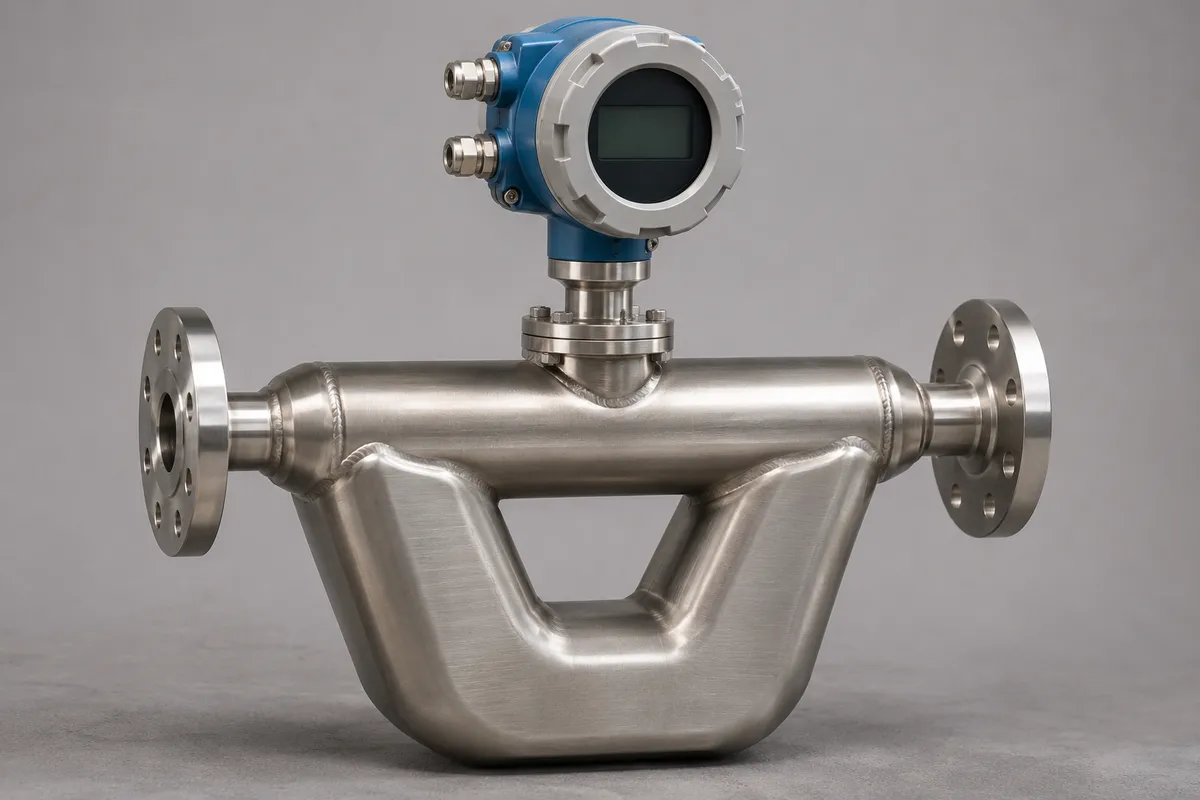
- Endress+Hauser Promass F 300 measures mass flow by the Coriolis principle. The standard liquid mass-flow specification is ±0.10% under the manufacturer's conditions.
- What we check
- Compare collected mass over a measured time with the mass reported by the meter. Capture zero stability separately from the errors at flowing conditions.
- Reference equipment and accuracy
- A gravimetric rig needs a calibrated weighing system and timebase. A transfer meter needs calibration for the fluid and flow range under review.
- When to repeat the check
- Check zero behaviour between calibrations and reassess after deposits, mechanical work or changes to the meter mounting.
Technical references Proline Promass F 300 Coriolis flowmeter