
On this page
How sample weight sets the count
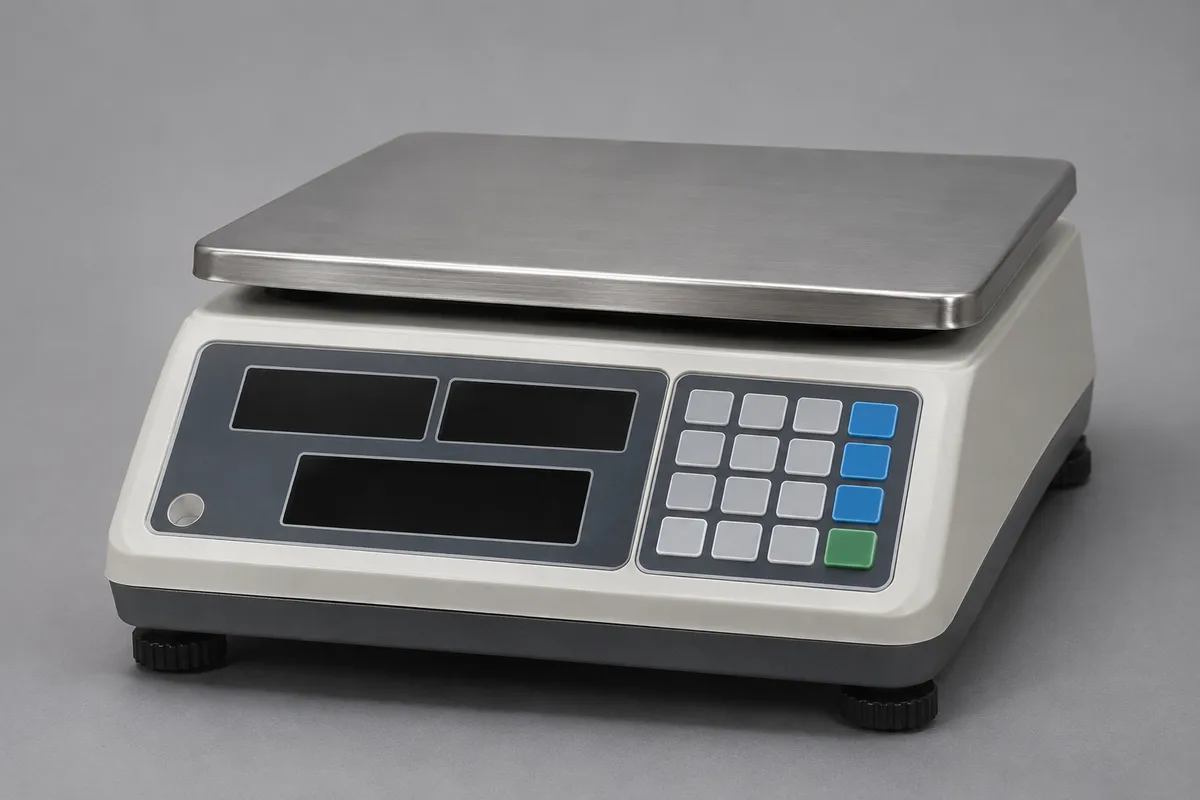
Record the weight divisions, normal sample quantity, stored unit weight and container tare. If you need the counting function examined, supply representative pieces or the sample procedure alongside the mass points. Keep measured weight discrepancies separate from count differences attributable to variation between pieces.
If two similar fasteners have different finishes, their average weights can differ enough to affect a large count. Identify the batch used to set the unit weight, especially when the scale is being investigated after a stock discrepancy.
Specifications and service checks
An average piece weight learnt from ten washers can change when a second batch has heavier plating. Weighing a reference load checks the mass indication. Trying a counted group from the current batch also checks the counting setup.
- Range and configuration
- The OHAUS RC31P30 has a 30 kg capacity and the RC31P1502 is a 1.5 kg version. Counting performance also depends on the average mass of one part.
- Manufacturers and models
- OHAUS Ranger Count 3000 includes both models. Supply the piece-weight setting if counting is the important function.
- What we check
- Check weight indication with standard weights, then use a counted sample to assess the counting function at the normal sample size.
- Reference equipment and accuracy
- Reference weights test the scale. A verified count of representative parts tests the sampling and rounding involved in the displayed quantity.
- When to repeat the check
- Review the scale after a change of load cell or location. Re-establish the average piece mass whenever the component batch changes.
Technical references OHAUS Counting scale reference · OHAUS Counting scale reference