
On this page
Temperature changes during normal use
Where the door is opened regularly, record each opening in the run log. A warm peak associated with an opening and a sustained difference between two shelves call for different follow-up, even when both appear on the same temperature plot.
A probe fastened to a wall and a probe placed inside a product simulator can respond at different rates after a door opening. State which measurement the alarm or quality limit applies to, and identify the location and type of each probe on the layout.
Specifications and service checks
A probe left near the front of a drawer and one bundled behind stock will respond differently during access. Make a note of their exact positions and whether stock surrounded either probe. The same labels can then be used when reviewing the recovery trace.
- Range and configuration
- Liebherr gives −10 to −26 °C for the LGPv 1420 laboratory freezer. Ultra-low freezers are a different equipment class and require references rated for their own storage temperatures.
- Manufacturers and models
- Liebherr’s LGPv range and Eppendorf’s CryoCube F740hi illustrate different freezer classes.
- What we check
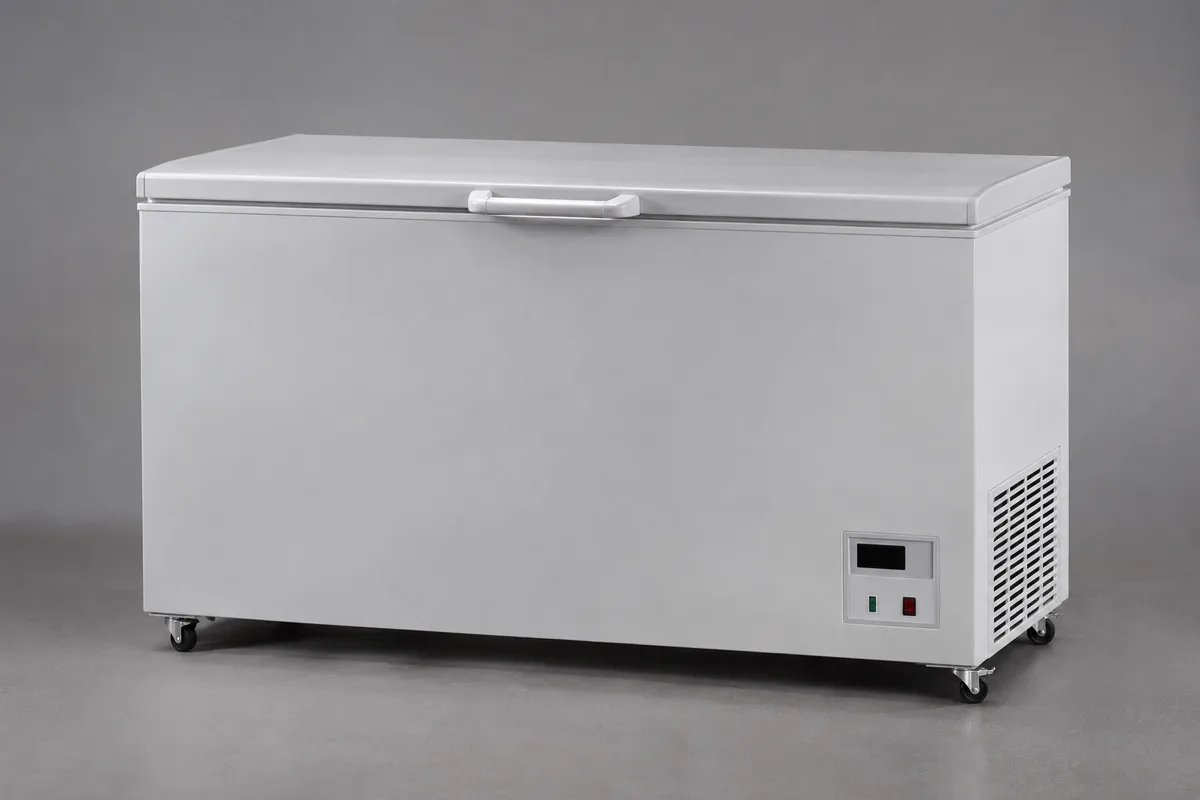
- For a chest freezer, identify depth and position as well as the compartment. For an upright model, use shelf references. Compare the fixed indicator with independent measurements at the recorded positions.
- Reference equipment and accuracy
- Use probes whose calibration extends to the lowest temperature required. Lead routing and settling time can affect readings, especially in an ultra-low unit.
- When to repeat the check
- Check again after a refrigeration repair, control probe replacement or persistent monitor alarm. Compare drift near the normal storage temperature.
Technical references Liebherr laboratory freezer manual · Eppendorf CryoCube F740hi manual