
Mark the storage space on the drawing
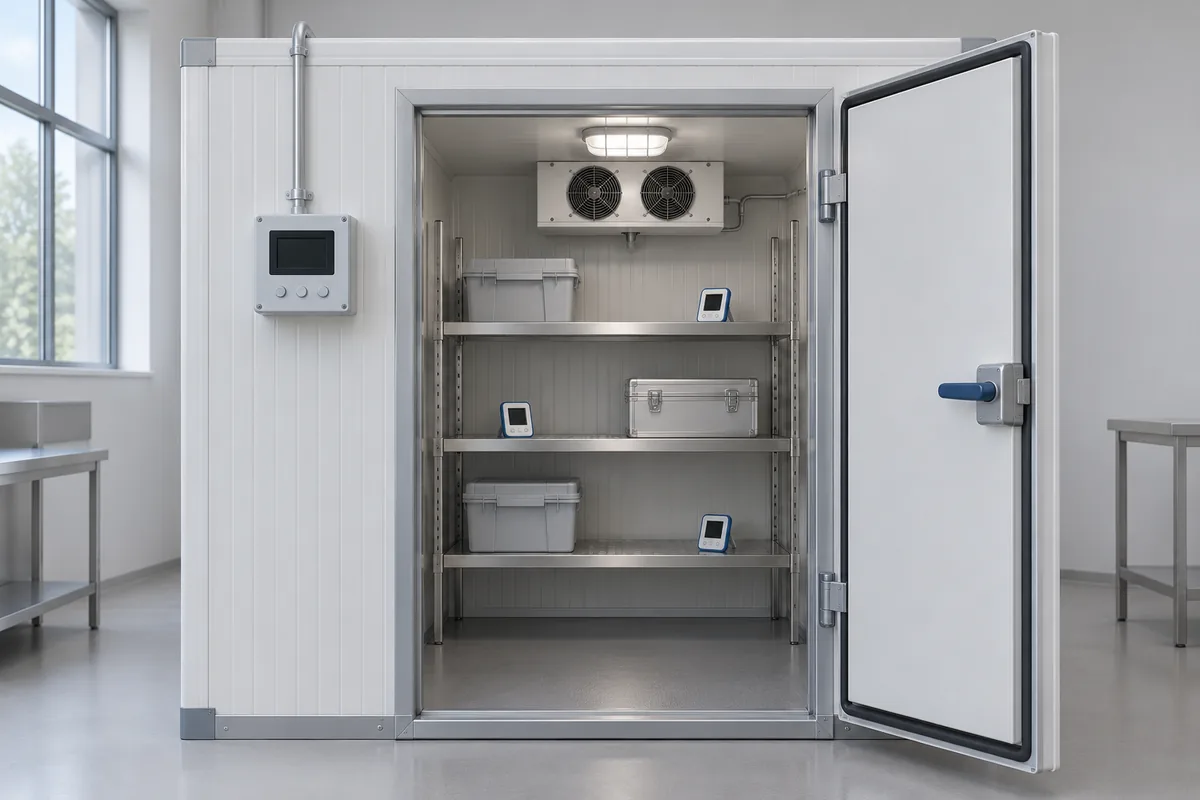
Give the internal dimensions, shelf heights, door positions and cooler locations. Mark areas where stock is normally kept, any empty zones and the position of the existing monitor. A hand sketch with a key is useful when a current drawing is unavailable.
Agree on the operating conditions
Tell us the room setting, normal loading pattern, defrost schedule and busiest door periods. Give your required temperature limits and reporting period. Ask for a position map and time traces if your team needs to compare the loading door with the rear racks.
Make the position map usable after the visit
Give each proposed measuring position a location that can be found again: rack number, shelf level and distance from a recognisable feature. Retain the layout showing the positions actually used, including any relocation during the recording period. The report should let your reviewer distinguish a logger near a door from one inside the stored load, rather than presenting a collection of unnamed temperature traces.
Agree which part of the record will be evaluated against the owner’s limits and how door events, defrost cycles or a power interruption will be annotated. A gap in one recorder file should remain visible in the report. If a later change moves racks or alters air circulation, the earlier study describes its original arrangement; the quality team should decide whether further mapping is needed.
Freezer and ultra-low-temperature storage mapping
For a freezer, give the actual storage setpoint and permitted limits rather than relying on a cabinet description such as deep freezer. Identify drawers, inner doors, racks or walk-in storage zones and the load arrangement. The proposed sensors and recording equipment must be suitable for the requested low-temperature conditions; RTS will review that requirement before accepting a study.
State whether the protocol requires steady storage records, a specified door event or recovery observations. Include any automatic defrost cycle and the position of the independent monitor. For an ultra-low-temperature cabinet, identify access ports and the owner’s restrictions on disturbing stored material. Keep cabinet and walk-in layouts separate, with the study boundaries shown on each plan.
Arrange access during a working shift
Name the person who controls access to the loading bay and can record events during the study. Confirm who will recover the recorders at the end and reconcile their identifiers. For several rooms or depots, attach a separate layout and local contact for each installation.