
On this page
Reading a print strip or film tablet
Start with the material you actually read. A print room may use a particular filter and aperture on a control strip. A film reader may rely on several transmission-density steps on a tablet. Name those steps or the working density interval, and mark the face or track read. That lets the technician reproduce the same optical path when the instrument is compared again.
Densitometer measurement mode
Give the filter or spectral response, aperture and reference standard required by the method. If your instrument actually reports mass density, say so; that is a different measurement family. Keep the assigned reference values and the selected measurement mode with the enquiry.
Specifications and service checks
An optical step tablet has individually assigned patches. If a film appears satisfactory at a pale step but disagrees at a dark step, identify both patch numbers and the meter aperture. The two readings cover different optical densities.
- Range and configuration
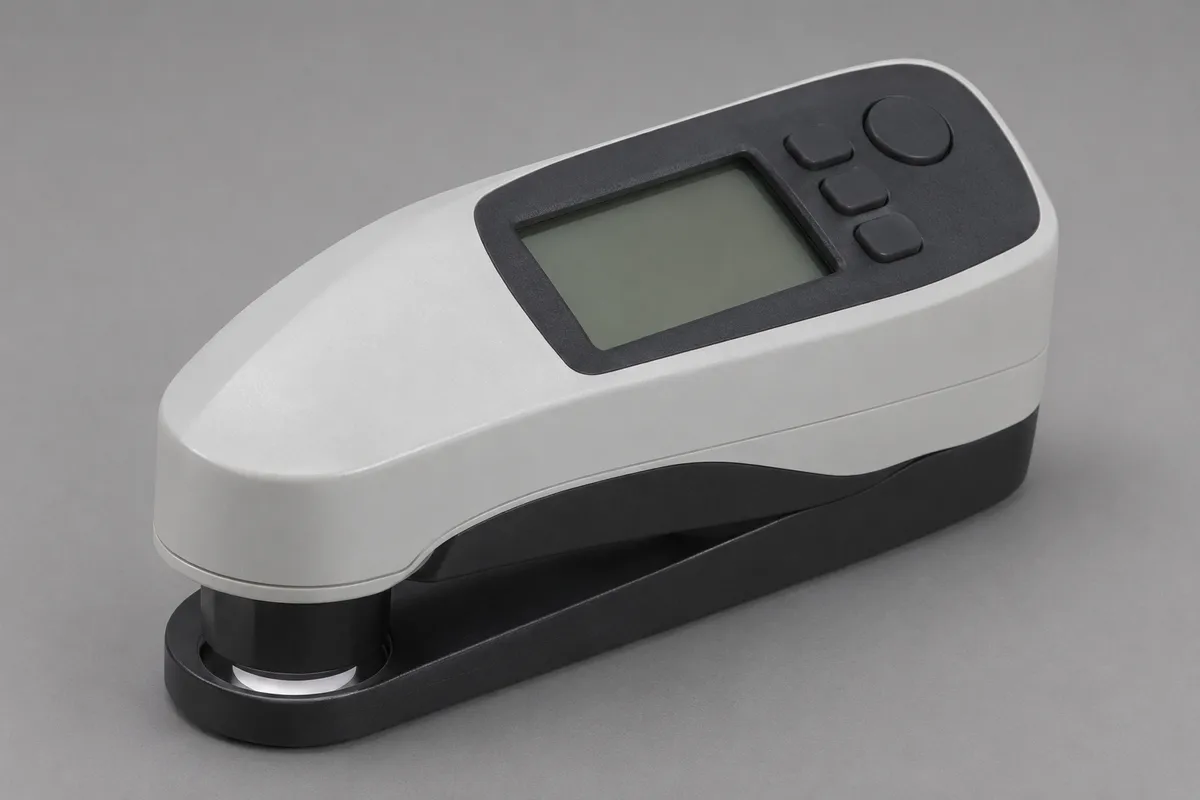
- The X-Rite 341C is a transmission densitometer capable of reading above 5 D. Reflection instruments require a different reference and illumination geometry.
- Manufacturers and models
- X-Rite 341C is a legacy transmission model often identified from its front-panel marking.
- What we check
- Zero the instrument as specified, then compare readings across a certified density step tablet. Observe whether the response departs progressively at the darkest steps.
- Reference equipment and accuracy
- Use a transmission tablet or reflection standard certified for the spectral response and geometry in use. Include reference uncertainty at the highest densities measured.
- When to repeat the check
- Inspect the aperture and step tablet before use. Recheck after lamp replacement, optical cleaning or an increase in scatter on repeated readings.
Technical references X-Rite 341C Portable Transmission Densitometer