
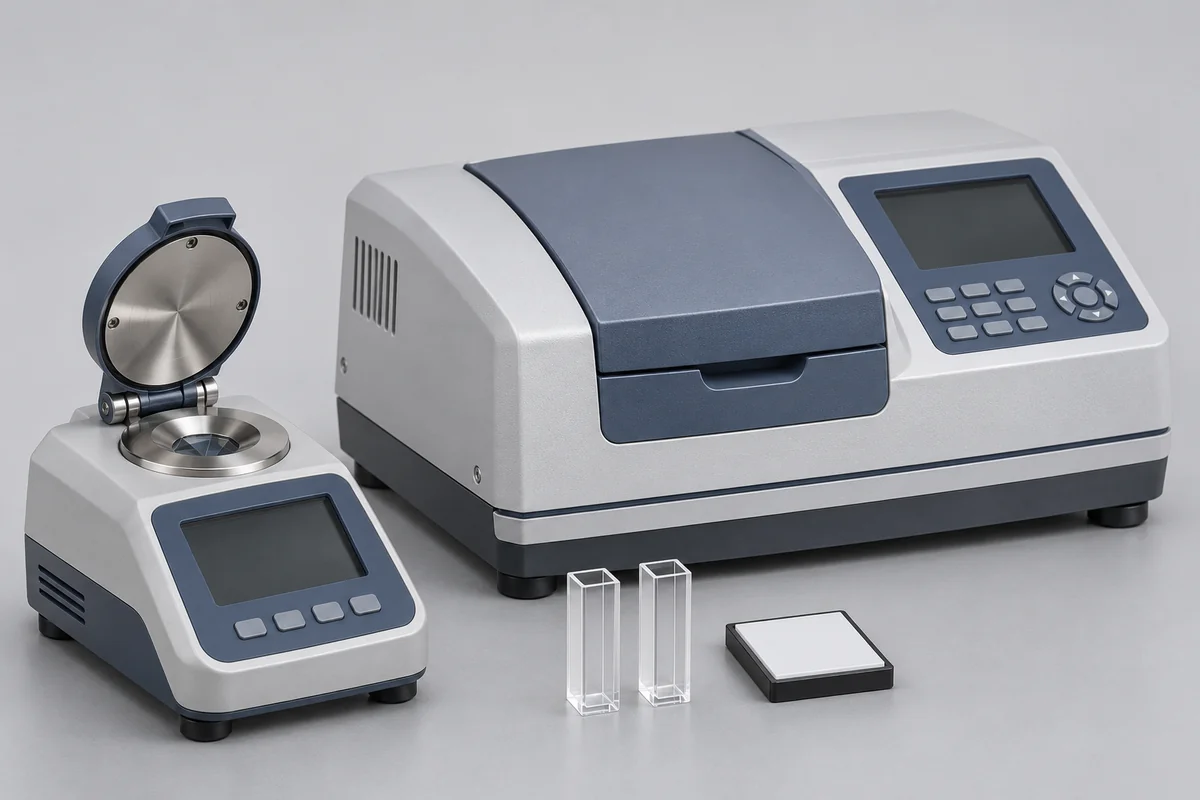
Colorimeter: colour or solution response
State whether the colorimeter measures a material's colour coordinates or a solution response used in a chemical method. Identify the illumination, viewing arrangement or selected wavelength, as applicable. Include the reference tile, filter or solution records used by your procedure. A check of one colour standard or solution should not be presented as verification of every product colour or analytical concentration.
Densitometer measurement mode
For a densitometer, specify whether optical density is measured in transmission or reflection and identify the sample type. Give the filter or spectral response, aperture and reference standard required by the method. If your instrument actually reports mass density, say so; that is a different measurement family. Keep the assigned reference values and the selected measurement mode with the enquiry.
Refractometer scale and temperature
A refractometer can display refractive index or a calculated scale such as Brix. Record the selected scale, temperature control or compensation settings, and the reference material used. Include its certificate, expiry and measurement temperature where specified. A comparison using one reference liquid does not validate a concentration conversion for an unrelated mixture; the analytical method must identify that separate relationship.
Identify the spectrometer technique
Spectrometer is a broad equipment name. Give the technique, model, detector and reported quantity, together with the method used by the laboratory. Wavelength-related checks, response checks and a material-composition method are different requests. RTS needs this distinction before identifying a suitable measurement route. Include relevant reference-material certificates and avoid describing a general instrument service as validation of every stored application method.
Spectrophotometer functions to specify
For a spectrophotometer, state the wavelength interval used and whether the result is transmittance, absorbance or reflectance. Identify the cell or sample holder, path length where applicable and the references specified for each check. Wavelength performance and photometric response are separate characteristics. Add any method-specific qualification requirement explicitly instead of assuming a single reference reading covers the complete instrument.
Keep instrument and method evidence separate
A laboratory may need an equipment performance record as well as evidence that a particular analytical method works for its samples. Name the owner of each requirement and send the applicable acceptance limits. RTS will confirm the available instrument checks, reference resources and reporting laboratory before accepting work. Reference materials and customer samples should only be dispatched after their suitability and handling are agreed.
Atomic absorption spectrophotometer method review
For an atomic absorption spectrophotometer, identify the atomisation system, element-specific source and analytical method involved in the enquiry. Wavelength or instrument-response checks differ from verification of a complete concentration method with reference solutions. State the modules and performance evidence required. RTS needs the specialist procedure, reference materials and suitable service route reviewed before this equipment can be accepted.
UV visible spectrophotometer performance
Give the UV visible spectrophotometer model and the wavelength, absorbance or transmittance conditions used by the laboratory. Identify the reference filters or solutions and the performance checks in its protocol. Wavelength accuracy, photometric response and other optical characteristics are separate records. A result obtained for one mode or cell arrangement should not silently establish every configured measurement mode.
Flame photometer response and reference solutions
List the flame photometer’s measured elements, range and sample-introduction arrangement. State whether the enquiry concerns an instrument function or response to specified reference solutions under the analytical method. A gas-flow or electrical check alone cannot establish concentration response. Include the reference-material requirements and laboratory protocol so RTS can review the specialist assessment before a quotation is agreed.
Polarimeter optical rotation conditions
For a polarimeter, identify the reported rotation quantity, wavelength, temperature and sample-tube arrangement required by the method. A quartz reference plate and a solution-based check require their own reference conditions. Keep any calculated concentration scale distinct from the underlying optical rotation. RTS will review the available reference method and reporting requirements before accepting the instrument for assessment.