
On this page
Torque direction and the memory pointer
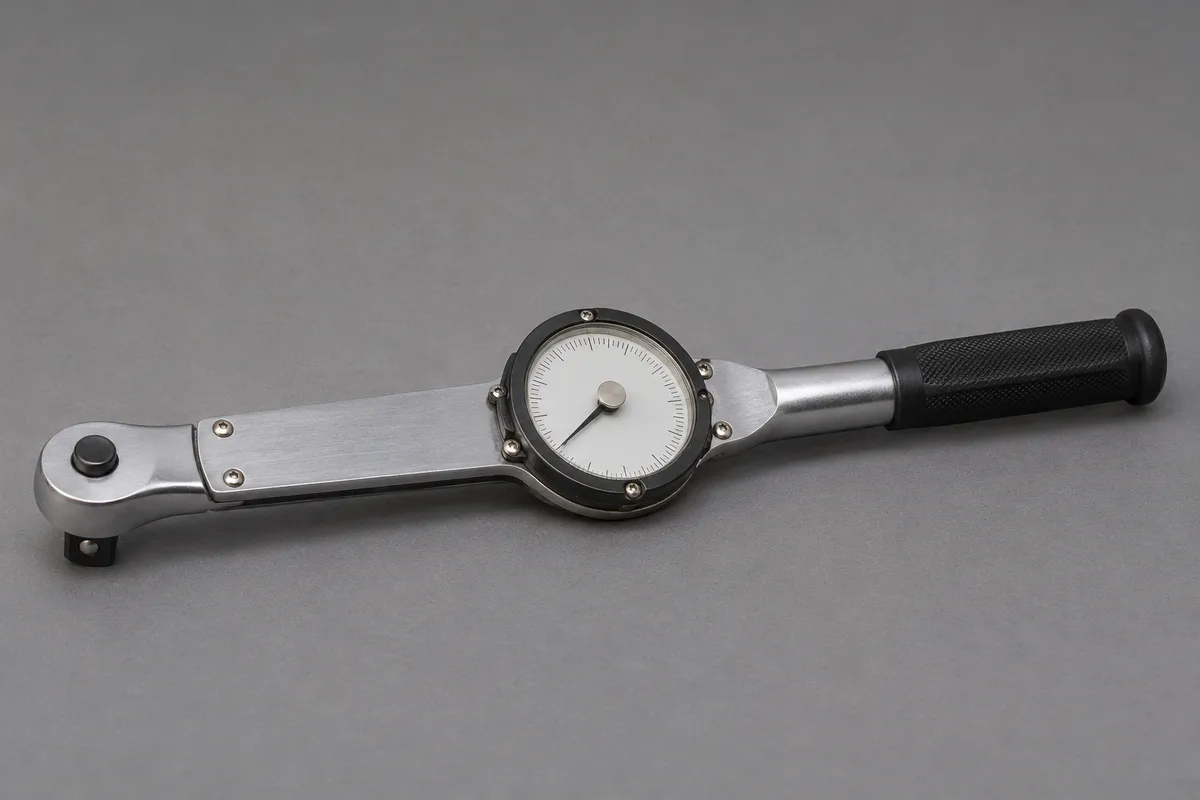
Specify the dial unit, usable directions and the working points required. Include the position of any memory or drag pointer when describing a discrepancy. Record the unloaded indication as well as the readings under load so a pointer zero shift remains visible.
Two users can report different peak values from one wrench if one reads the live pointer and the other reads the retained pointer. A job instruction naming the pointer removes that ambiguity before the readings are compared.
Specifications and service checks
A pointer reading after a load has been released can be the retained maximum on a dial fitted with a follower. Record that value separately from the live indication observed during loading when comparing readings between shifts.
- Range and configuration
- DB-series dial tools come in several torque bands. Record the face unit and both working directions if inspectors rely on the reverse scale.
- Manufacturers and models
- Tohnichi DB12N5 and DB100N are catalogue examples of dial indicating wrenches.
- What we check
- Compare the pointer reading with torque applied to the drive. Where there is a memory pointer, check it separately from the live indication.
- Reference equipment and accuracy
- Use a traceable torque transducer with adequate uncertainty across the marked scale. Specify the position of the loading point on the handle.
- When to repeat the check
- Inspect pointer zero after a knock. A regular reference check at the main assembly torque helps decide whether the annual recall is adequate.
Technical references Tohnichi Dial torque wrench reference